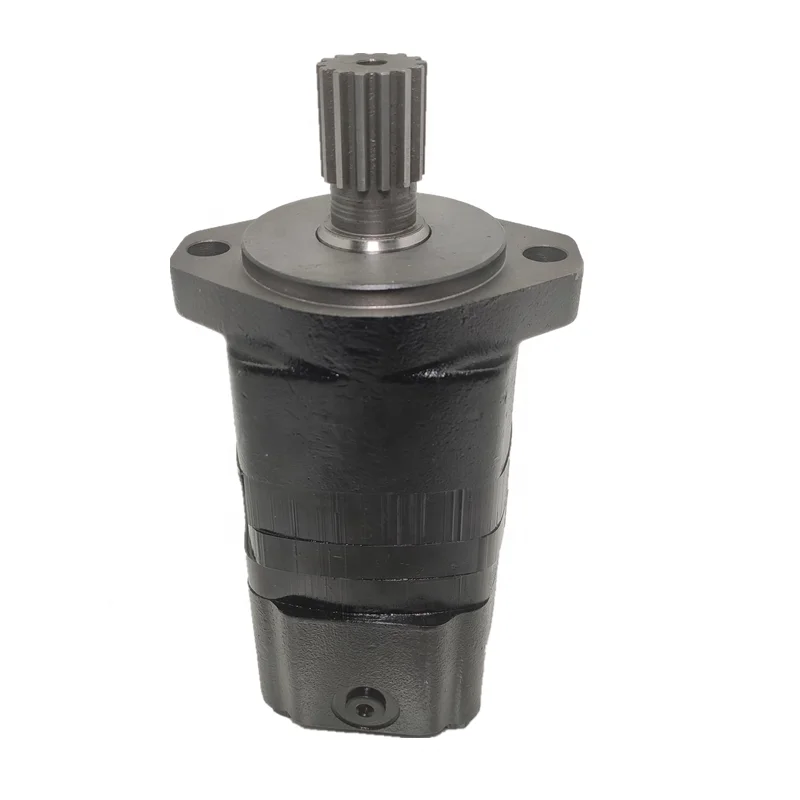
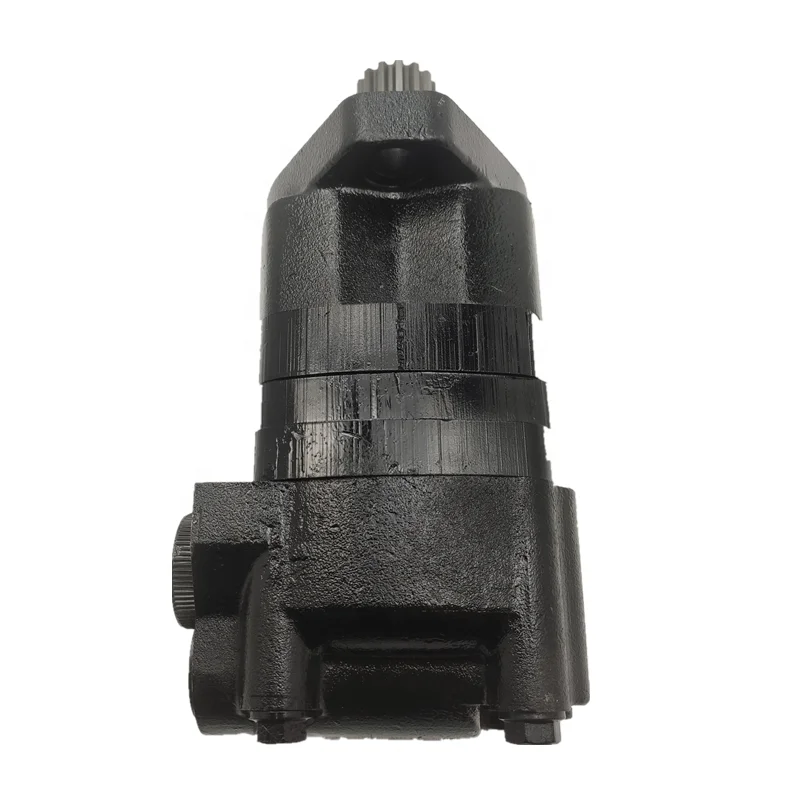
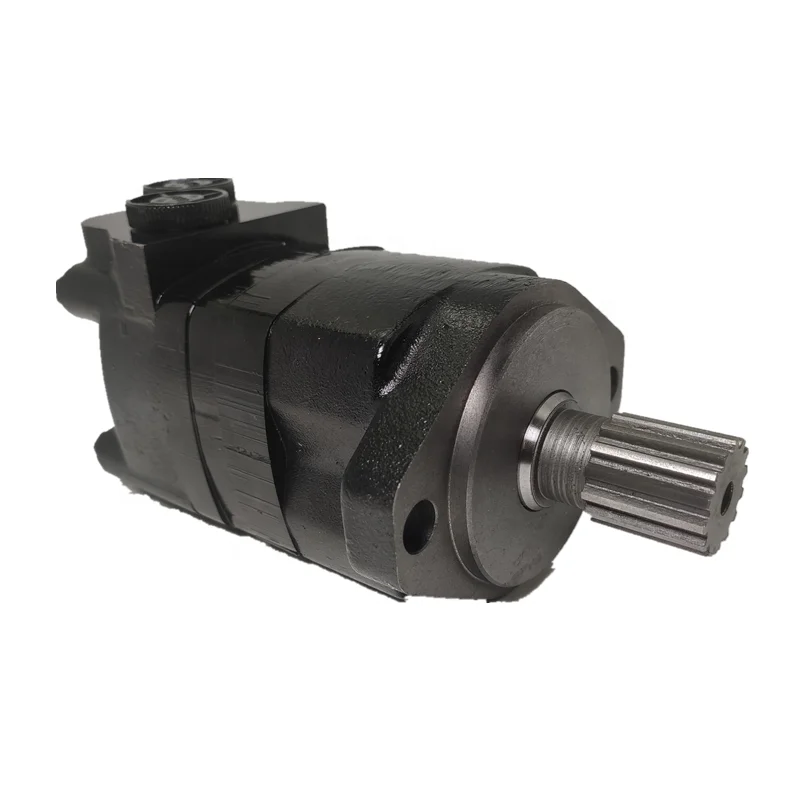
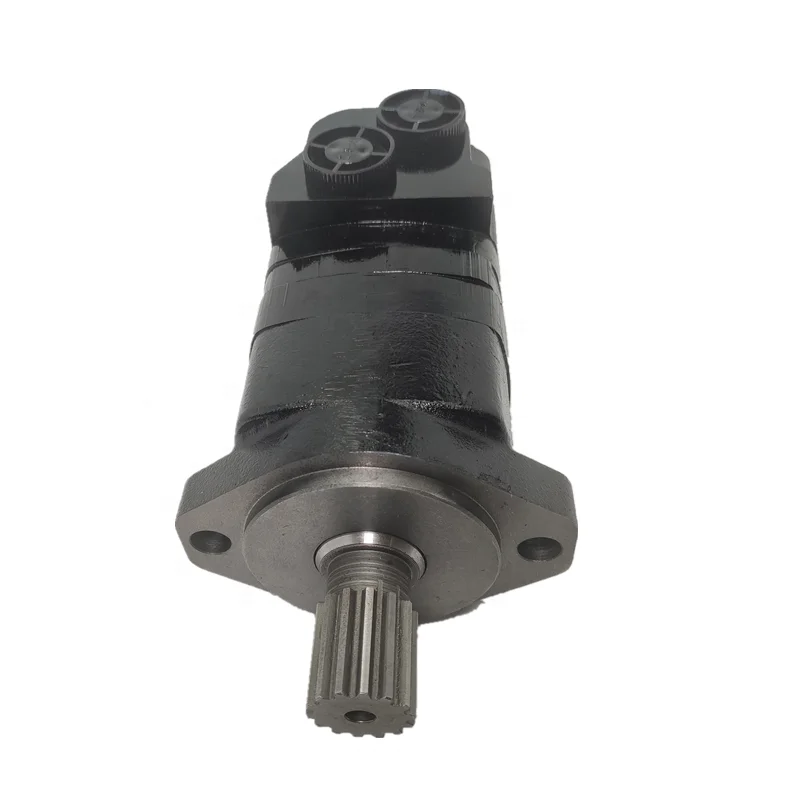
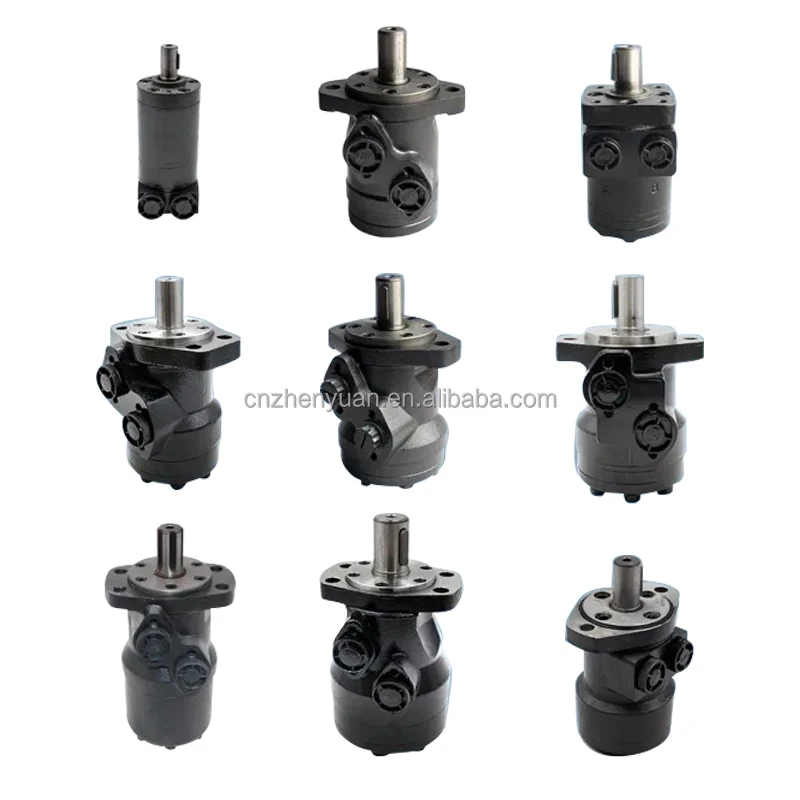

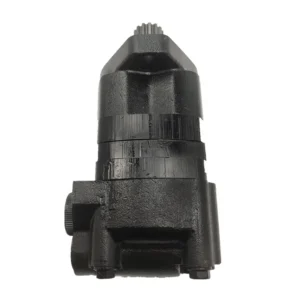
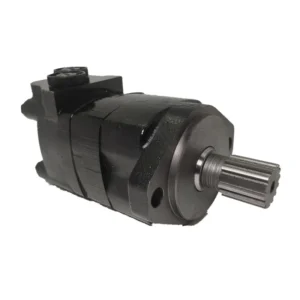
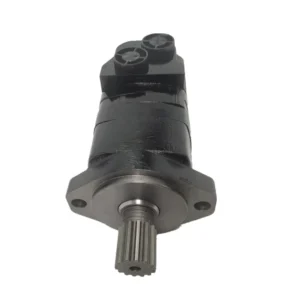
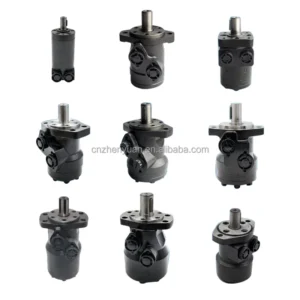
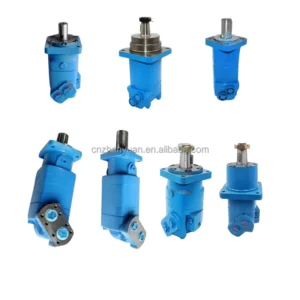
The BME, BMER, and OMER series high-performance orbital wheel-type low speed high torque (LSHT) hydraulic motors manufactured by LIC Hydraulic (comprehensively matching standard model coding options including BMER-1, BMER-2, BME-300, and BMER-2-200-WDAW) are heavy-duty embedded fluid power driving elements custom-engineered for vocational vehicle wheeled drives and harsh open/closed hydrostatic circuits. Conforming precisely to standard international wheel-mount installation pilots , tapered or splined output shafts, geometric port spacing dimensions, and low-speed torque output curves, this motor series provides 100% drop-in interchangeability with global industry standards including Parker (legacy Ross Torqmotor BME/BMER platform) and Danfoss OMER series wheel motors.
Standard low-tier orbital motors subject to continuous cross-country vibration, sudden pressure reversal spikes, or extreme external side-loading forces frequently experience valve plate misalignment, early geroler cam wear, or front seal blowouts that lead to rapid displacement losses and machinery downtime. LIC addresses these typical operational failure modes by optimizing the internal high-pressure Geroler roller-set geometry and implementing integrated heavy-duty dual tapered roller bearings. Every single wheel motor assembly undergoes 100% full-load simulated vocational vehicle grade ramp-climbing, dynamic deceleration, and heavy wheel-hub mechanical loading factory testing prior to shipment. Sustaining high volumetric efficiency above 95% at an intermittent operating pressure threshold over 200 bar, our motors supply a reliable procurement alternative for B2B global equipment distributors, mobile fleet workshops, and vehicle system integrators.
Technical Specifications
Accurate, catalog-verified technical engineering parameters matching standard Parker BMER / Danfoss OMER documentation benchmarks (Example profile derived from model BMER-2-200-WDAW):
Product Series: BMER Heavy-Duty High-Pressure Orbital Wheel Motor Platform (Integrated Geroler Roller-Set Construction)
Displacement Framing Ranges: Covering a full range from 100 cc/rev to 750 cc/rev nominal sizing brackets.
BME-300: Geometric nominal displacement of approx. 300 cm³/rev.BMER-2-200: Geometric nominal displacement of approx. 200 cm³/rev (12.2 ci/rev).
Complete Nomenclature Structural Coding Breakdown Example (BMER-2-200-WDAW):
BMER: Primary classification code for heavy-duty, roller-style high-pressure geroler hydraulic motors.2: Design identification series index tracking second-generation micro-geometry layout configurations.200: 200 cm³/rev nominal geometric displacement per revolution sizing.W: Integrated installation option specifying an 凹入式四孔车轮安装法兰 (Wheel Mount Flange) layout, letting the motor housing sit deeply inside the wheel hub cavity to reduce radial load overhang length.D: Shaft profile type specifying a standard 1-1/4 inch (31.75 mm) Tapered Shaft (圆锥轴) featuring a standard Woodruff keyway slot and high-torque slotted locknut dedicated to securing heavy wheel hubs.A: Dual service fluid port allocation layout specifying standard 7/8-14 UNF straight thread ports (SAE O-Ring ports), side or rear oriented.W: Reinforced high-pressure shaft seal assembly setup or integrated customized micro-venting low-speed option.
Maximum Continuous Operating Pressure Limit: 175 bar – 205 bar (Subject to minor adjustments across specific displacement lines).
Maximum Intermittent Peak Pressure Threshold: 200 bar – 240 bar (24 MPa / 3480 psi).
Maximum Intermittent Output Torque Rating: Up to 550 Nm – 850 Nm (Delivering up to 620 Nm continuous torque at the 200cc displacement mark).
Maximum Rotational Velocity Speed: 330 rpm – 450 rpm (200cc models support up to 370 rpm continuous velocity).
Minimum Stable Continuous Crawl Speed: 6 rpm (Ensuring absolute smooth creeping without stick-slip jerky steps).
Maximum Allowable External Radial Side Loading Load: Up to 15,000 N – 22,000 N evaluated adjacent to the primary mounting face.
Net Mass Frame Weight: BMER-2-200-WDAW standard frame configuration approx. 11.5 kg (25.3 lbs).
Key Technical Advantages
Advanced Internal Geroler Roller-Set Architecture: The rolling contact layout introduces specialized precision-hardened cylindrical rollers embedded directly into the stators gear teeth profile. This converts sliding contact friction boundaries into low-friction rolling interfaces, decreasing structural friction drag by over 60%. This enables stable micro-speeds down to 6 rpm and minimizes starting torque pressure demands.
Integrated Dual-Row Heavy-Duty Tapered Roller Bearings: The front chassis housing integrates two premium pre-loaded tapered roller bearing arrays. This robust support system allows the main motor output shaft to serve directly as the vehicle axle’s structural wheel hub spindle, absorbing high side loads, vertical vehicle masses, and moment forces during sharp off-road maneuvers.
Pressure-Balanced Axial Valve Fluid Routing: LIC refines the internal micro-clearance tolerances of the axial distribution valve plate. The design automatically manages hydrostatic clearance balances across shifting fluid operating temperatures, keeping internal volumetric bypass slippage extremely low while preserving fluid energy under high load pressure cycles.
High-Pressure Radial Lip Shaft Seal Shroud (Anti-Leakage): The front shaft housing incorporates a multi-lip high-pressure synthetic compound shaft seal backed by an integrated steel retain support spacer. This layout safely isolates backpressures up to 100 bar without a separate external case drain line, preventing hub-side weeping and protecting environmental site regulations.
High-Yield Heavy Duty Drive Link Connection Internal Spindle: The intermediate drive link connecting the main rotor to the output assembly is machined out of a high-alloy forged steel bar, treated with full carbo-nitriding case-hardening. Precision-matched gear splines minimize backlash play, enabling reliable handling of high-frequency reverse shocks and high wheel spin slip demands.
Application Areas
The BME, BMER, and OMER series wheel-type low speed high torque orbital motors deliver short length footprints, high-bearing load wheel chassis, and smooth micro-crawl control across international mobile machinery:
Hydrostatic Skid Steer Loaders & Compact Construction Machinery: Serves as the primary four-wheel direct-drive hydrostatic drive motor on small-to-mid wheel loaders, micro-excavators, and compact site utility dump vehicles.
Self-Propelled Aerial Work Platforms & Scissor Lifts: Primary high-traction wheel driving module integrated into rough-terrain scissor lifts, articulated boom lifts, and industrial automated platform vehicles.
Specialized Agricultural Equipment & Harvester Machines: Direct wheel hub drives on automated cotton pickers, mechanical sugarcane harvesters, combine implements, and specialized orchard utility access platforms.
Municipal Sanitation Fleet Equipment & Road Maintenance Machinery: Driving wheels on compact all-hydraulic street sweeping vehicles, auxiliary tracking wheels on asphalt cold-milling equipment, and commercial heavy-duty lawn mowing equipment.
Expert Maintenance Tips
Mandatory Torque Wrench Calibrations During Wheel Hub Assembly; Avoid Impact Wrenches: The output shaft configuration utilizes a tapered geometry (圆锥轴) keyed lock. When locking down a wheel hub rim or a companion flange adapter, operators must utilize a calibrated manual torque wrench to tighten the retention slot-nut in staged sequences. Slamming the assembly with a high-torque pneumatic impact gun risks driving the shaft inward past design limits, binding the internal tapered roller bearings, generating high friction heat, and destroying the bearing cage assembly within short service windows.
Install an Independent External Case Drain Line if Backpressure Exceeds 100 bar: Although the high-pressure radial seal handles high backpressures, applications involving closed-loop hydrostatic drives or series-connected multi-motor setups can see transient return shocks over 100 bar. Removing the internal plug and routing a separate, zero-restriction case drain line directly to the reservoir lowers internal casing pressures and can triple shaft seal service life.
Execute System-Wide Hydraulic Circuit Flushes Prior to Replacing Failed Motors: When replacing a motor that failed due to catastrophic internal seizure or fracturing, the old line arrays and the fluid reservoir will contain microscopic abrasive metal fragments. Connecting a new LIC motor to un-flushed circuits allows debris to enter the geroler pocket tolerances and damage the bi-metal surfaces within seconds. Perform a thorough dynamic circuit flush and refresh the fluid to meet ISO 4406 19/16/13 (NAS Class 8) or cleaner before starting the new motor.