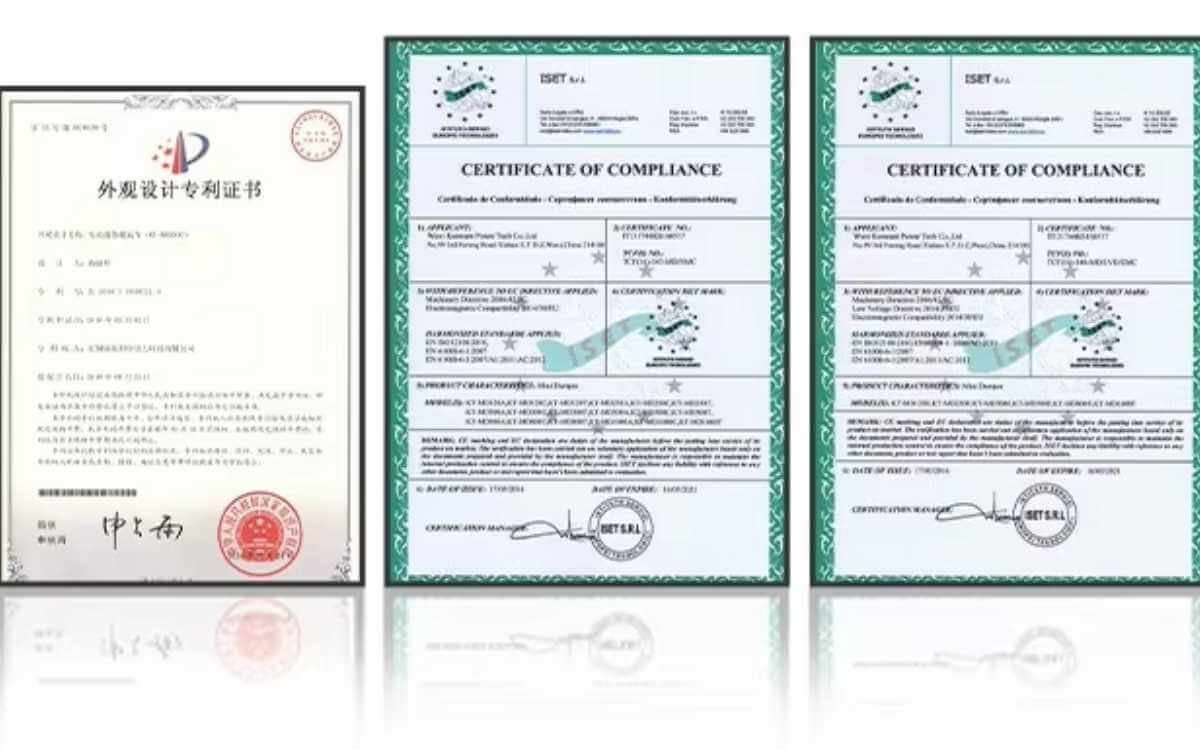
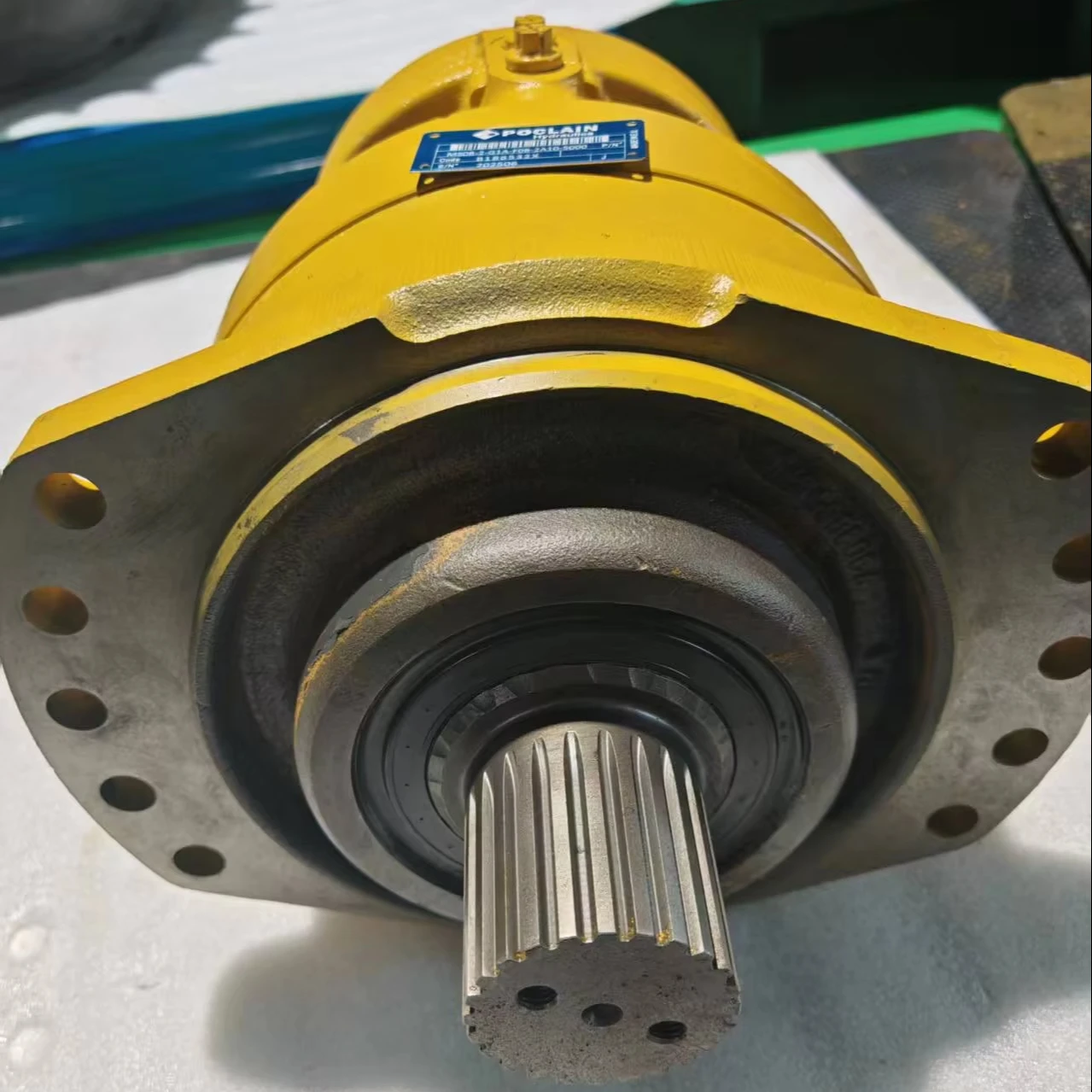
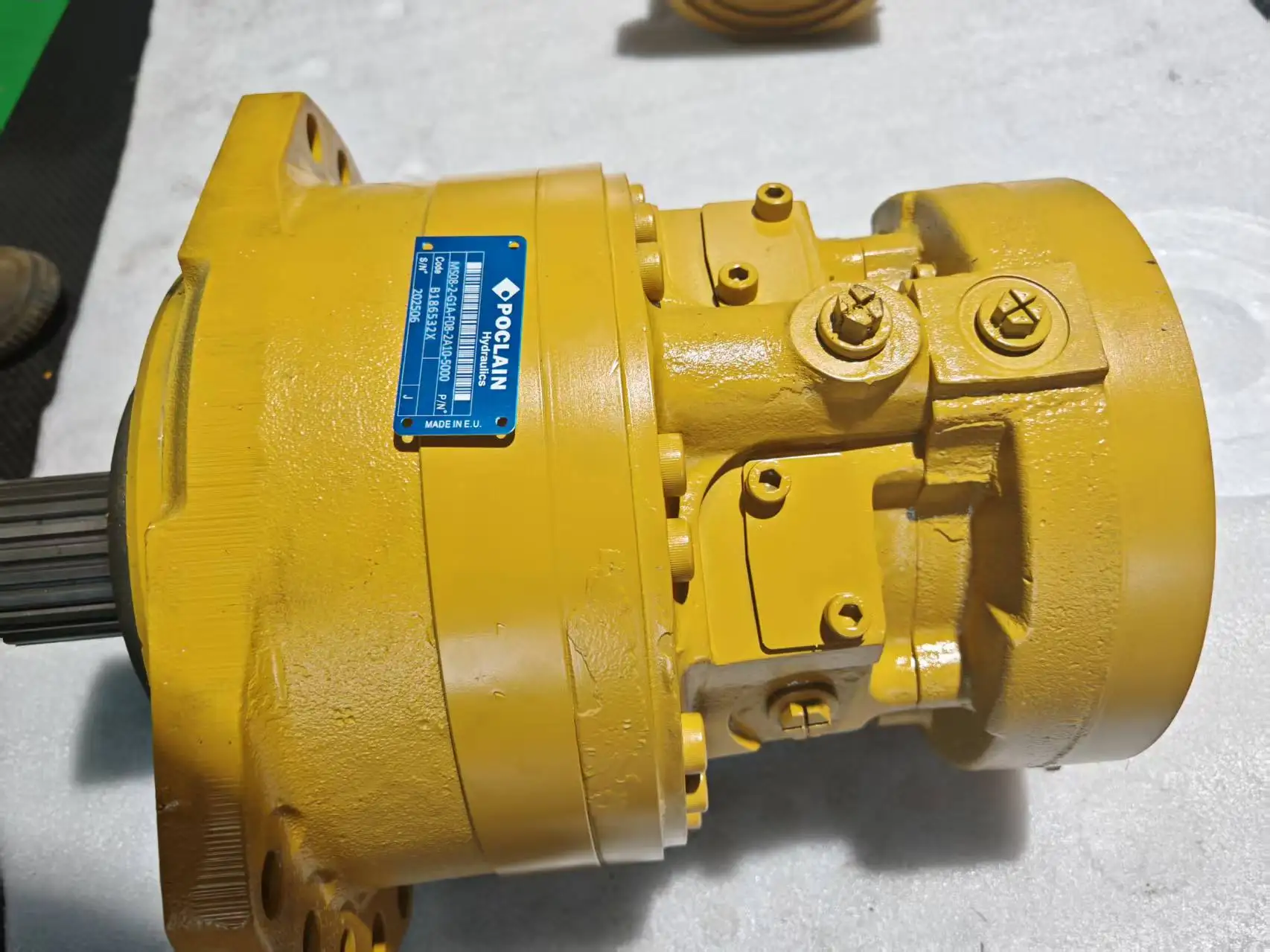
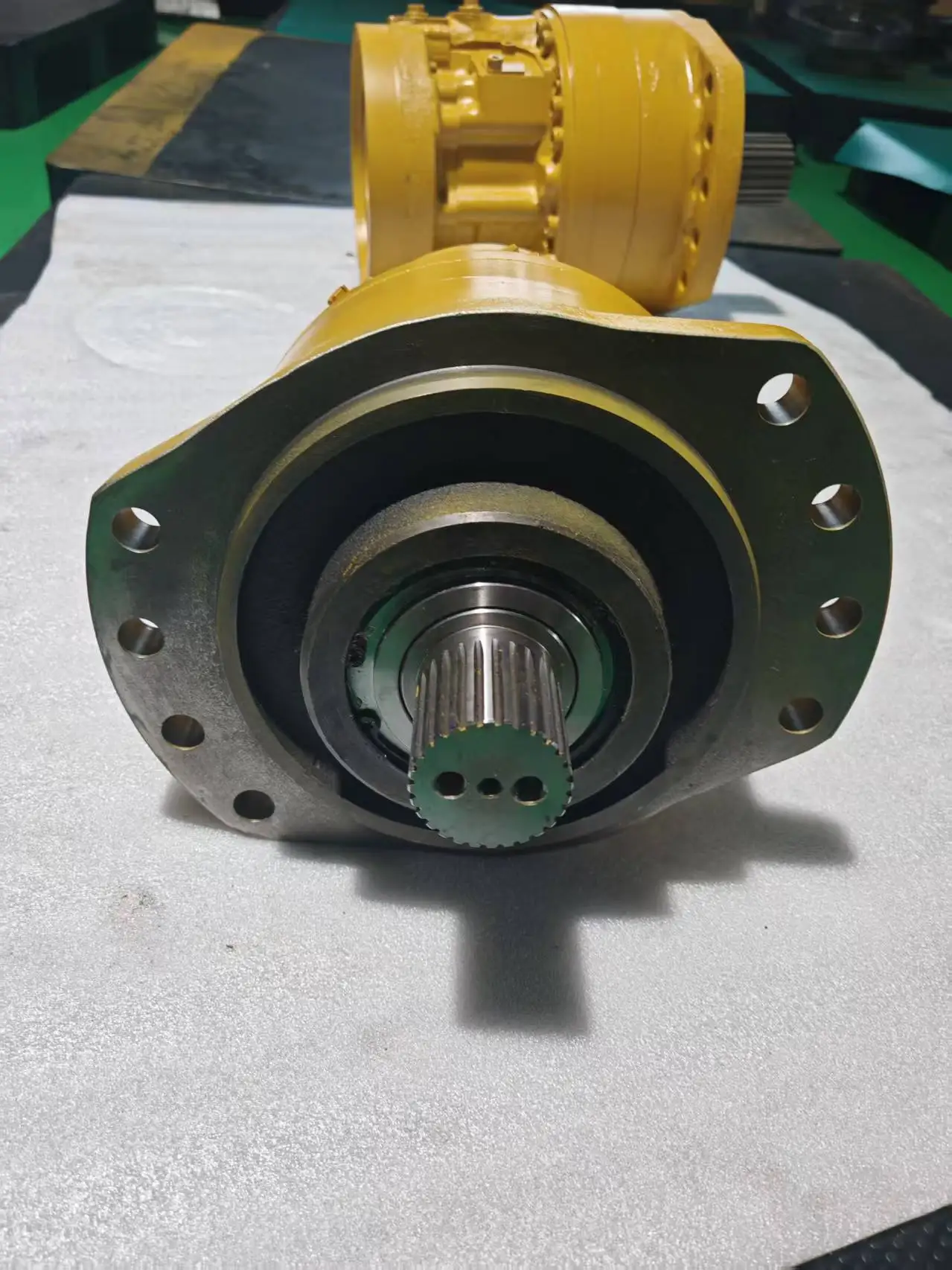
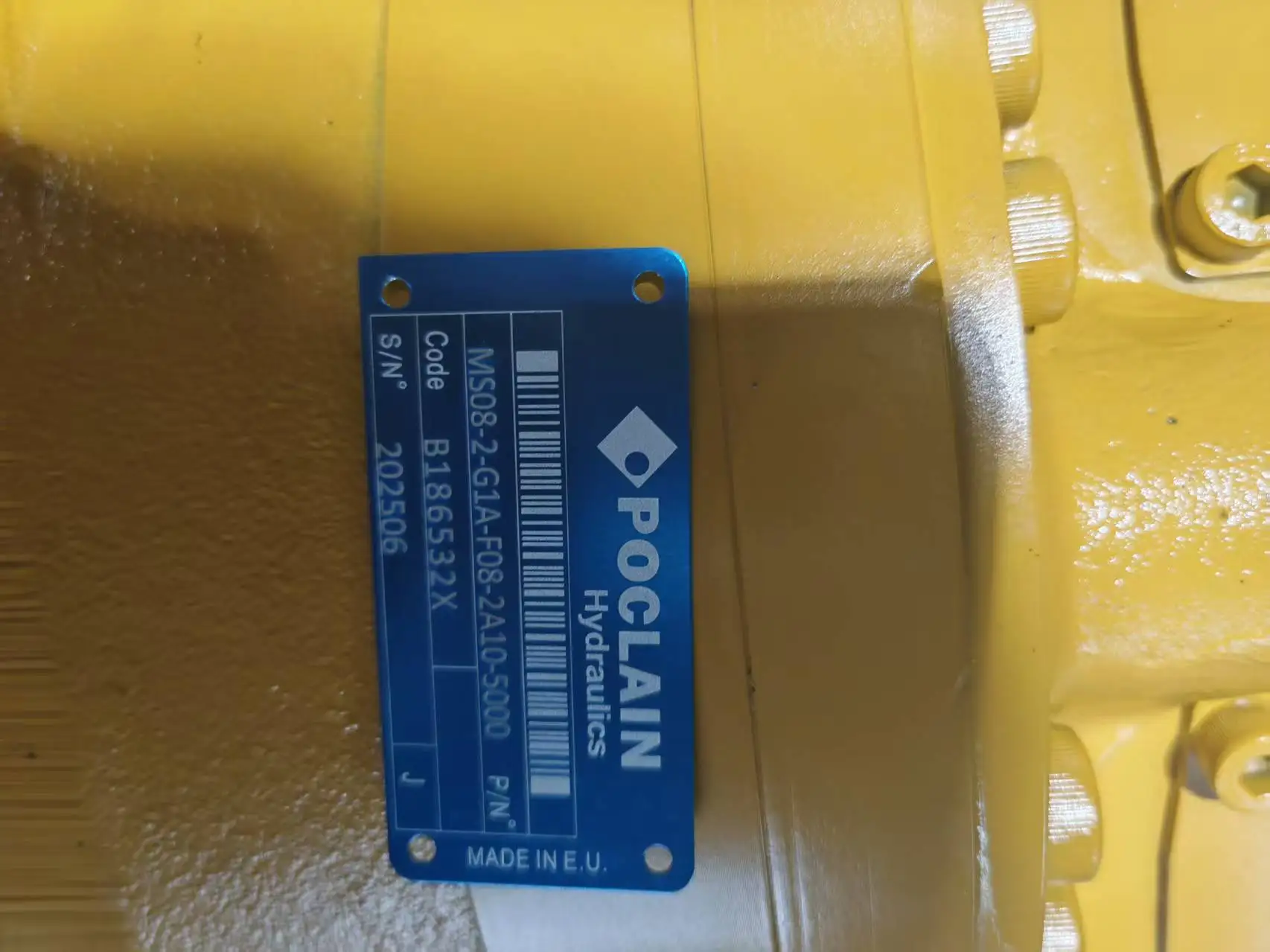
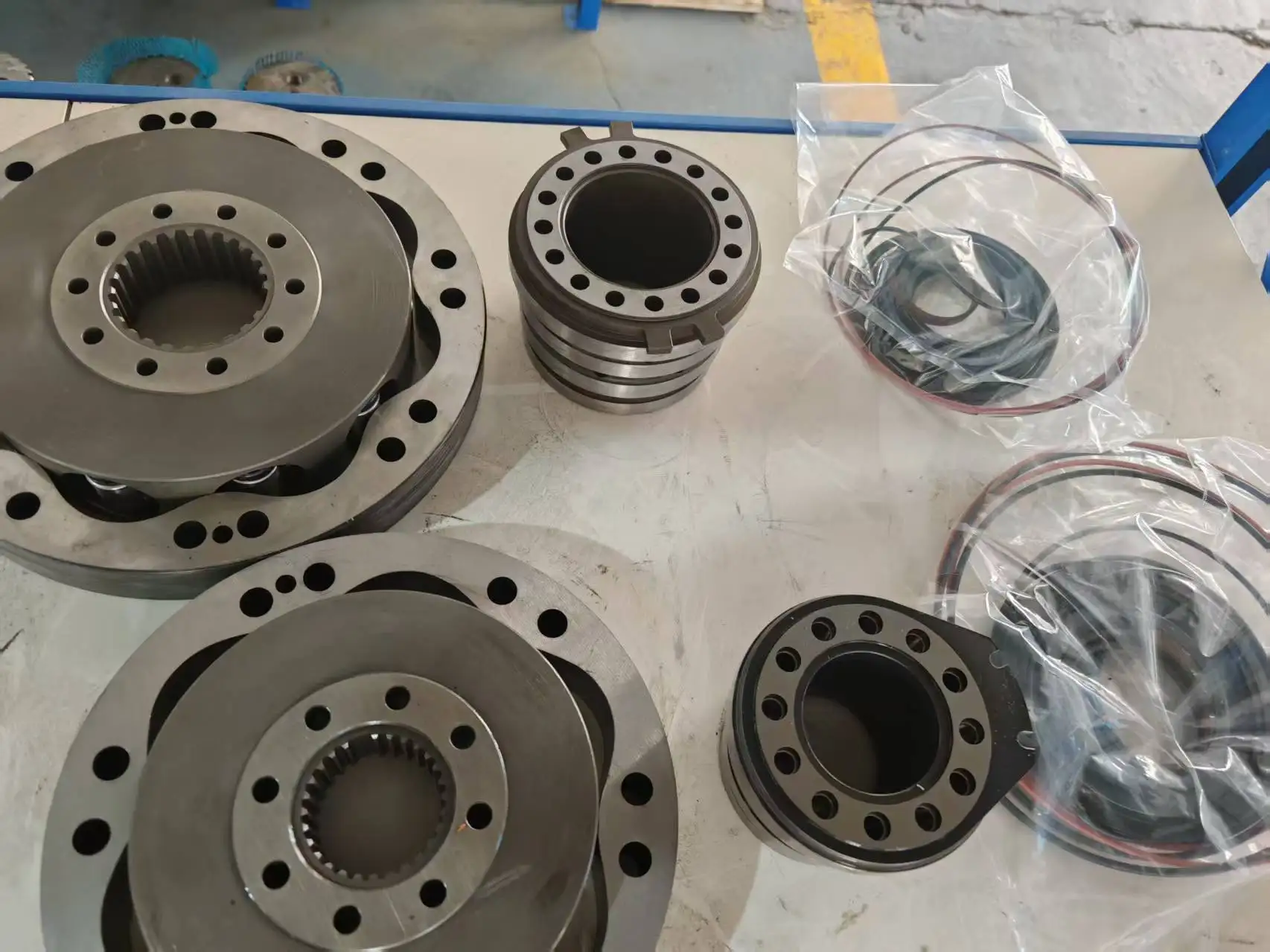
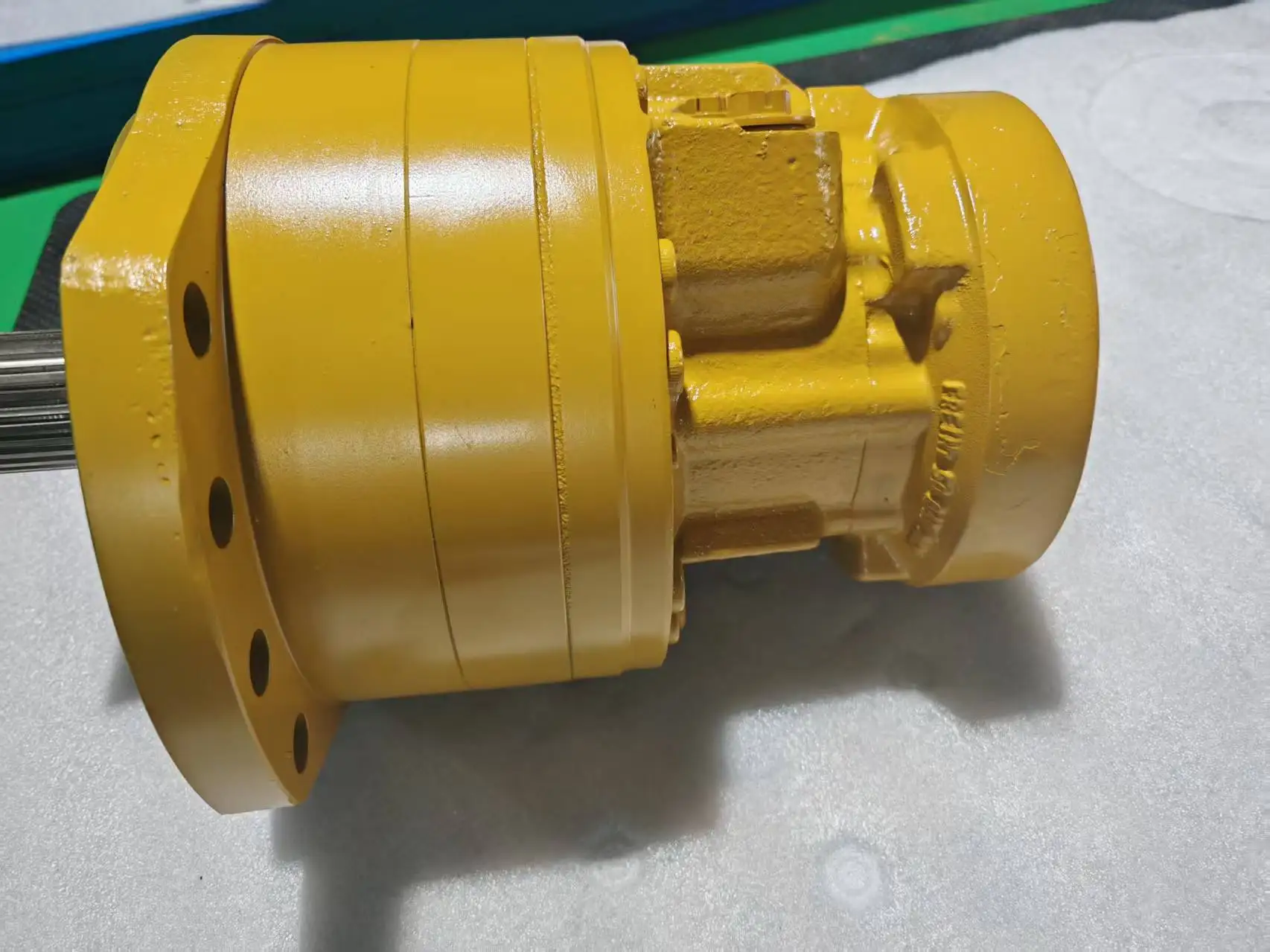
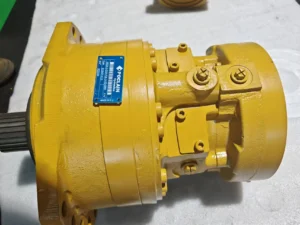
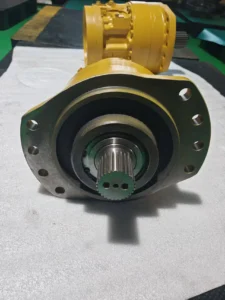
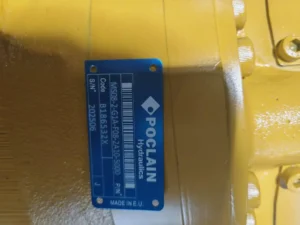
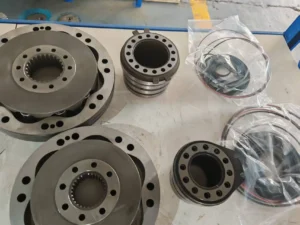
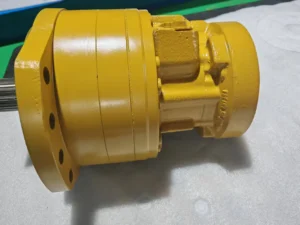
MS08-2-G1A-F08-2A10-5000 Drive Shaft Engine Customizable Low Speed High Torque Radial Piston Motor MS MSE 02 05 08 11 25 35 50
Core performance parameters
– Motor type: Cycloidal hydraulic motor, fixed displacement structure, suitable for medium and low pressure hydraulic systems, supports independent drive of a single motor or multi-motor linkage, and can achieve forward and reverse rotation.
– Pressure rating: Rated working pressure 16 MPa, continuous operating pressure ≤16 MPa; The instantaneous peak pressure is 20 MPa (lasting for ≤3 seconds). The back pressure at the return oil port is allowed to be ≤1.5 MPa. In case of overpressure, a relief valve should be configured for protection.
– Displacement and rotational speed: Rated displacement 8 mL/r (corresponding to model “08” marking); Rated speed: 1500 r/min, maximum speed: 1800 r/min (short-term continuous ≤1 minute); The speed adaptation range is 300-1600 r/min, and the output torque is linearly matched with the input pressure (the rated torque is 12 N·m at 16 MPa).
– Efficiency and power: Under rated working conditions, the volumetric efficiency is ≥90%, and the total efficiency is ≥85%. The output power is ≤1.9 kW at 1500 r/min, and it is compatible with a system flow rate of approximately 12 L/min.
2. Structure and connection parameters
– Structural type: Horizontal installation, cycloidal rotor-stator meshing structure, integrated check valve and overload relief valve, pressure lubrication method adopted, output shaft connected by spline.
– Core material: The rotor/stator is made of 40Cr alloy steel (quenched, surface hardness HRC55-60); The output shaft is made of 42CrMo alloy steel (quenched and tempered). The seal is made of oil-resistant nitrile rubber composite material (with a temperature resistance range of -20℃ to 100℃).
– Connection specifications: The diameter of the oil inlet (P port) is Φ 15mm, and the diameter of the oil return port (T port) is Φ 12mm. Both are metric threads (M18×1.5/M14×1.5). The flange installation is compatible with the ISO 7005-1 light standard. The output shaft spline specification is 10×3, and the motor weight is ≤5 kg.
3. Medium and Environmental requirements
– Medium requirements: It is recommended to use L-HM 46 anti-wear hydraulic oil. For low-temperature environments (below -20℃), L-HV 46 anti-wear hydraulic oil should be selected. The kinematic viscosity of the oil is 15-400 mm²/s, and the moisture content is ≤0.1%.
– Cleanliness standard: The oil cleanliness should reach ISO 4406 18/15 grade. It is recommended that the system be equipped with a 10 μm fine filter and an 80 μm coarse filter in front of the oil inlet.
– Environmental parameters: Operating environment temperature -20℃ to 80℃, relative humidity ≤95%; With a protection grade of IP65, it is suitable for dusty and slightly oily working conditions of small construction machinery, agricultural machinery and industrial equipment.Ii. Working Principle
This motor is a cycloidal fixed-displacement hydraulic motor. Its core converts hydraulic energy into mechanical energy through the mechanism of “high-pressure oil driving rotor meshing motion → mechanical energy output → overload overflow protection”. The specific process is as follows:
1. Power output process
High-pressure hydraulic oil enters the inner cavity of the motor housing through the oil inlet and acts on the tooth surface of the cycloidal rotor. Due to the eccentricity existing in the meshing of the rotor and stator teeth, the high-pressure oil drives the rotor to rotate around the center of the stator while also driving the rotor itself to rotate. The self-rotation motion of the rotor is transmitted to the load through the spline output shaft, achieving continuous torque output. The low-pressure oil that has completed work is collected through the oil discharge channel between the stator teeth and then discharged from the return oil port, forming a stable working cycle.
2. Direction switching and safety protection
– Forward and reverse rotation control: By switching the oil flow direction between the oil inlet and the oil return port through an external reversing valve, the self-rotation direction of the rotor can be changed, enabling the forward and reverse rotation of the motor output shaft. The switching response time is ≤0.5 seconds.
– Safety protection: Built-in overload relief valve. When the system pressure exceeds the peak pressure of 20 MPa, the relief valve will automatically open to unload and reduce the pressure to a safe range. The integrated check valve can prevent the backflow of oil during shutdown from causing the rotor to reverse, ensuring stable load positioning.
Iii. Product Features and Advantages
– Compact, lightweight and highly adaptable: With a small size (approximately 100×80× 70mm in length × width × height) and a weight of no more than 5kg, it can be integrated into equipment with limited installation space, such as the rotating mechanism of small excavators and the actuating components of agricultural machinery, meeting the requirements of lightweight drive.
– Stable low-speed high-torque output: It can maintain a stable torque output at a low speed of 300 r/min without any “crawling” phenomenon. Under a pressure of 16 MPa, the rated torque reaches 12 N·m, which can directly drive small loads without the need for additional reduction mechanisms, simplifying system design.
– Excellent impact resistance and vibration resistance: The rotor and stator adopt high-hardness meshing tooth surfaces, with precise fit clearances (0.02- 0.05mm), capable of withstanding short-term load impacts (peak torque 15 N·m). The integral cast steel shell has strong anti-vibration ability and is suitable for the bumpy working conditions of construction machinery.
– Easy maintenance and long service life: The sealing parts adopt a modular design, and can be replaced by disassembling the end cover. The core meshing pair is precisely processed, and its fault-free operating life under rated conditions reaches 8,000 hours, which is 15% longer than that of ordinary small motors.
– Smooth forward and reverse rotation: With no dead points for reversing, the torque fluctuation during forward and reverse rotation is ≤±5%, making it suitable for scenarios that require frequent reversing, such as the forward and reverse operation of conveying equipment and the rotary actions of small mechanical hands.
Iv. Usage Functions and Purposes
1. Core usage functions
– Medium and low pressure torque drive: It outputs a stable torque of 12 N·m at 16 MPa pressure, providing power for small actuators such as small valve switches and material push devices, and is suitable for medium and low load drive scenarios.
– Precise operation in both forward and reverse directions: With rapid reversing and stable torque, it can achieve uniform movement of the load in both forward and reverse directions, such as the start and stop reversing of small conveyor belts and the switching of seeders in agricultural machinery.
– Automatic overload protection: The built-in relief valve automatically responds to overpressure conditions, preventing the motor housing and meshing pair from being damaged due to overload and reducing the risk of equipment failure.
– Multi-motor Linkage: Supports parallel operation of 2 to 4 motors, achieving torque superposition through flow distribution valves. It is suitable for small multi-actuator drive scenarios, such as dual-wheel drive of small loaders.
2. Main application fields
– Small construction machinery: Rotating mechanism of 0.5-1 ton micro excavators, drive wheels of small loaders, vibration mechanism of hand-guided rollers.
– Agricultural machinery: Small harvester header drive, seeder seed arrangement mechanism, orchard pruner rotating cutter head.
– Industrial and civil equipment: Small conveying equipment drive rollers, garbage compression box push plate mechanisms, small valve actuators.
V. Applicable Machines and Scenarios
1. Adapt to the core machine
– Construction machinery: 0.5-1 ton micro crawler excavators, small wheel loaders, hand-guided vibratory rollers.
– Agricultural machinery: Small self-propelled harvesters, semi-automatic seeders, small orchard pruners.
– Industrial equipment: Light belt conveyors, small garbage compression equipment, small valve actuators for pipelines.
2. Typical application scenarios
– Micro excavator rotation scenario: As a 0.8-ton micro excavator rotation motor, it inputs 16 MPa pressure oil and outputs 12 N·m torque to drive the rotation platform. The rotational speed is adjusted to 5-10 r/min to achieve smooth rotation, making it suitable for operations in narrow Spaces such as orchard ditching and courtyard renovation.
– Harvester header drive scenario: It provides power for the small wheat harvester header, with a torque of 12 N·m driving the rotating cutter head of the header at a speed of 150-200 r/min to ensure smooth cutting. The dust-resistant structure is suitable for field operation environments.
– Conveyor belt drive scenario: Drive the drive roller of the light belt conveyor, output 8-10 N·m torque at a pressure of 10-12 MPa, and achieve uniform material transportation at a speed of 300-500 r/min. The forward and reverse rotation function is suitable for material loading and unloading switching, and is suitable for workshop assembly lines and warehouse sorting scenarios.
Six. Similar models
1. Alternative models of the same series
-MS06-2-G1A-F08-2A10-5000: Small displacement model of the same structure, rated displacement 6 mL/r, torque 9 N·m at 16 MPa pressure, installation dimensions consistent with the original model, suitable for micro valves and small mechanical hands, cost 15% lower than the original model.
-MS10-2-G1A-F08-2A10-5000: A large-displacement model of the same series, with a rated displacement of 10 mL/r and a torque of 15 N·m under 16 MPa pressure. The structural materials are the same, suitable for 1-1.5 ton excavators and medium-sized harvesters. The cost is 20% higher than that of the original model.
2. Cross-series alternative models
-MS08-H-2-G1A-F08-2A10-5000: High-pressure upgraded model, rated pressure 20 MPa, displacement 8 mL/r, ceramic coating on the meshing pair surface, wear resistance improved by 40%, suitable for small mining breakers and heavy agricultural machinery, cost 35% higher than the original model.
-MS08-S-2-G1A-F08-2A10-5000: A simplified model without an internal relief valve, with a displacement of 8 mL/r and a rated pressure of 16 MPa. It features a more compact structure and is suitable for stable load scenarios (such as fixed-speed conveyor belts). The cost is 25% lower than that of the original model.
-MS08/08-D-2-G1A-F08-2A10-5000: Dual-motor model, total displacement 16 mL/r, rated pressure 16 MPa, output torque 24 N·m, suitable for dual-drive wheel equipment (such as small two-wheel loaders), cost 55% higher than the original model.
Vii. Precautions for Use
1. Oil management
– Only L-HM 46 or L-HV 46 anti-wear hydraulic oil must be selected. It is strictly prohibited to mix oils of different grades. Change the oil of the new motor after its first 200 hours of operation. Subsequently, change the oil every 1,000 hours. Before changing the oil, clean the oil tank and filter.
Check the oil level and cleanliness every week. Replace the filter element immediately when the pressure difference of the fine filter exceeds 0.4 MPa. When emulsification, discoloration or presence of metal debris in the oil is detected, the system should be thoroughly cleaned and the oil changed to prevent abnormal wear of the meshing pairs.
2. Installation and commissioning
When installing, the coaxiality error between the output shaft and the load shaft should be no more than 0.15mm (for rigid connection) or no more than 0.2mm (for elastic connection), the flatness of the flange surface should be no more than 0.05mm /m, and the connecting bolts should be evenly tightened with a torque of 150 N·m to avoid eccentricity causing the bearing to overheat.
Before the first start, fill the oil inlet with hydraulic oil and manually turn the wheel 4 to 5 times to ensure smooth operation. After startup, run it no-load for 10 minutes (at a speed of 1000 r/min). When the oil temperature rises above 30℃, gradually load it. The pressure increase rate should be no more than 0.3 MPa/ min.
During debugging, test the smoothness of the forward and reverse rotation switching. There should be no obvious impact during the switching. Calibrate the relief valve to ensure precise unloading when the pressure reaches 20 MPa and avoid overpressure operation.
3. Operation and Maintenance
During operation, monitor the temperature of the motor housing (normal ≤75℃, maximum ≤80℃), inlet and outlet pressures, and vibration values (≤ 4.0mm /s). If a sudden temperature rise of ≥8℃, pressure fluctuation > 0.8MPa, or abnormal noise is detected, immediately stop the machine to investigate issues such as oil contamination and wear of the meshing pair.
– Regular maintenance every 2000 hours: Replace seals and filter elements; Check the rotor-stator meshing clearance (replacement is required if the clearance is greater than 0.1mm) and the spline wear of the output shaft (replacement is required if the clearance is greater than 0.06mm). Disassemble and check the shell’s sealing performance every 6,000 hours. Replace the components if necessary.
Before starting after long-term parking, remove the end cover to check if the sealing parts are aged and apply grease to the meshing surface. Before starting at low temperatures (< -10℃), heat the oil to above 8℃ to prevent cold start wear.
4. Storage protection
When stored for a long time, seal the oil port with a metal plug, inject anti-rust oil (80% of the shell volume), apply anti-rust grease to the splines of the output shaft, and wrap it with a waterproof and dustproof cover. Store in a dry and well-ventilated place (0-40℃, humidity ≤60%). Manually turn the wheel twice a month to prevent adhesion and rust.
Before putting the motor into use after being idle for more than 8 months, clean the interior of the motor and replace the seals. Test the rotational flexibility by passing low-pressure oil (1-2 MPa), and load in stages until the rated pressure is confirmed to be normal before putting it into use.
MSE02-2-123-A02-1120-J000、
MS02-1-123-R02-1110-Y2J0
MS05-6-133-F05-1120-JOOO、
MS05-0-113-F05-1K28-EJ00、
MS05-0-113-F05-1K29-EJ00
MS05-0-D24-F05-1620-EM00、
MS05-0-G24-F05-1620-EM00、
MS05-0-D24-F05-1620-EM00
MS05-0-G24-F05-1620-EM00、
MS05-0-D24-R05-1620-EM00、
MS05-0-G24-R05-1620-EM00
MS05-1-113-R05-2A50-E000、
MSE05-2-113-R05-2A50-CKOO、
MSE05-2-113-R05-2A50-EJ00
MS05-0-DE4-F05-1220-8000、
MS08-1-G21-F09-1120-0000、
MS08-1-D21-F09-1120-0000
MS08-0-111-A08-2A50-67M0、
MS08-2-111-F09-2A50-1E00、
MS08-2-D25-F08-1720-2EJ0
MS08-2-G25-F08-1720-2EJ0、
MS08-2-D25-R08-1720-2EJ0、
MS08-2-G25-R08-1720-2EJ0
MSE08-0-111-A08-2A50-EJ00、
MSE08-2-111-A08-2A50-EJ00、
MSE08-2-121-R08-1120-BCJQ
MS08-2-125-R08-1120-EJ00、
MSE11-0-121-R11-1121-59EJ、
MSE11-2-D21-F12-1130-JOOO
MS11-0-111-2A50-C000、
MS11-2-111-R83-2A50-0000、
MS11-2-127-R11-1212-5EJ0
MS18-2-A24-F19-1410-5000、
MS18-2-G11-G12-1410-0000、
MS18-A-C21-R18-7221-257M
MS18-0-111-A18-2A50-7000、
MS18-1-D21-F19-1120-0000、
MS18-1-G21-F19-1120-0000
MS25-2-D21-F42-1220-0000、
MS35-2-111-A35-2A50-7H00、
MS50-2-D21-F83-1330-7P00
MS50-0-A21-R50-2A50-7E00、
MS50-2-A21-R50-2A50-7E00、
MS125-0-111-R83-3A50-7E00
MS125-0-111-R83-3A50-7EFJ、
MS125-0-111-R83-2A50-6DL1、
MK04-2-11A-KO4-3340-3000
MK04-0-114-KO4-3340-3000、
MKO4-8-114-KO4-3340-3000、
MKE18-1-121-F19-1340-P000
MK35-9-121-A18-1140-7000