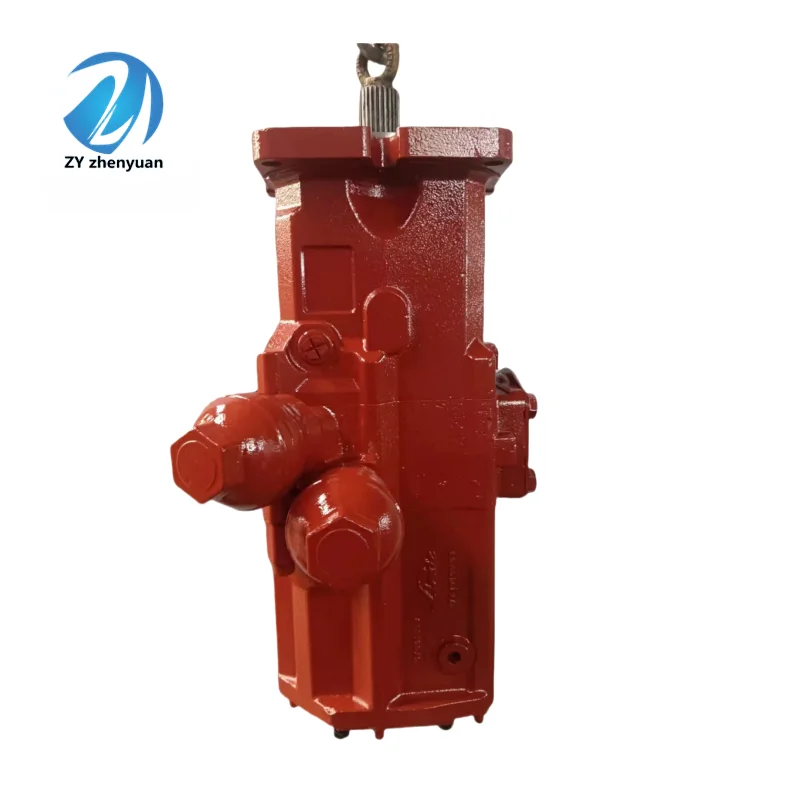
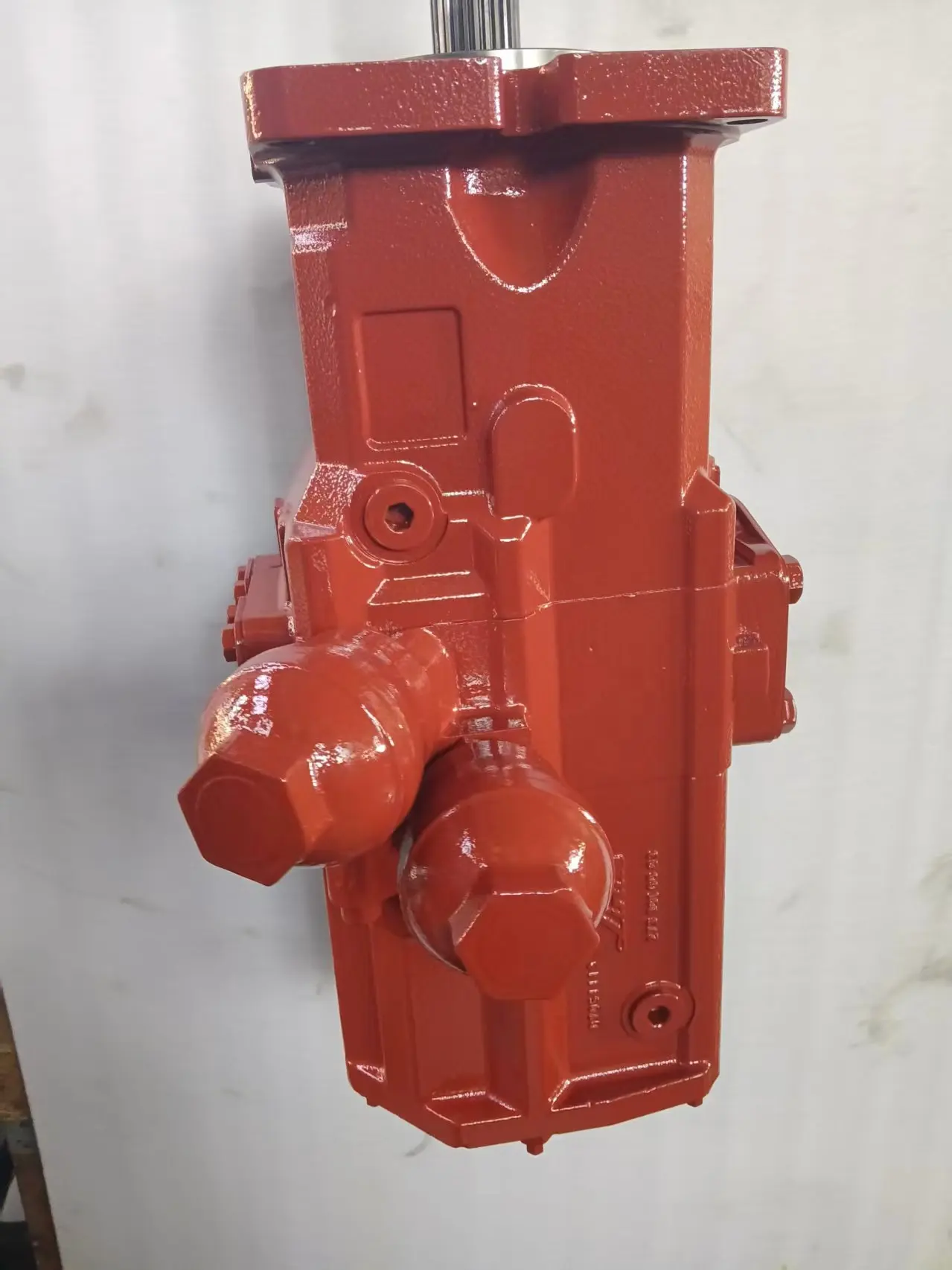
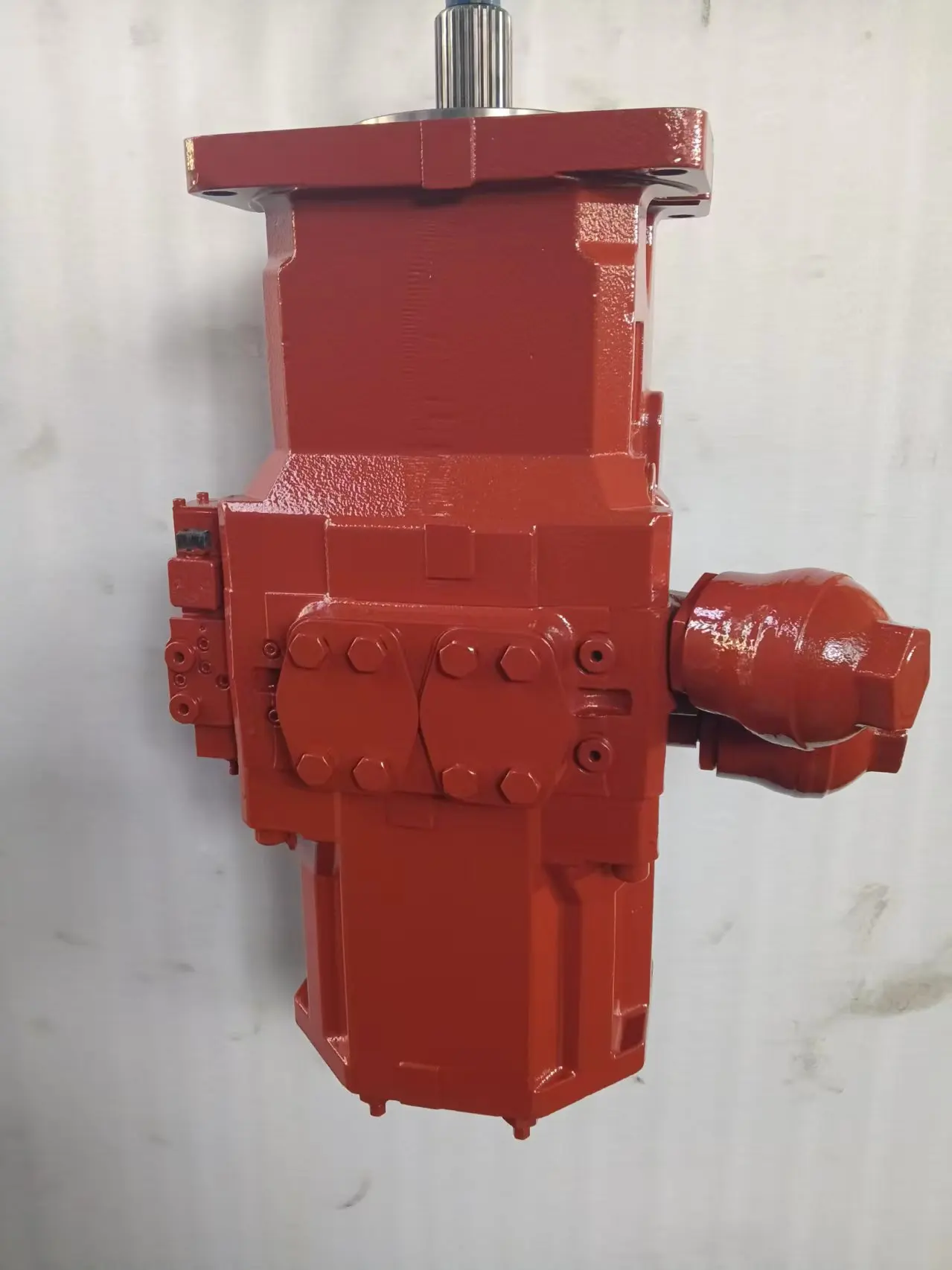
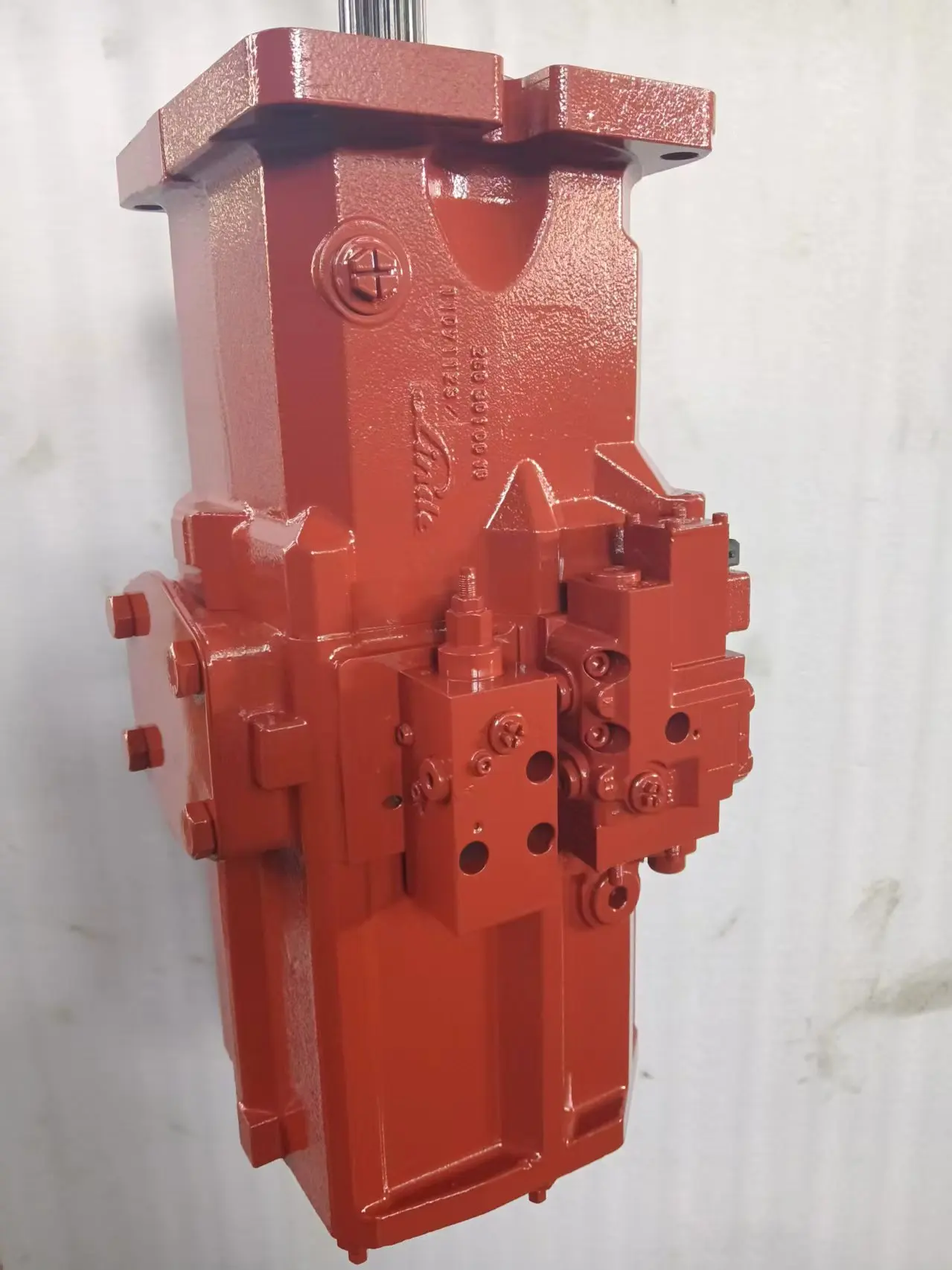
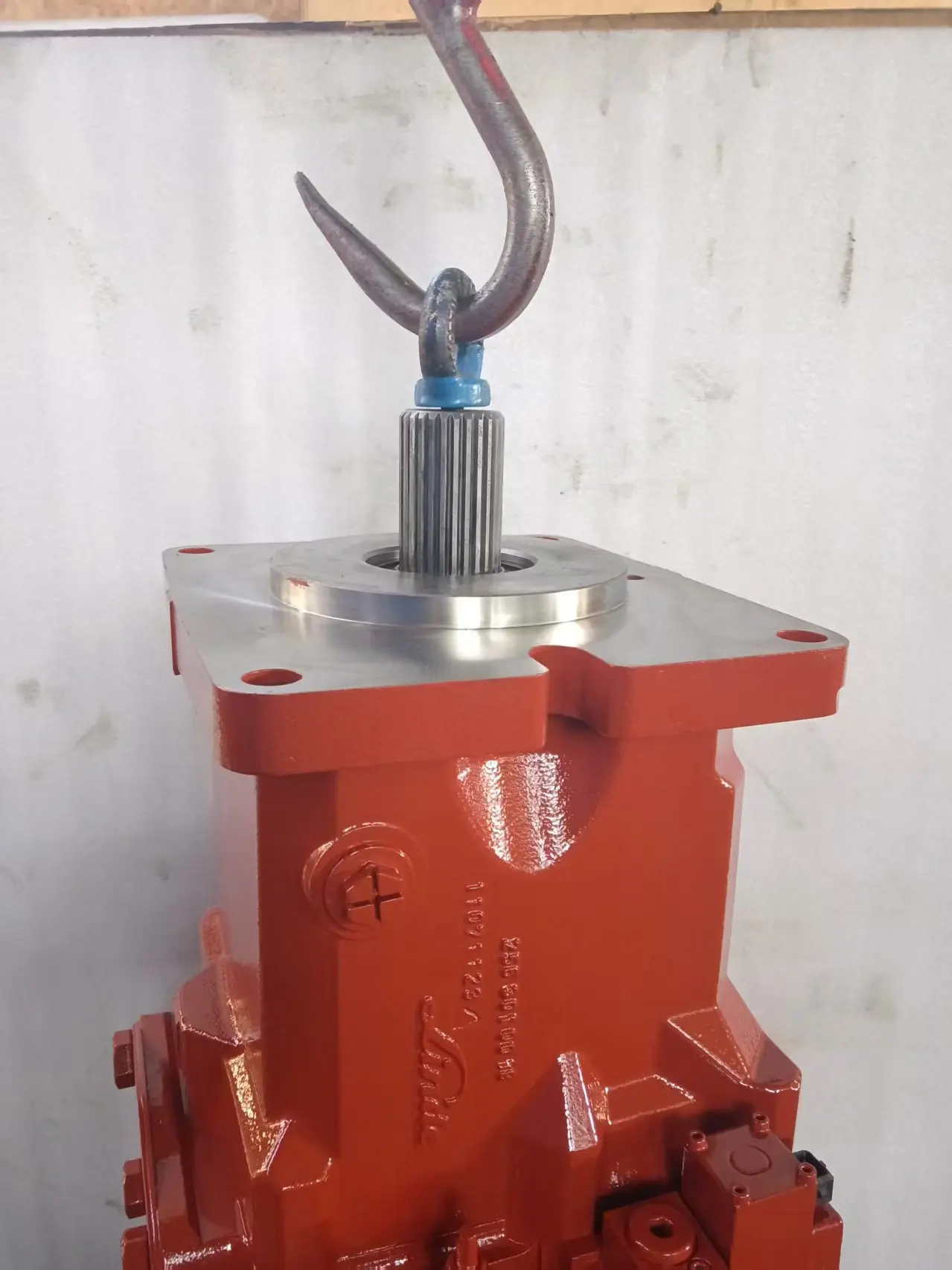
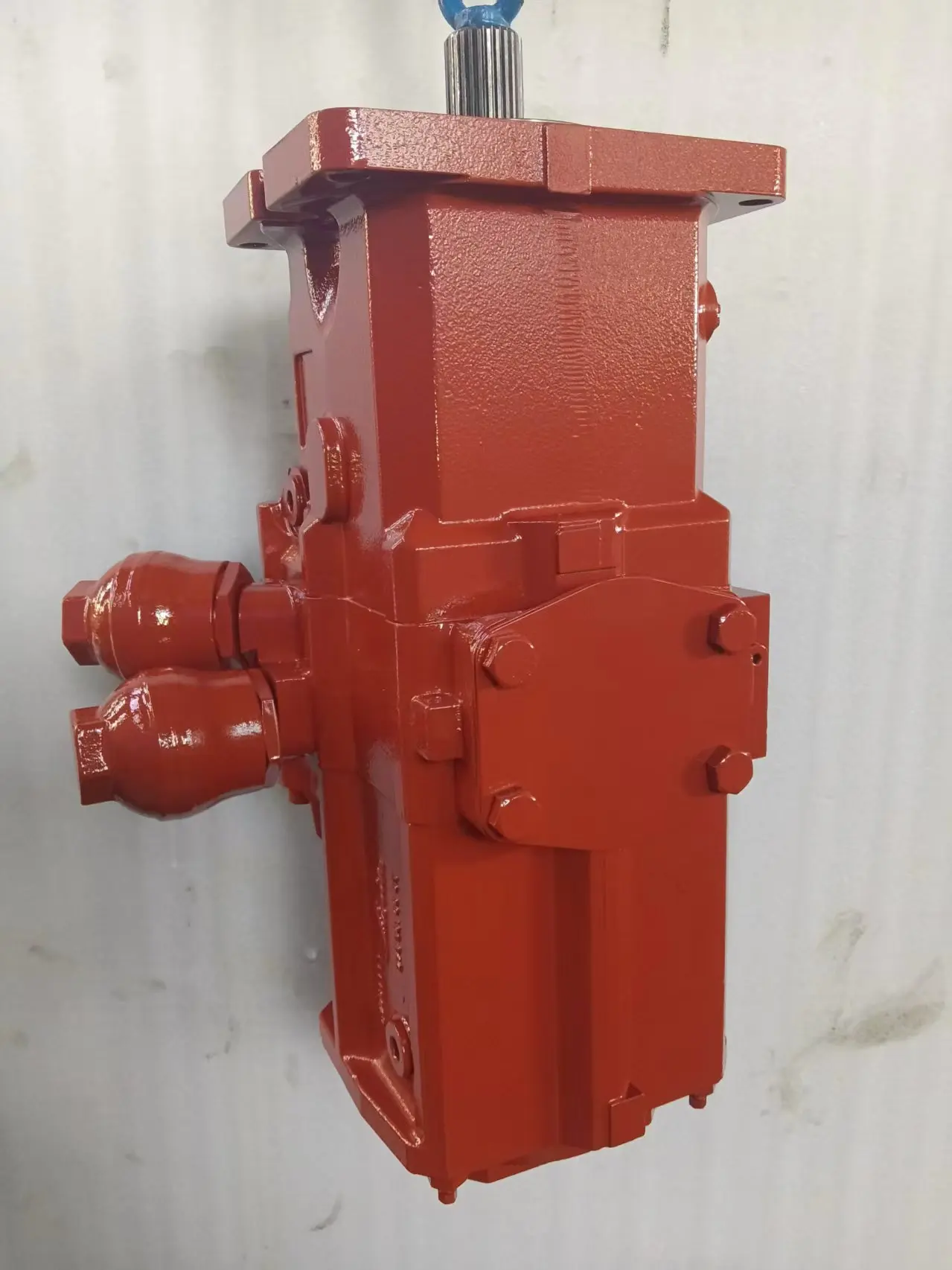

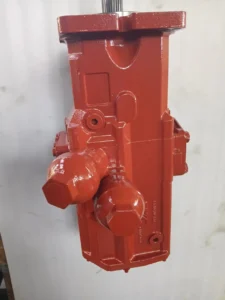
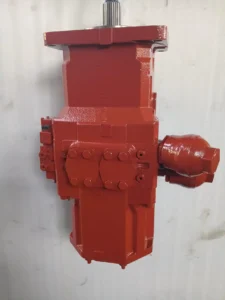
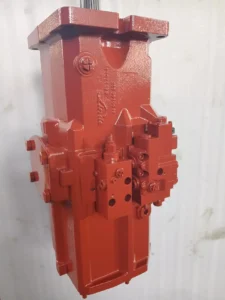
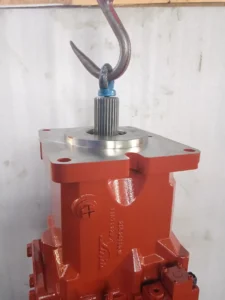
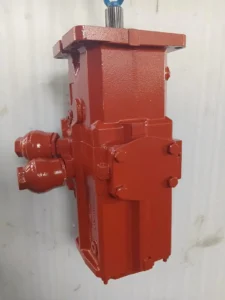
Hydraulic Pump HPR HPV HMF HMV055/075/105/135/165/210/160 Series HPR165D-02R H2X273B00514 High Pressure Piston Pump HPR165D-02R
Basic specifications
Type: Swash plate axial variable piston pump, suitable for open hydraulic systems.
Nominal displacement: 165 cm³/rev (The “165” in the model directly corresponds to the displacement).
Pressure range: Rated pressure 420 bar, peak pressure 500 bar.
Speed range: Maximum speed 2200 rpm, compatible with motor or internal combustion engine drive.
Volumetric efficiency: ≥95% (high-precision axial clearance compensation design).
Noise level: ≤78 dB (A) (at 1500 rpm), optimized by the SPU noise reduction unit.
Oil compatibility
Applicable medium: Mineral hydraulic oil, synthetic hydraulic oil (ISO VG 32/46/68).
Working oil temperature: -20℃ to + 90℃ (recommended range: 40-60℃).
Viscosity range: 10-80 mm²/s, optimal viscosity: 15-30 mm²/s.
Interface and Installation
Oil port connection: SAE high-pressure flange (inlet), SAE threaded interface (outlet), suitable for large flow pipelines.
Installation method: Flange type or foot bracket type. It is necessary to ensure that the coaxiality of the motor and the pump shaft is ≤ 0.05mm.2. Working Principle
Swashplate variable mechanism
Oil suction process: When the Angle between the swash plate and the cylinder block axis increases, the plunger extends outward under the action of centrifugal force, the volume of the sealed cavity increases, and a vacuum is formed to suck in the oil.
Oil discharge process: When the Angle of the swash plate decreases, the plunger is pushed back, the volume of the sealed cavity decreases, and the oil is discharged through the oil distribution plate.
Variable control: The swash plate Angle is adjusted by the servo cylinder to achieve stepless displacement regulation (0-165 cm³/rev), with a response time of ≤10 ms.
Core technology
Load sensing (LS) control: Real-time monitoring of system pressure, automatic adjustment of pump output flow to avoid energy waste.
Shell oil drainage design: By draining oil from the shell, the stability of the oil suction port is enhanced to prevent cavitation.
3. Product features and advantages
Core features
High reliability: It features a high-strength cast iron housing and wear-resistant plungers (with chrome plating on the surface), with a lifespan exceeding 10,000 hours.
Low pulsation output: Flow pulsation ≤±2%, reducing system vibration and noise.
Anti-pollution capacity: It allows the oil cleanliness to reach ISO 16/14/11 (particle count: >4μm ≤250,000 /mL), which is superior to most plunger pumps.
Differentiation advantage
Wide speed range: 650-2200 rpm, compatible with various power sources such as electric motors and internal combustion engines.
LSC synchronous control: In conjunction with Linde multi-way valves, it achieves synchronous actions of multiple actuators, enhancing the accuracy of compound actions.
4. Usage functions and purposes
Core function
High-pressure and high-flow supply: Continuously output high-pressure oil (420 bar) to drive hydraulic actuating elements (hydraulic cylinders, hydraulic motors).
Intelligent flow regulation: Through LS control or electro-hydraulic proportional control, flow is allocated as needed to reduce energy consumption.
Typical application scenarios
Injection molding machine: It provides high-pressure oil required for the injection molding and holding pressure stages to ensure the precision of the products (such as automotive parts).
Metallurgical equipment: The reduction systems of rolling mills and continuous casting machines require stable flow and rapid response.
Construction machinery: Hydraulic systems of excavators and loaders, achieving multi-action compound control.
Marine machinery: Hydraulic drive for deck machinery (such as anchor winches and winches), suitable for harsh Marine environments.
5. Applicable machines and scenarios
Industrial equipment
Hydraulic press: For high-pressure processes such as metal forming and rubber vulcanization, the maximum pressure can reach 500 bar.
Machine tool: The feed system of the combined machine tool requires a flow accuracy within ±1%.
New energy equipment: Hydraulic tension control of lithium battery electrode sheet coating machines to ensure uniform coating.
Mobile machinery
Port machinery: The hoisting and luffing mechanisms of container cranes need to withstand frequent starts and stops as well as impacts.
Agricultural machinery: Drive for the header lifting and threshing device of combine harvesters.
6. Similar models
HPR55D-02R
HPR135D-02R
HPR210D-02R
HPR165D-02R
7. Precautions for Use
Installation and connection
Coaxiality requirement: The coaxiality between the motor and the pump shaft should be ≤ 0.05mm; otherwise, it will cause vibration and bearing damage.
Suction pipeline: Pipe diameter ≥2 “, length ≤ 1.5m, to avoid excessive suction resistance causing cavitation.
Oil drain port: Connect it back to the fuel tank separately and maintain a back pressure of 0.5-1.0 bar to prevent air from entering.
Oil and fluid management
Cleanliness control: Use 10μm filter elements (such as Parker FH06 series), and regularly test the cleanliness of the oil to ensure compliance with ISO 16/14/11.
Viscosity matching: Preheat to above 20℃ when starting at low temperatures. Use high-viscosity oil (ISO VG 68) in high-temperature environments.
Operation monitoring
Pressure monitoring: Install a pressure gauge to monitor the system pressure in real time and avoid overpressure operation (exceeding 500 bar).
Temperature management: Shut down the machine for inspection when the oil temperature exceeds 90℃ to troubleshoot faults in the cooling system.
Maintenance and fault handling
Regular maintenance: Replace the filter element every 500 hours and check the wear of the plunger every 2000 hours (replace if the wear of the chromium plating layer is greater than 0.03mm).
Common faults
Abnormal noise: Check whether the oil suction pipeline is leaking and whether the oil is emulsified.
Insufficient flow: Clean the gap between the oil distribution plate and the swash plate, or replace the worn sealing parts of the servo cylinder.