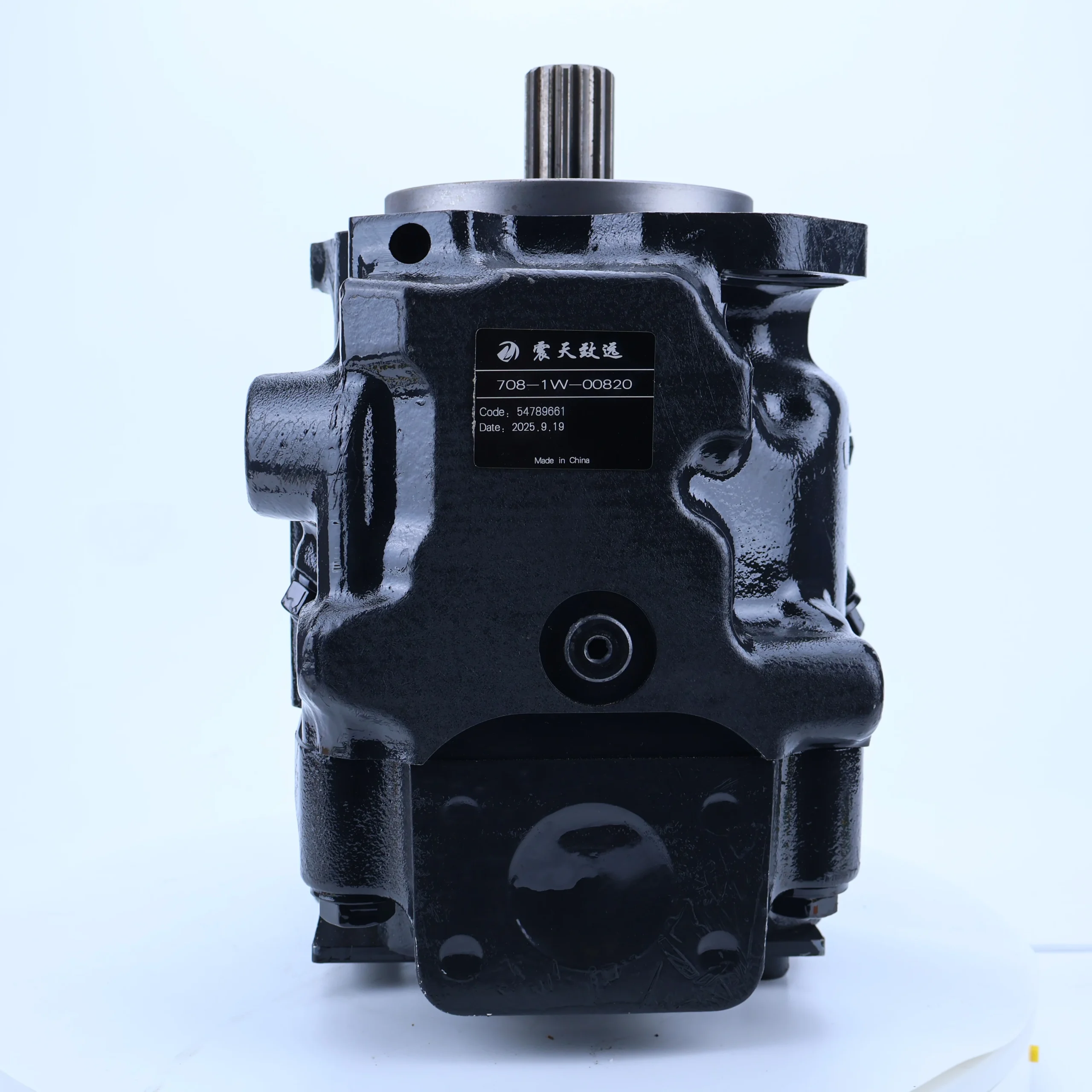
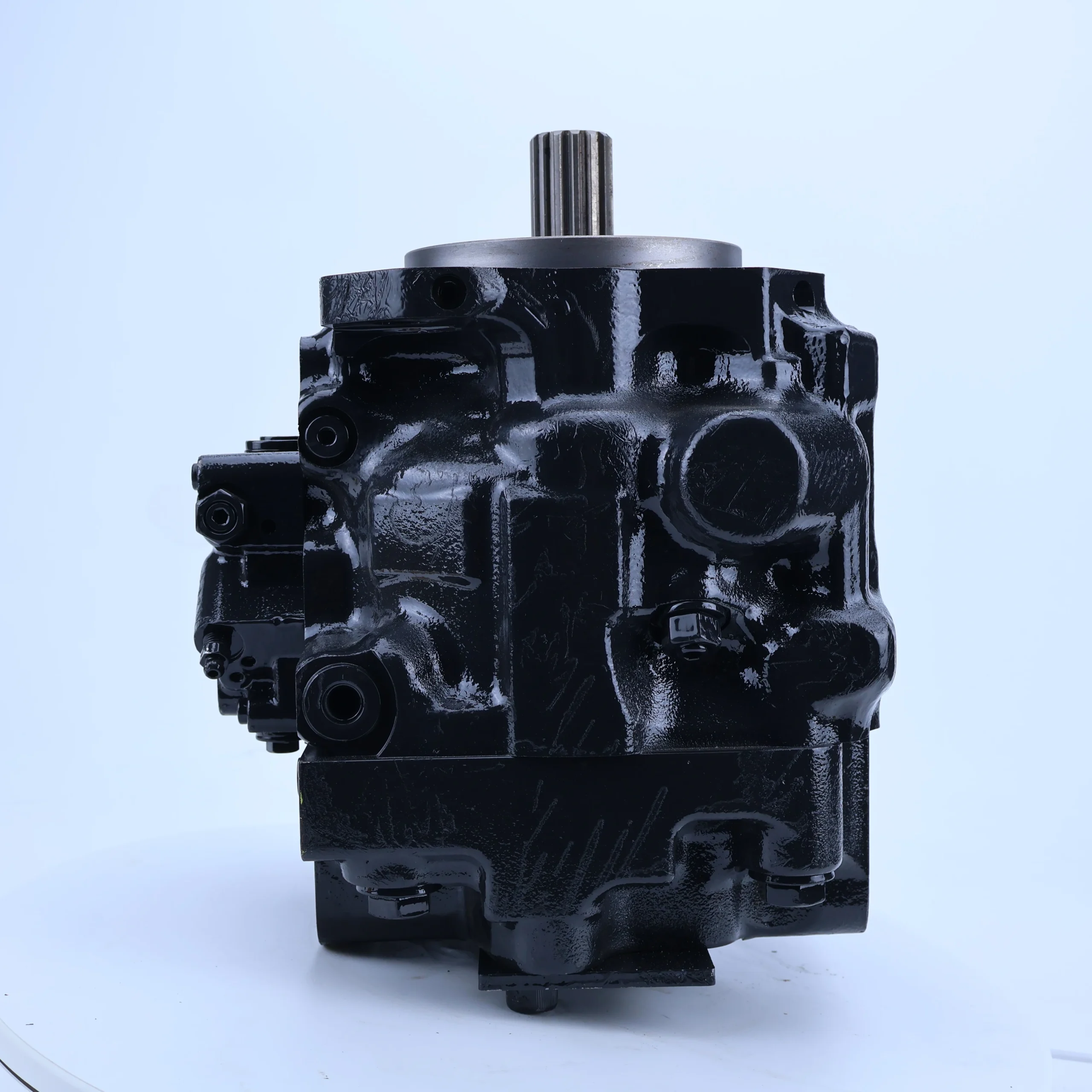
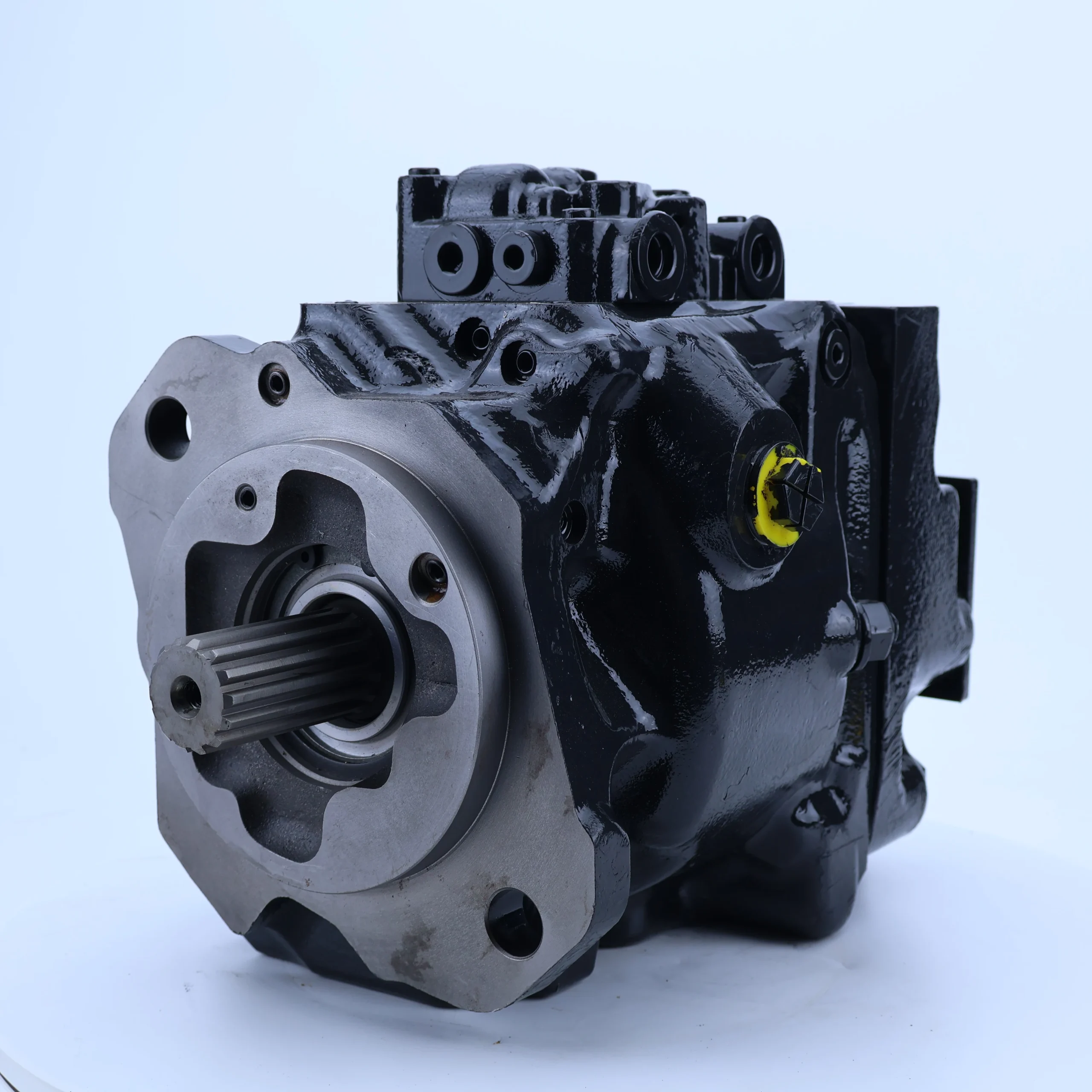
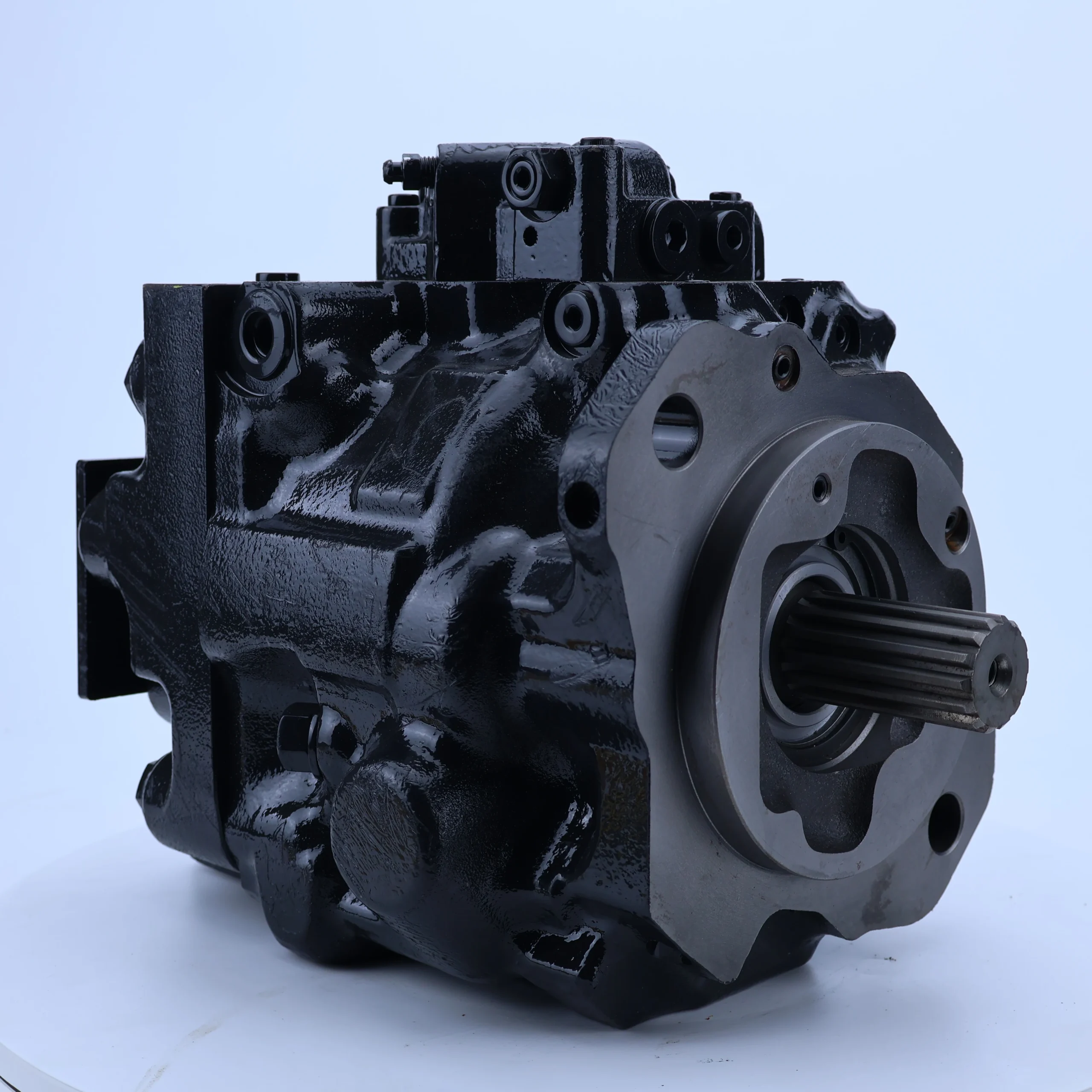
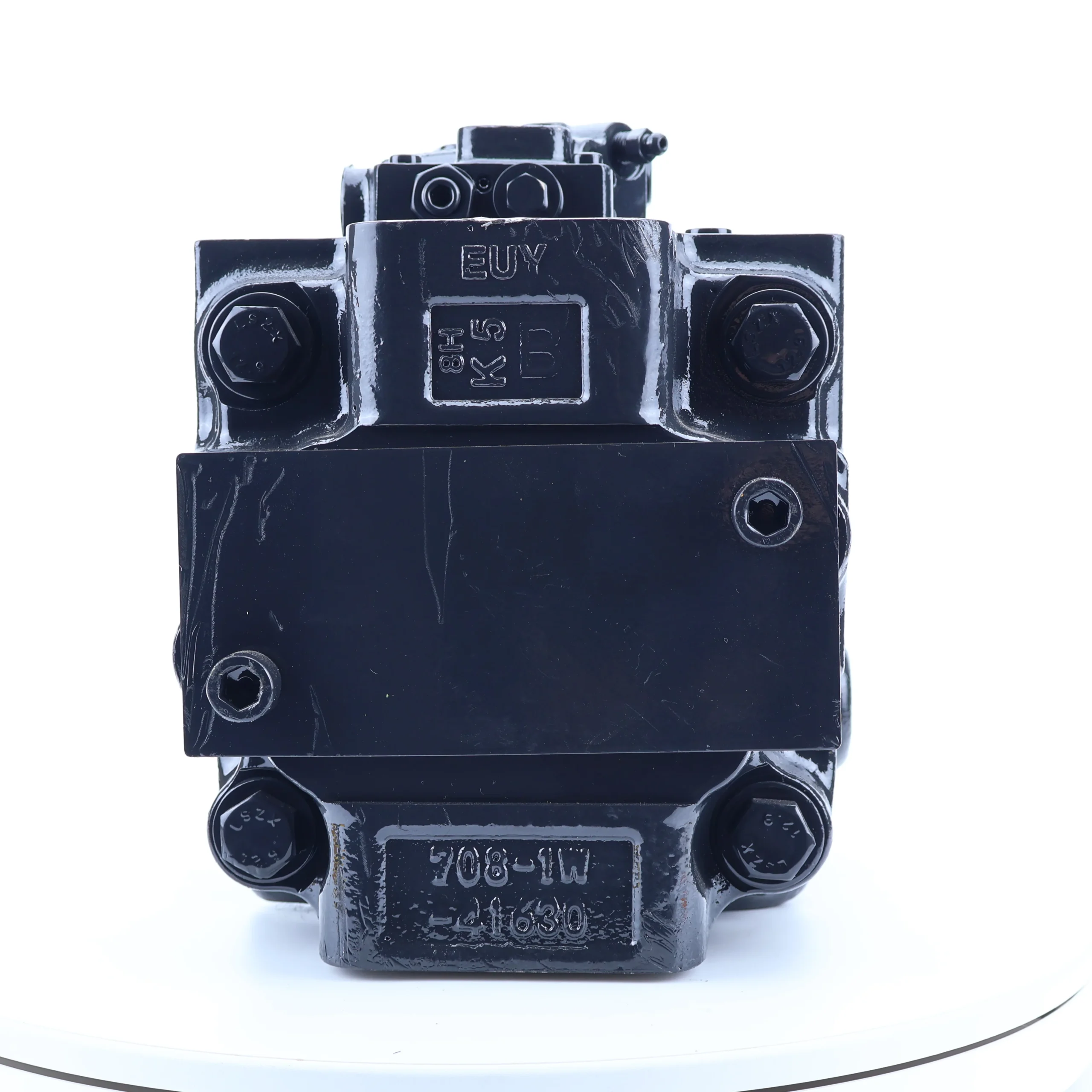
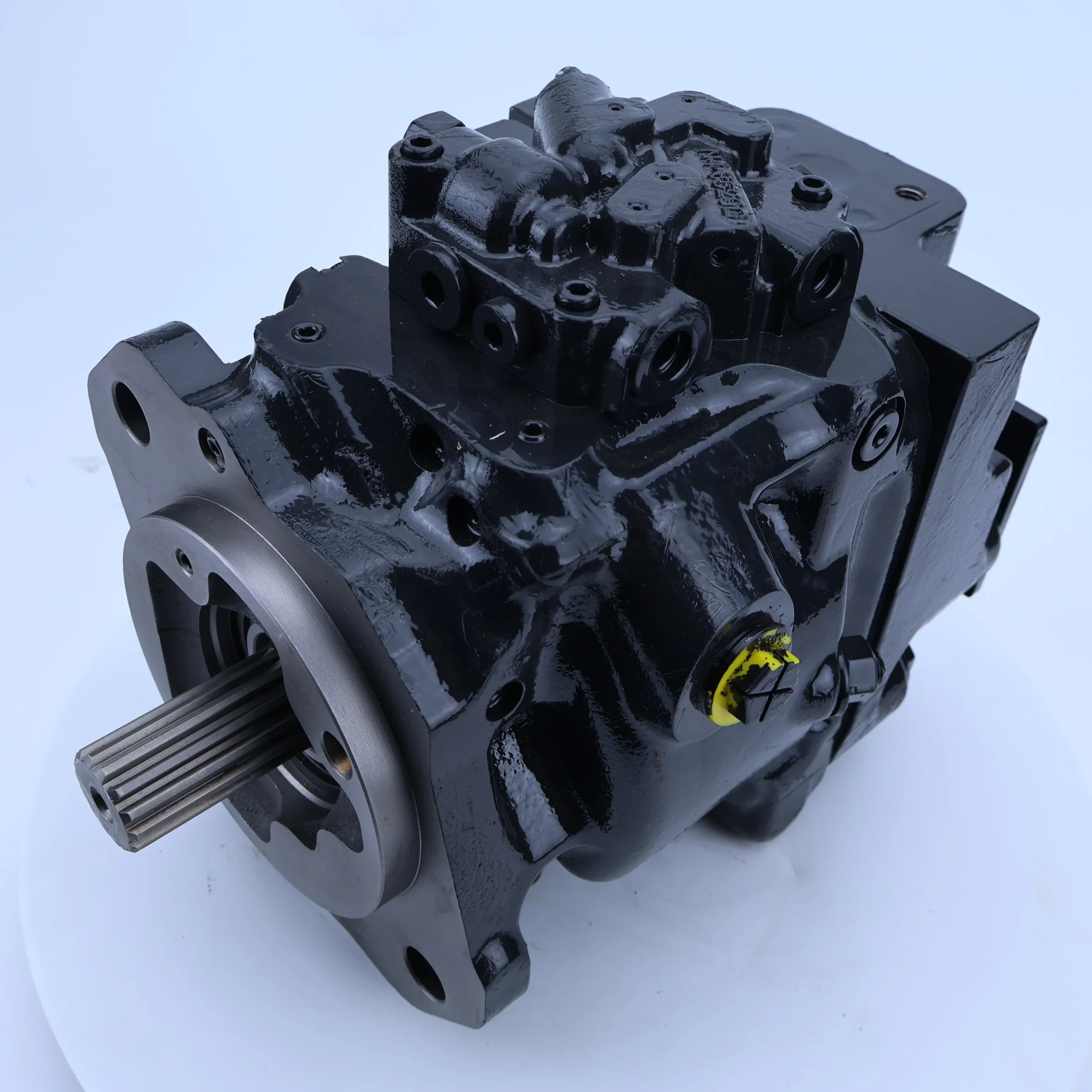
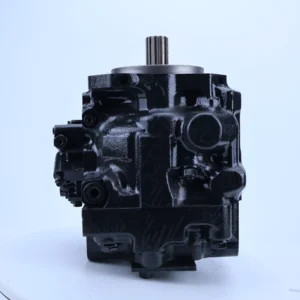
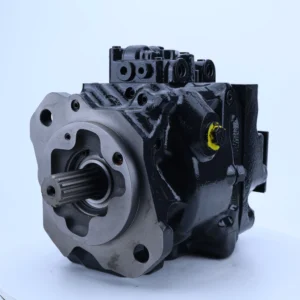
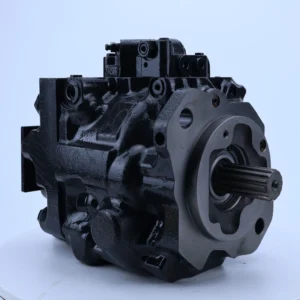

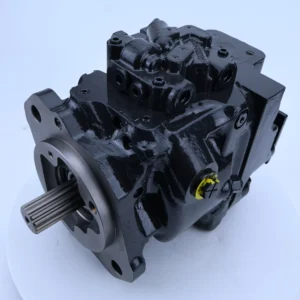
708-1WZ-00820 Excavator Hydraulic Piston Pump 708-2L-31114 708-3D-00020 Construction Machinery Parts PC130-8 PC138
Core performance parameters- Pump type: Swashplate axial piston variable pump, load sensitive + constant power dual control, bidirectional suction and discharge design, suitable for medium and large excavators’ medium and high-pressure hydraulic systems, providing on-demand flow power source for the main actuator.
– Displacement and pressure parameters: Rated displacement 140 mL/r; The rated working pressure is 28 MPa, and the maximum allowable pressure is 31.5 MPa (for short periods ≤10 seconds, such as in the case of hard rock excavation). The rated speed is 1800 r/min, the maximum speed is 2200 r/min (short-term ≤5 minutes), and the minimum stable speed is 500 r/min.
– Efficiency and flow parameters: Rated working condition volumetric efficiency ≥94%, total efficiency ≥88%; At the rated speed, the maximum output flow is 252 L/min, and the minimum regulated flow is ≤8 L/min. The driving power is approximately 120 kW (under rated working conditions).
– Operating characteristics: Continuous operating oil temperature ≤85℃, rated working condition noise value ≤90 dB (measured at 1 meter); The fault-free operating life under rated conditions is ≥ 10,000 hours.
2. Structure and connection parameters
– Structural type: Swash plate axial piston structure, integrating high-strength alloy cast iron pump body, reinforced piston pair, load-sensitive control valve, constant power regulation mechanism and manual emergency knob; It adopts a pressure self-compensating distribution plate, an internal oil suction check valve to prevent cavitation, and the pump body is equipped with an integrated heat dissipation oil circuit.
– Core material: The plunger is made of chromium-molybdenum alloy steel (with deep nitriding treatment on the surface, hardness HRC60-64); The cylinder block is made of tin bronze ZCuSn10Pb6 (precision honing). The swash plate is an alloy steel substrate with a ceramic composite coating (hardness above HV900). The sealing part is a high-pressure resistant fluororubber combination (temperature resistance ≤110℃).
– Connection specifications: Oil port flange connection (suction port S is DN80, outlet port P is DN65); The installation method is flange installation (compatible with the special flange for the excavator power cabin). The input shaft is connected by involute splines (specification: 30×50). The overall weight is approximately 85 kg, and the external dimensions (length × width × height) ≈720×480×420 mm.
3. Medium and Environmental requirements
– Medium requirements: L-HM 46 anti-wear hydraulic oil is suitable for normal temperature. L-HM 32 is selected for low-temperature environment (below -20℃). The allowable medium viscosity is 12-400 mm²/s, moisture content is ≤0.02%, and solid particle size is ≤10 μm.
– Environmental parameters: The cleanliness of the oil should reach ISO 4406 14/11 grade, and a 10 μm high-pressure filter should be placed in front of the oil suction port. The operating environment temperature ranges from -30℃ to 90℃, with a relative humidity of no more than 95%. The protection grade is IP67 (suitable for outdoor water exposure and dusty conditions of excavators).
Ii. Working Principle
This pump is a special swashplate axial plunger variable pump for excavators. Its core converts mechanical energy into hydraulic energy through a mechanism of “engine drive – plunger oil suction and discharge – load sensitive regulation – constant power and voltage stabilization”, meeting the multi-action coordination requirements of the excavator’s boom, bucket arm, and rotation. The specific process is as follows:
1. The basic process of oil suction and discharge
The engine drives the pump block and cylinder to rotate at high speed through splines. Under the action of centrifugal force and the return disc, the plunger inside the cylinder tightly adheres to the end face of the swash disc. When the plunger rotates with the cylinder body to the oil suction area, the inclination Angle of the swash plate causes the plunger to extend outward, increasing the volume of the pump chamber and creating a negative pressure. The hydraulic oil is then sucked in through the oil suction port S and the check valve. When rotating to the oil pressure area, the swash plate pushes the plunger to retract inward, reducing its volume and squeezing the oil to form high pressure. The oil is then discharged through the oil outlet P to the main valve group of the excavator, completing the oil suction and discharge cycle.
2. Load sensitive regulation process
The built-in load sensitive valve of the pump collects the load pressure signal of the main valve group in real time: when the excavator performs a single action (such as boom lifting), the load pressure increases, and the load sensitive valve pushes the variable cylinder to increase the inclination Angle of the swash plate, and the output flow increases synchronously to meet the action speed requirements. When multiple actions are coordinated (such as boom lifting + boom closing and closing), the flow distribution is matched according to the highest load pressure to avoid flow waste, and it saves more than 35% energy compared with ordinary variable pumps. When the system pressure exceeds 28 MPa, the constant power mechanism automatically reduces the displacement to maintain stable power and prevent engine overload.
3. Protection mechanism
When the pressure exceeds 31.5 MPa, the built-in relief valve automatically unloads. The one-way valve at the oil suction port prevents the backflow of oil during shutdown, which could cause cavitation. The integrated heat dissipation oil circuit is connected to the excavator’s cooling system to quickly remove the frictional heat. The manual emergency knob can forcibly adjust the displacement when the electronic control fails, ensuring the emergency arm retraction of the excavator.
Iii. Product Features and Advantages
– Load-sensitive, energy-saving and highly efficient: Flow is distributed as needed. In multi-action coordinated working conditions, it saves 35% to 40% energy compared with traditional pumps, significantly reducing the fuel consumption of excavators. The flow regulation response time is ≤50 ms, and there is no lag in action switching, which improves the operation efficiency.
– Strong heavy-load impact resistance: With a rated pressure of 28 MPa, it is suitable for heavy-load working conditions such as hard rock excavation. The combination of the reinforced plunger pair and the ceramic swash plate enables the impact resistance to reach 45 MPa. Constant power control prevents overload, and the rated working condition fault-free life is ≥ 10,000 hours, which is 25% longer than that of ordinary excavator pumps.
– Good adaptability to harsh working conditions: IP67 protection grade, resistant to outdoor water splashing and dust invasion; The high-strength pump body with reinforcing ribs is designed to adapt to the vibration and shock during excavator operation. The wide-temperature design is suitable for environments ranging from -30℃ in extreme cold to 90℃ in high temperature.
– Convenient operation and maintenance with high fault tolerance: Standardized flanges are compatible with the power cabins of mainstream excavators and can directly replace pumps of the same specification. The key components are modularly designed, reducing the maintenance time by 50% compared with traditional pumps. The manual emergency knob ensures that basic actions are controllable in case of faults.
Iv. Usage Functions and Purposes
1. Core usage functions
– Load on-demand fuel supply: Automatically adjust the flow rate based on the excavator’s operating load to achieve “fast under light load and stable force under heavy load”, adapting to multiple working conditions such as excavation, crushing, and lifting, replacing the “fixed displacement pump + throttling loss” mode and reducing fuel consumption.
– Multi-action coordinated drive: It provides precise flow distribution for multiple actuating mechanisms such as boom, bucket arm, rotation, and walking, ensuring the coordination of compound actions (such as digging materials while walking), with an action response delay of ≤0.1 seconds.
– Emergency support operation: When the electrical control system malfunctions, the displacement can be adjusted manually through the knob to ensure emergency actions such as the lowering of the excavator’s boom and the retraction of the bucket rod, preventing the equipment from being stuck at the operation site.
2. Main application fields
In the field of medium and large excavators: Main hydraulic pumps for 20-30 ton crawler excavators and 25-35 ton wheeled excavators, suitable for mainstream operation scenarios such as earthwork excavation, rock crushing, and foundation pit excavation.
In the field of special excavation equipment: main drive pumps for small mining excavators, wetland excavators, and special excavators for building demolition, suitable for heavy-load requirements under special working conditions.
V. Applicable Machines and Scenarios
1. Adapt to the core machine
Mainstream excavators: 20-ton, 25-ton, and 30-ton crawler excavators, as well as 25-ton, 30-ton, and 35-ton wheeled excavators.
– Specialized excavators: Mining excavators with a bucket capacity of 1.2-2.0 m³, excavators dedicated to wetlands, and hydraulic crushing excavators for building demolition.
2. Typical application scenarios
– Earthwork excavation scenario: As the main pump of a 25-ton crawler excavator, when the input speed is 1800 r/min, the output flow rate is 252 L/min and the pressure is 25 MPa. It drives the combined action of bucket rod excavation and boom lifting, with smooth operation and no lag. The fuel consumption is 38% lower than that of ordinary pumps. It can operate continuously for 10 hours a day without failure.
– Rock crushing scenario: It is equipped with a 20-ton excavator breaker for operation, with an output pressure of 28 MPa and a flow rate of 180 L/min. The impact frequency of the breaker reaches 1500 times per minute. Constant power control prevents the engine from being stuck during crushing, and IP67 protection is provided to resist the invasion of crushing dust.
In high-cold outdoor scenarios: When driving a 30-ton excavator in a -25℃ cold area, the oil temperature rises to 40℃ within 5 minutes after startup. The flow regulation accuracy is stable, and the low-temperature start-up torque reaches 90% of the rated torque, ensuring continuous construction in winter.
Six. Similar models
1. Alternative models of the same series
-708-1WZ-00810: A medium-displacement model of the same structure, with a rated displacement of 100 mL/r and a rated flow rate of 180 L/min. The pressure parameters are consistent, suitable for 15-20 ton excavators, and the cost is 30% lower than that of the original model.
-708-1WZ-00830: A large-displacement model of the same series, with a rated displacement of 180 mL/r and a rated flow rate of 324 L/min. The pressure parameters are the same. It is suitable for large excavators ranging from 30 to 40 tons, but the cost is 40% higher than that of the original model.
2. Cross-series alternative models
-708-1WZ-00820-P: Electrically controlled proportional variable model, supporting precise control by the excavator ECU, with a flow regulation accuracy of ≤1%, suitable for automated mining scenarios. The cost is 45% higher than that of the original model.
-708-1WZ-00820-H: High-pressure enhanced model, with a rated working pressure of 31.5 MPa, suitable for ultra-heavy-load mining in mines. Its cost is 35% higher than that of the original model.
-708-1WZ-00820-F: Different installation flange models are compatible with the power compartments of specific brands of excavators, with consistent performance parameters and the same cost.
Vii. Precautions for Use
1. Medium and Selection management
– Strictly select the special L-HM 32/46 anti-wear hydraulic oil for excavators. It is strictly prohibited to mix different grades of oil or use inferior oil. Select the model based on the excavator’s tonnage (20-30 tons) and system flow rate (≤252 L/min). Do not use beyond the specified parameters.
Before the first use of a new pump or one that has undergone major overhauls, the pipelines and pump cavity should be flushed with clean oil for more than 150 minutes. The diameter of the oil suction pipeline should be no less than 80mm and the length no more than 2.5 meters to avoid excessive oil suction resistance causing cavitation.
2. Installation and commissioning
When installing, confirm the direction of the oil port (S for oil suction and P for oil discharge), and it is strictly forbidden to connect them in reverse. The coaxiality error between the input shaft and the engine is ≤ 0.1mm. It is connected by a special elastic coupling for excavators to avoid uneven load wear.
Before debugging, manually turn the wheel 3 to 5 times to confirm there is no jamming. When starting for the first time, run at low speed (800 r/min) without load for 30 minutes, gradually increase to the rated parameter, calibrate the pressure-flow curve of the load sensitive valve, and a leakage of ≤3 mL/min at the rated pressure is considered normal.
When installed outdoors, apply oil-resistant sealant to the flange connection and do a good job of waterproofing the electrical interface. The pre-tightening torque of the pump body fixing bolts meets the requirements to prevent loosening caused by vibration.
3. Operation and Maintenance
Check the oil temperature (normal ≤80℃), pressure and noise every day during operation. Monitor the oil cleanliness every week. If the temperature rises sharply by more than 15℃, the pressure fluctuates by more than 1 MPa or the noise exceeds 95 dB, stop the machine immediately for inspection, with a focus on checking for oil contamination, plunger wear or control valve jamming.
– Regular maintenance every 5,000 hours: Disassemble and clean the pump body, and check the gap between the plunger and the cylinder (replace when it is greater than 0.02mm). Replace the sealing parts, distribution plates and filters, reassemble and test the efficiency (a volumetric efficiency of ≥92% is considered up to standard).
– Do not run the plunger without oil for more than 3 seconds as it is prone to sintering. It is strictly prohibited to operate under long-term overpressure (> 31.5 MPa) or at an excessive speed. Before shutting down, it should be run without load for 5 minutes. Only when the oil temperature drops below 60℃ should the machine be turned off.
4. Storage protection
When stored for a long time, use a special plug to seal the oil port, inject anti-rust oil into the pump cavity, and apply lithium-based grease to the splined shaft. Store in a dry warehouse at 0-45℃, away from direct sunlight and corrosive gases. Turn the vehicle once every three months.
Before the pump is put into use after being idle for more than 18 months, thoroughly clean the pump cavity and replace all the seals. After adding new oil, conduct a low-speed trial run for 20 minutes. Only when the performance test meets the standards can the equipment be installed.