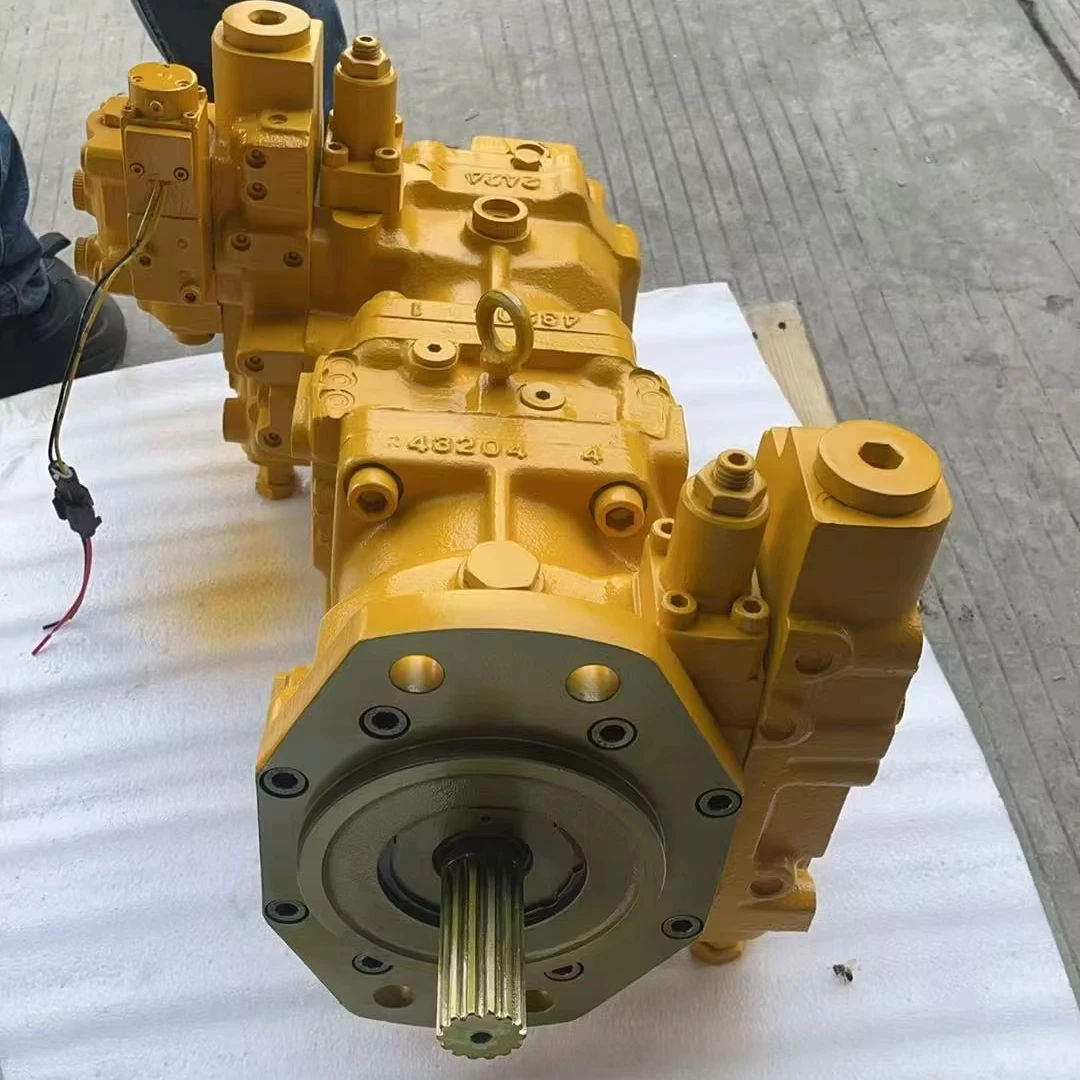


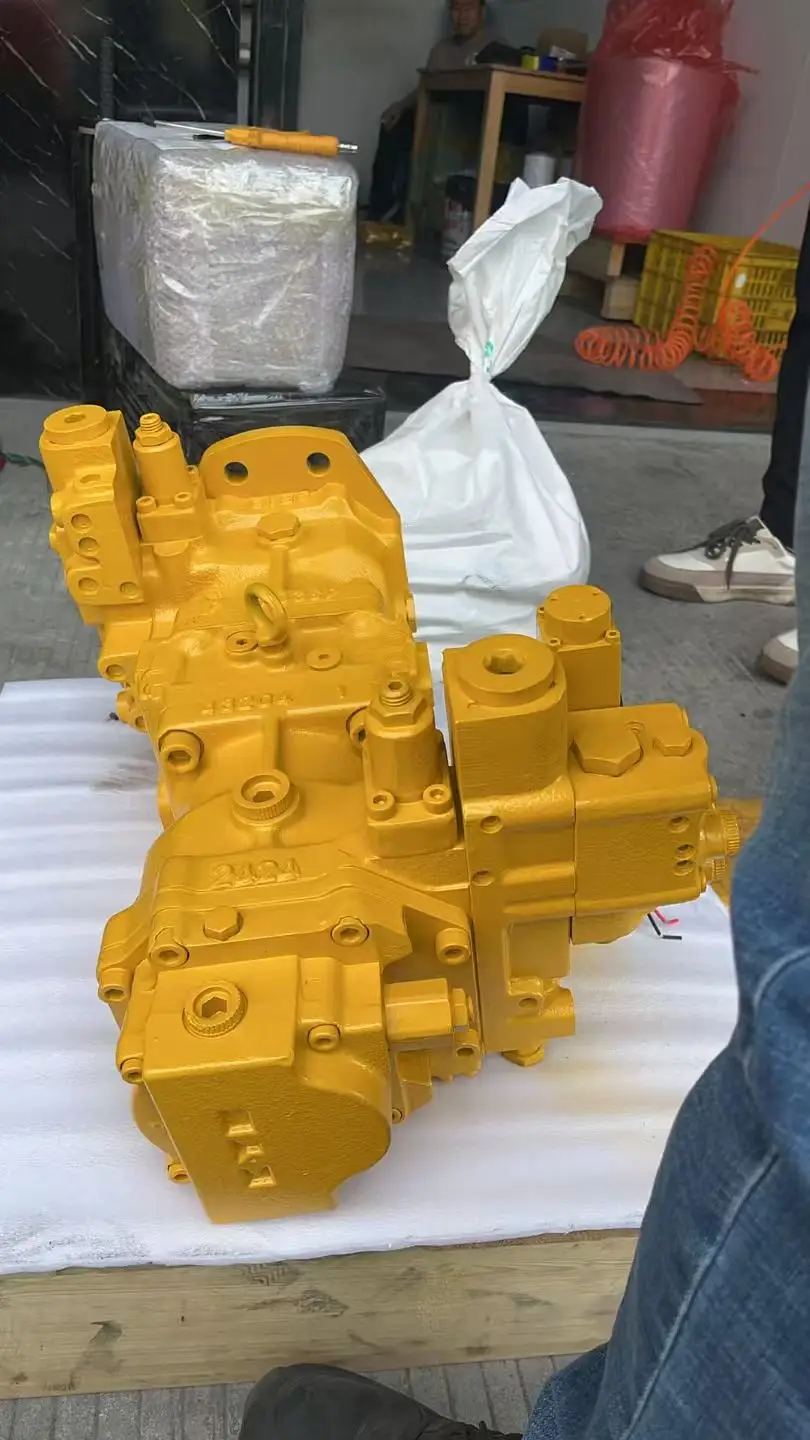
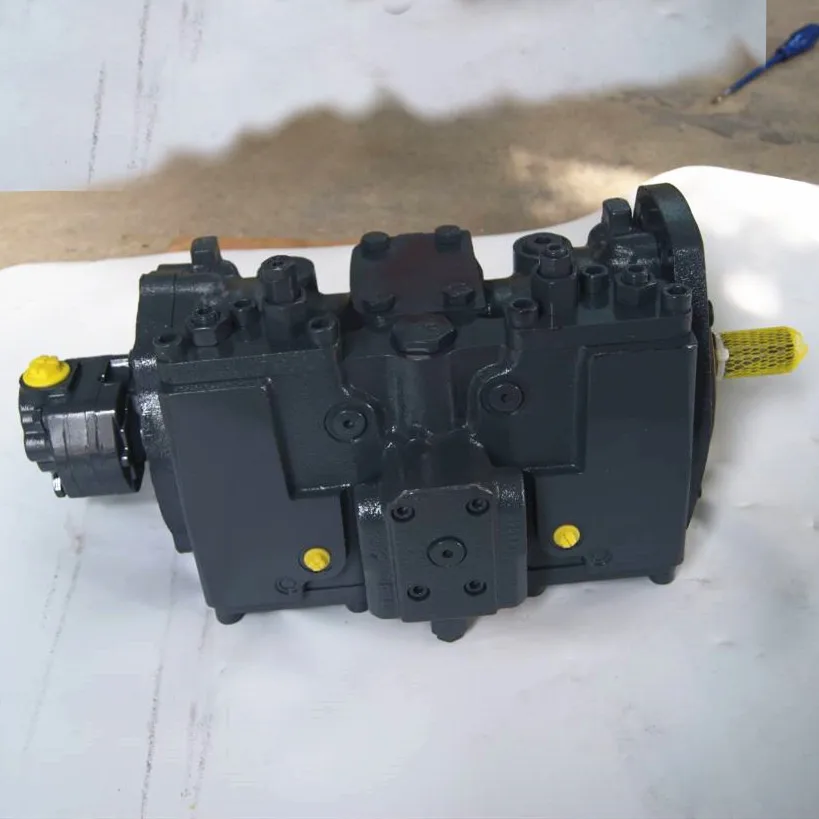
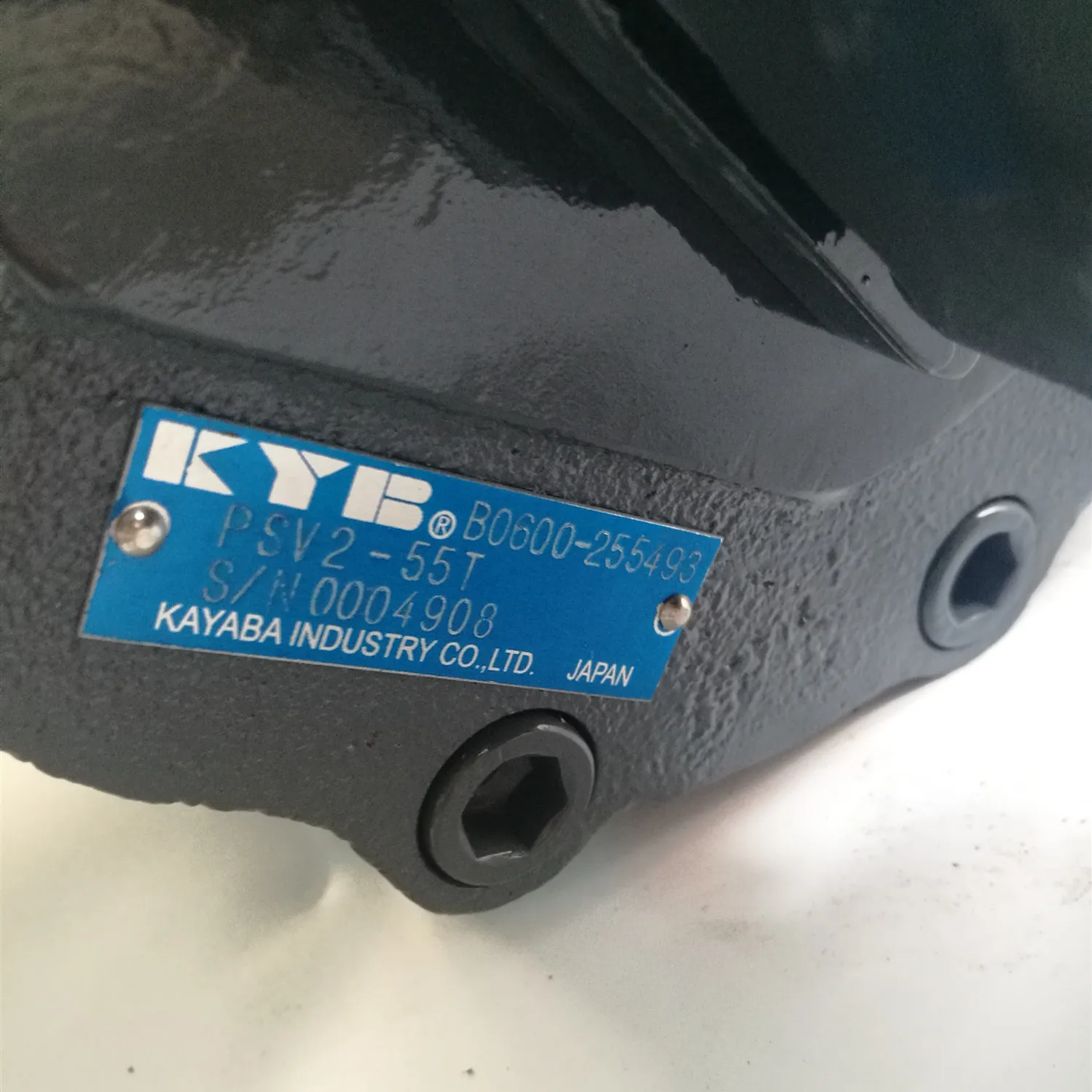
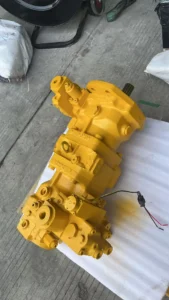
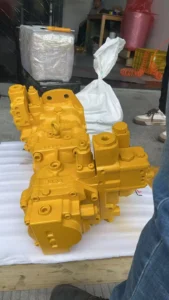

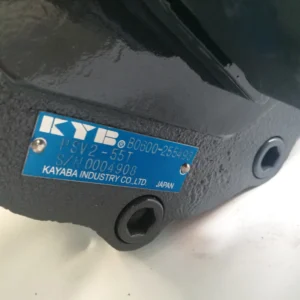
PSV2-66T-2 Hydraulic Piston Pump for JCB Excavator PSV2-52T PSV2-55T-2 High Pressure Hydraulic Pump PSV2 PSV2-66T
Displacement: Dual-pump structure, with a theoretical displacement of 66 mL/r for each pump and a total displacement of 132 mL/r, suitable for the requirements of medium and high-pressure high-flow hydraulic systems.
Work pressure
Continuous working pressure: 25 MPa (250 bar)
Intermittent peak pressure: 35 MPa (350 bar), capable of handling short-term high-load conditions.
Speed range: Rated speed 1800 rpm, maximum speed 2200 rpm, minimum stable speed ≥500 rpm, compatible with the medium and high-speed output characteristics of the engine.
Control mode: Integrated load sensitivity (LS) and pressure compensation control, supports electro-hydraulic proportional regulation (optional), and can dynamically adjust the displacement according to the system load to achieve precise flow matching.
Structural form: Swash plate axial plunger structure, double pump design (PSV2 indicates double pumps), high-strength cast iron housing, key friction pairs (such as plunger and cylinder bore) are precisely ground.
Oil requirements
Applicable viscosity: 20-200 mm²/s anti-wear hydraulic oil (ISO VG 46 is recommended)
Working oil temperature: -15℃ to 80℃. The oil cleanliness should reach ISO 16/13 grade (NAS 8 grade).
Installation and adaptation
Shaft end: Flat key connection, shaft diameter complies with ISO 3019-2 standard
Flange: SAE B 4 bolt flange installation. The oil port supports side or rear arrangement and can be installed horizontally or vertically.Ii. Working Principle
This pump is a swashplate axial piston double pump, consisting of two independent pump cores. They share the same drive shaft and suction port, but each has its own independent discharge port. The core components include the drive shaft, cylinder block, plunger, swash plate and load-sensitive control valve group. At work:
Oil absorption process: The prime mover drives the drive shaft to rotate the cylinder block. Under the action of centrifugal force and the return disc, the plunger tightly adheres to the swash plate. When the plunger rotates to the lower side area of the swash plate, it extends outward, increasing the volume of the cylinder block’s sealed cavity and creating a vacuum. The oil then enters the cavity through the oil suction port of the distribution plate.
During the oil pressure process: When the plunger rotates to the high side area of the swash plate, the swash plate squeezes the plunger inward, reducing the cavity volume and increasing the oil pressure. The oil is then discharged to the system through the oil outlet of the distribution plate.
Load sensitive control: The pressure sensor detects the system load in real time. When the load increases, the control valve group increases the inclination Angle of the swash plate, extends the plunger stroke, and enhances the displacement. When the load decreases, the inclination Angle of the swash plate decreases, and the displacement decreases simultaneously, reducing energy loss.
Pressure compensation protection: When the system pressure reaches the set threshold, it automatically limits the increase in displacement to prevent overpressure from damaging components.
Iii. Product Features and Advantages
Strong adaptability to high pressure and large flow: The combination of a continuous pressure of 25 MPa and a total displacement of 132 mL/r can stably drive the coordinated operation of multiple actuating elements such as excavation, rotation, and lifting of 20-25 ton excavators.
Outstanding performance in high efficiency and energy conservation
Volumetric efficiency ≥94%, total efficiency ≥90%
Load sensitive control reduces energy waste in “high flow and low load” scenarios, lowering system temperature rise by more than 15%.
Anti-pollution and high reliability
The optimized design of the gap seal and the use of wear-resistant materials (such as bronze distribution plates) enhance the resistance to particle contamination. Under dusty working conditions, the service life can reach over 6,000 hours.
The redundant design of the dual-pump structure enables partial functions to be maintained even when a single pump core fails, ensuring emergency operation of the equipment.
Rapid control response: The electro-hydraulic proportional control response time is ≤0.3 seconds, and the displacement adjustment range is 5%-100%. It can quickly adapt to load fluctuations and ensure the coordination of actions.
Good maintenance convenience: The modular pump core design supports the individual replacement of worn parts, and the key seals are standardized, resulting in low maintenance costs.
Iv. Usage Functions and Purposes
Usage function:
As the power source of the hydraulic system, it converts mechanical energy into hydraulic energy to drive hydraulic cylinders and hydraulic motors to achieve linear or rotational motion.
Through load sensitivity and pressure compensation control, dynamic flow distribution and pressure protection for multiple actuating elements are achieved, enhancing the stability and safety of the system.
Purpose:
Construction machinery: excavation, slewing and traveling mechanisms of excavators, loaders and bulldozers.
Industrial equipment: injection molding machines, hydraulic presses, roller drive systems for metallurgical production lines.
Mining and port machinery: Hoisting and luffing mechanisms for mine roadheaders and port handling equipment.
V. Applicable Machines and Scenarios
Applicable machines
20-25 ton excavators, medium-sized loaders, crawler cranes.
1000-1500 ton injection molding machines, 500-800 ton hydraulic presses.
Port container straddle carriers and underground tunneling equipment for mines.
Applicable scenarios
High-pressure and high-flow, medium and heavy load working conditions, such as earthwork excavation in construction and metal stamping in factory workshops.
Scenarios where multiple actuating elements work in coordination and the load fluctuates greatly, such as continuous loading and unloading at ports and tunneling in mines.
Six. Similar models
Model of the same series
PSV2-45: Single pump displacement 45 mL/r, suitable for medium and high-pressure systems with small flow rates.
PSV2-90: Single pump displacement 90 mL/r, high-flow model, suitable for heavy-duty hydraulic systems.
Similar alternative models
A series dual pumps (such as A2F125) : They have the same structural principle, with a rated pressure of 31.5 MPa, and are suitable for higher pressure requirements.
Other brands of swash plate double piston pumps (such as A4VSO125) : Their performance parameters are similar, and they can be selected based on the installation interface and control requirements.
Vii. Precautions for Use
Oil and Fluid Management Specifications
Select hydraulic oil strictly in accordance with the requirements and avoid mixing oils of different brands or grades.
A ≥100 μm screen filter is installed at the oil suction port, and a 25 μm fine filter is added to the return oil line. The filter element is checked every 500 hours, and the hydraulic oil is replaced and the oil tank is cleaned every 2000 to 3000 hours.
Installation accuracy requirements
The prime mover is connected by an elastic coupling. The coaxiality error of the two shafts is ≤ 0.1mm, and the angular error is ≤0.5°, to prevent excessive radial force from damaging the bearings.
The length of the oil suction pipeline should be no more than 1.5m, and its diameter should not be less than the suction port of the pump to reduce the risk of cavitation.
Startup and operation monitoring
Before the first start, fill it with clean oil and manually turn the wheel 3 to 5 times to ensure there is no jamming.
After starting, run at low speed without load for 10 minutes. When the oil temperature rises above 30℃, gradually increase the load to the rated pressure.
During operation, monitor the oil temperature (30-70℃ is the best) and pressure (long-term overpressure is strictly prohibited). If any abnormality occurs, stop the machine immediately for inspection.
Maintenance and upkeep nodes
Check the sealing condition of the shaft seal every 1000 hours. Replace the seal when the leakage is greater than 3 drops per minute.
Disassemble and inspect the distribution plate, plunger and other friction pairs every 3,000 hours. If the wear exceeds 0.03mm, maintenance or replacement is required.
Before long-term shutdown, drain the oil or inject anti-rust oil, and seal the oil port to prevent impurities from entering.
Control parameter setting
The parameters of the load sensitive valve and the pressure compensation valve should be adjusted by professionals according to the working conditions. It is strictly prohibited to increase the pressure or flow limit at will.
After replacing the control module, the parameters need to be calibrated to ensure that the signal is linearly matched with the displacement and avoid system shock.