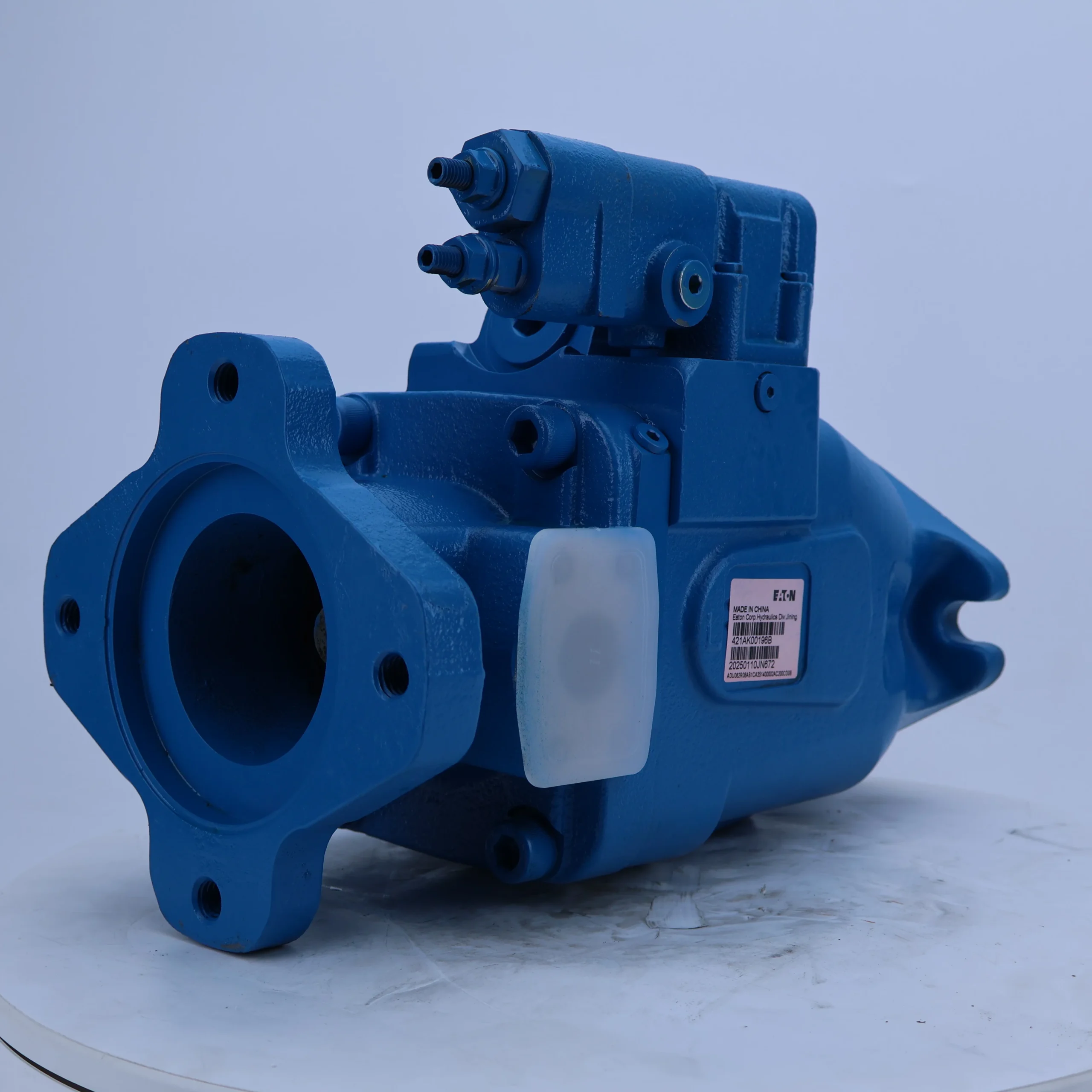
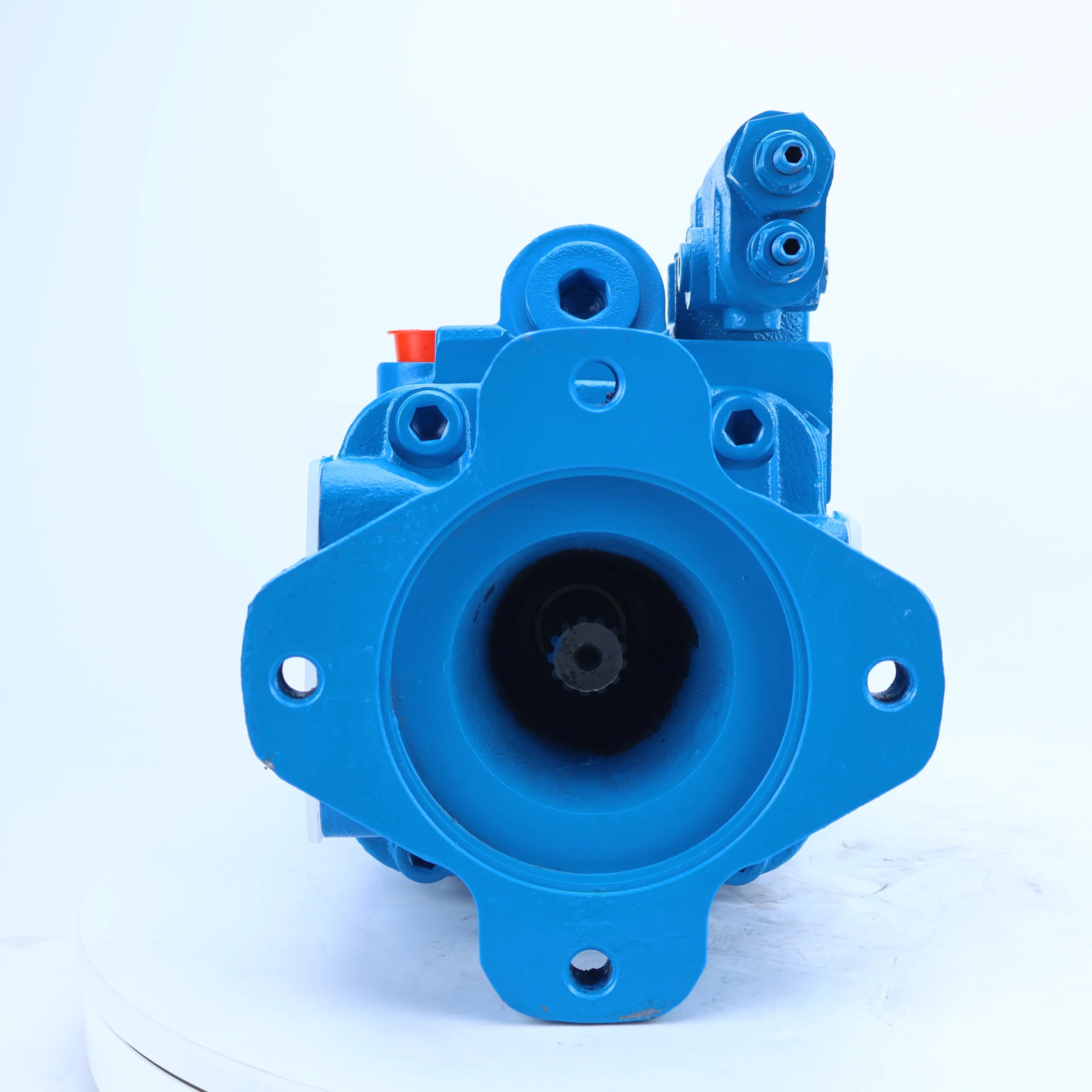
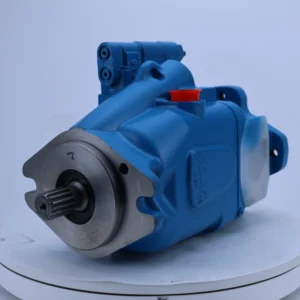
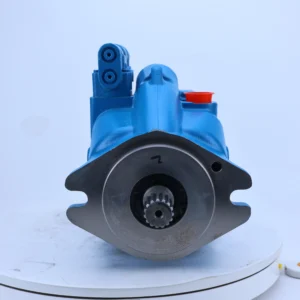
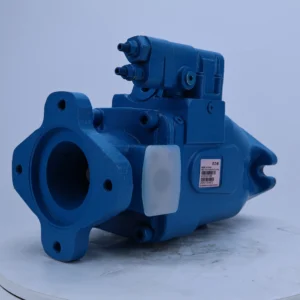
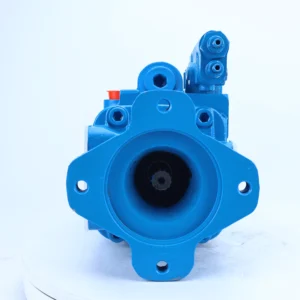
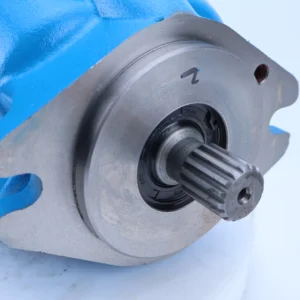
420 421 Hydraulic Piston Pump ADU62 421AK 420AK ADU49 Series 421AK00196B 421AK00274A High Pressure Mobile Hydraulic Pump
Core performance parameters
– Pump type: Axial piston variable oil pump, swash plate structure, with pressure compensation variable function, suitable for medium and high-pressure high-flow hydraulic system power supply.
– Pressure rating: Rated working pressure 31.5 MPa, continuous operating pressure ≤31.5 MPa; The instantaneous peak pressure is 35 MPa (lasting no more than 5 seconds). The variable pressure adjustment range is 12-31.5 MPa.
– Flow parameter: Rated displacement 421 mL/r (corresponding to the model “421” marking); When the rated speed is 1500 r/min, the rated flow rate is approximately 630 L/min. The speed adaptation range is 800-2000 r/min, and the flow rate is linearly matched with the speed (approximately 337 L/min at 800 r/min and approximately 840 L/min at 2000 r/min).
– Efficiency and power: Under rated working conditions, the volumetric efficiency is ≥94%, and the total efficiency is ≥90%. At 1500 r/min, the input shaft power should be ≤330 kW, and the power of the matching motor is recommended to be 315-355 kW.
2. Structure and connection parameters
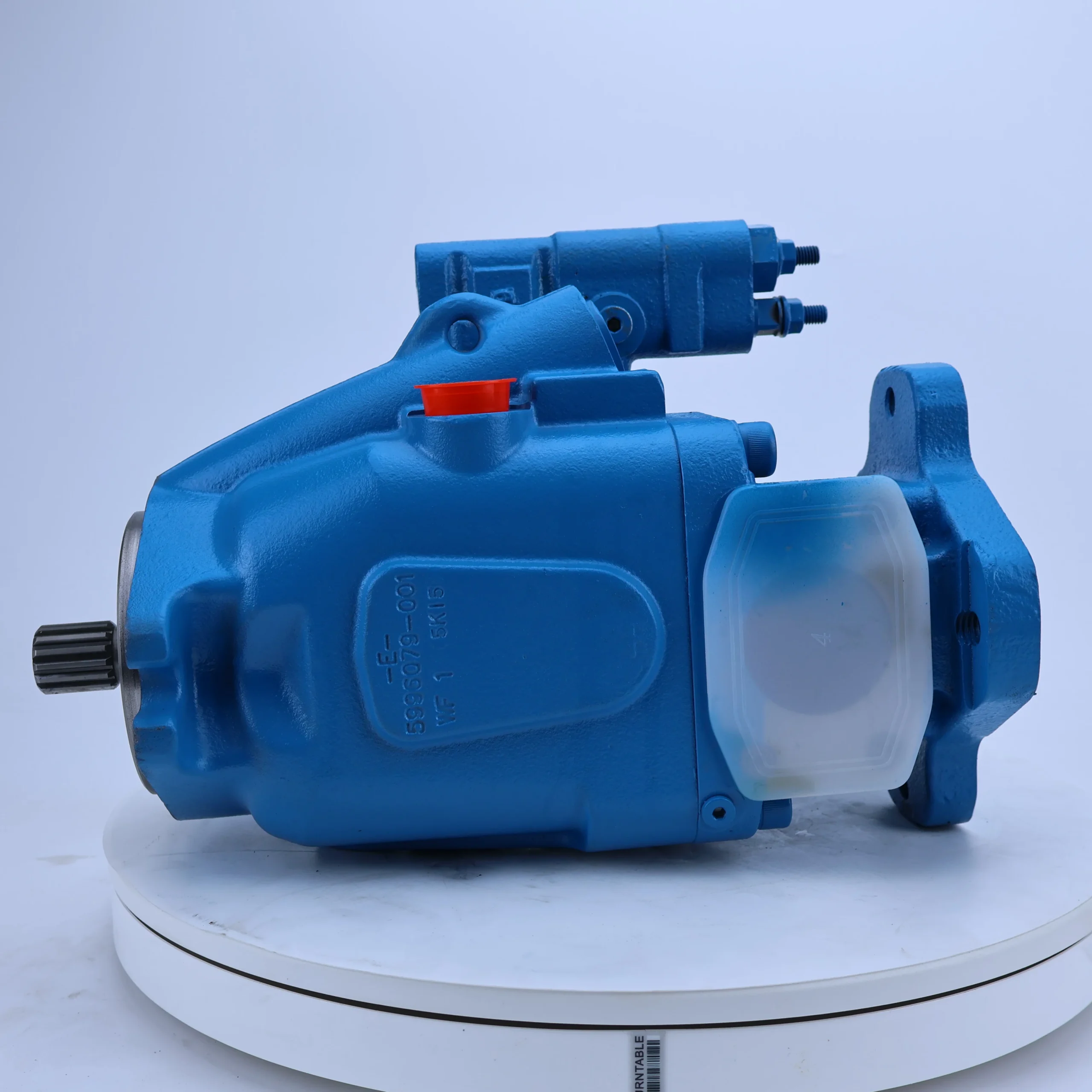
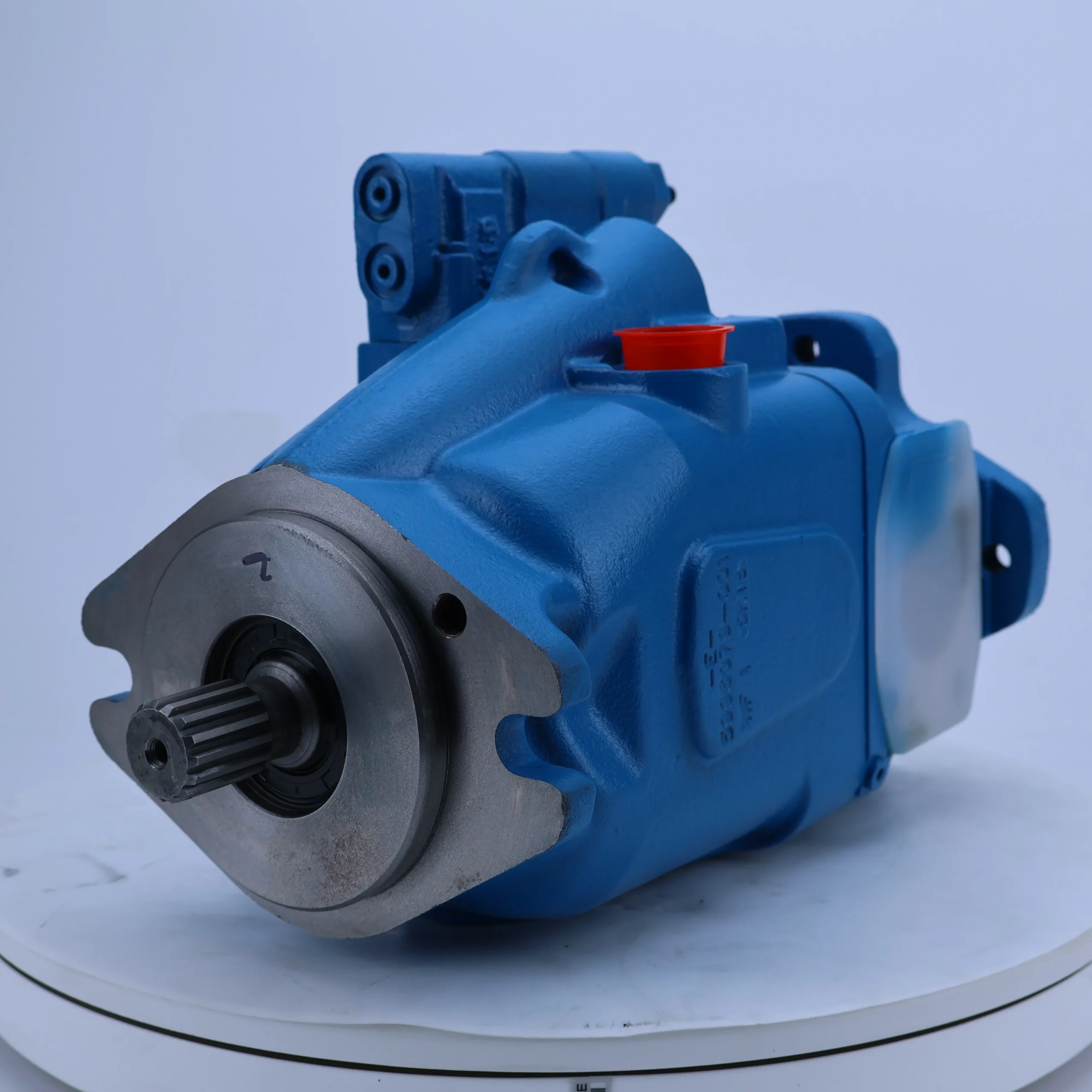
– Structural type: Horizontal installation swash plate structure, integrated pressure compensation variable mechanism; The cylinder block is splined to the input shaft. The 12 plungers are evenly distributed around the circumference, and the maximum inclination Angle of the swash plate is 18°.
– Core material: The plunger is made of alloy structural steel (20CrNi2MoA, nitrided, surface hardness HV900-1000); The swash plate is made of bearing steel (GCr15, quenched hardness HRC60-62). The pump body is made of forged carbon steel (42CrMo, quenched and tempered).
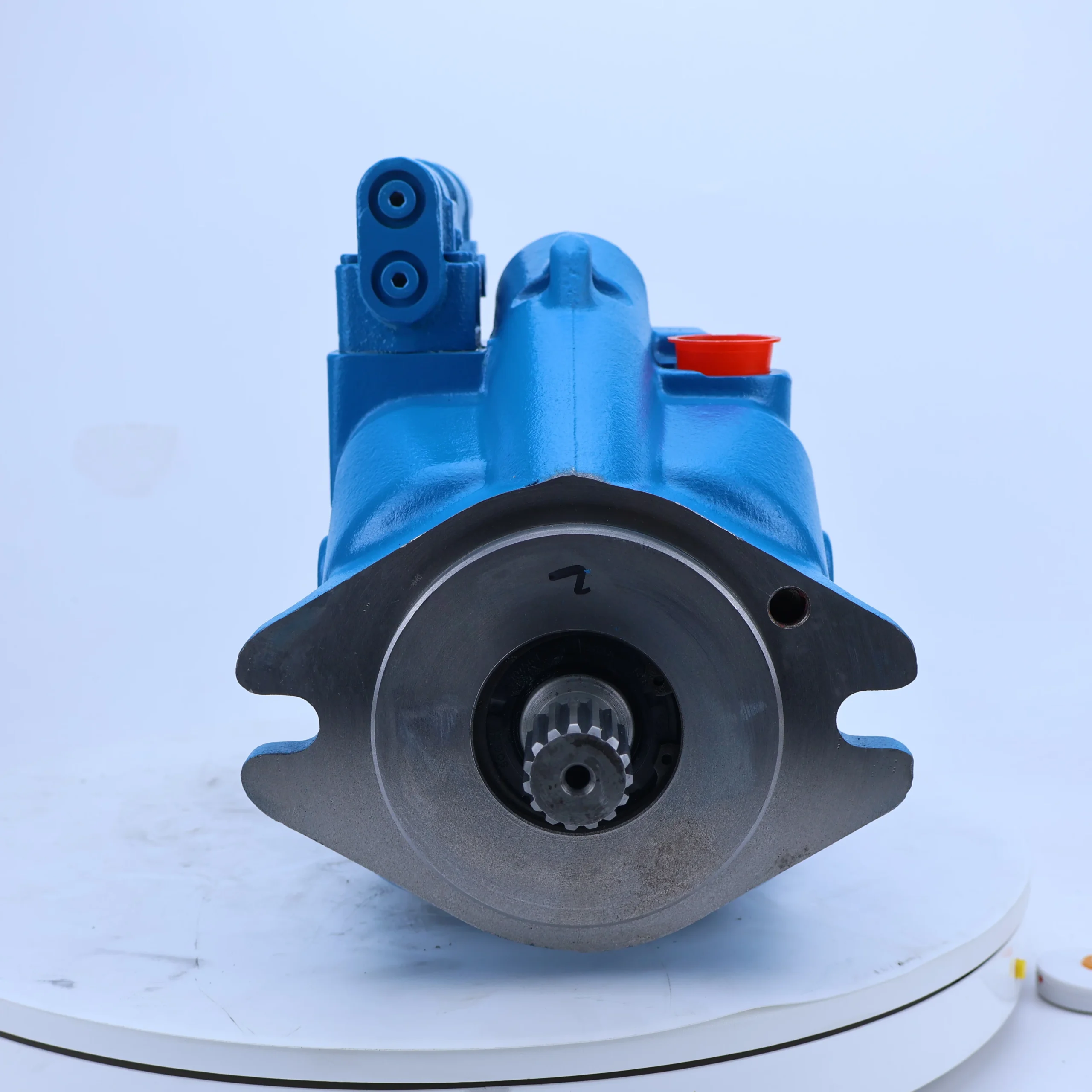
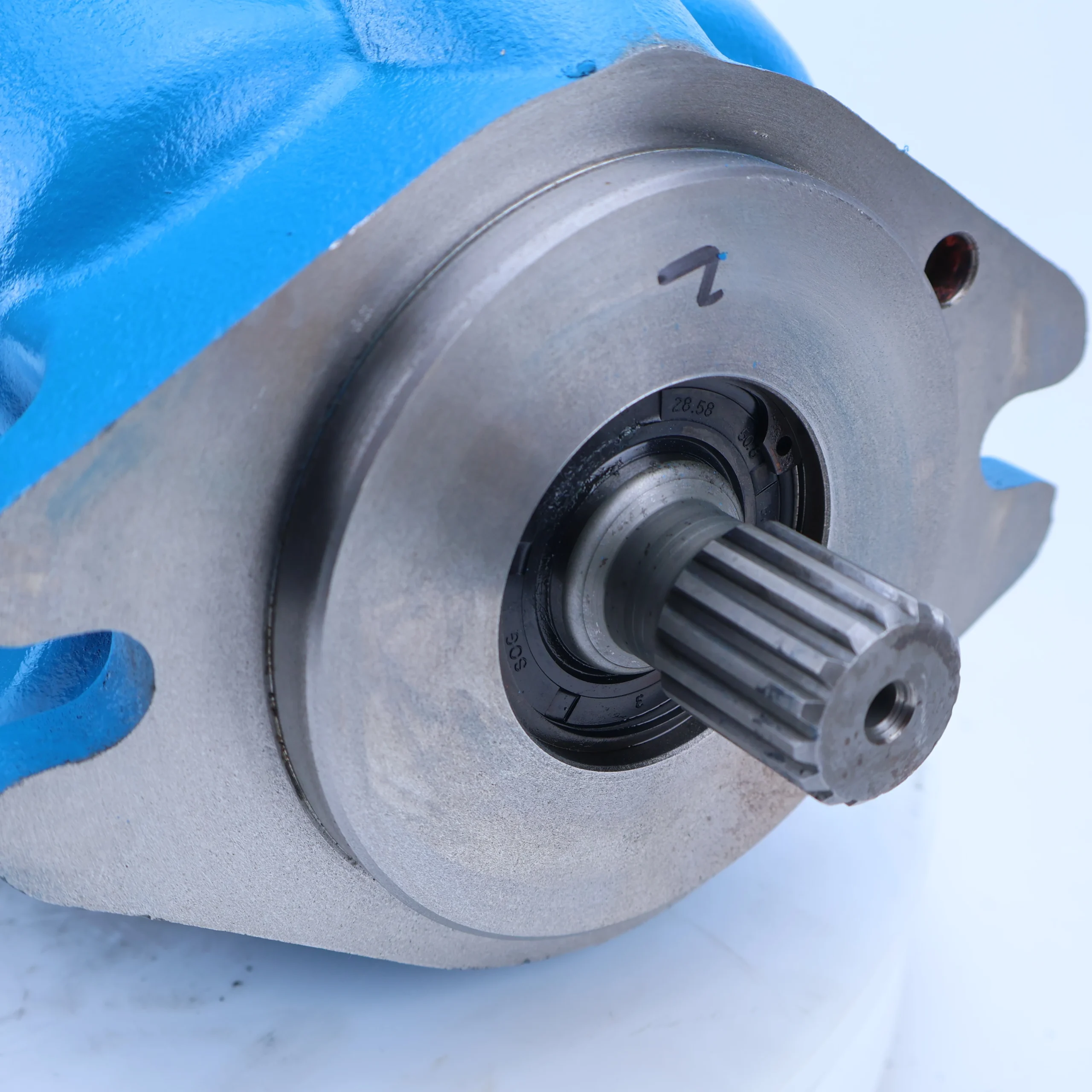
– Connection specifications: Suction port (S port) diameter Φ 100mm, pressure port (P port) diameter Φ 80mm, thread specifications S port M105×2, P port M90×2; The flange installation is compatible with the ISO 7005-1 standard, and the input shaft is spline connected (module 5, number of teeth 22).
3. Medium and Environmental requirements
– Medium requirements: L-HM 46 or L-HM 68 anti-wear hydraulic oil is recommended. L-HV 68 is selected for low temperatures (below -20℃). The kinematic viscosity of the oil is 40-100 mm²/s, and the moisture content is ≤0.1%.
– Cleanliness standard: The oil cleanliness should reach ISO 4406 16/13 grade. An 80 μm coarse filter should be installed at the suction port, and a 10 μm fine filter (β10≥200) should be installed at the pressure port.
– Environmental parameters: Operating temperature -20℃ to 80℃, relative humidity ≤95%; The protection grade is IP55, suitable for working conditions with vibration acceleration ≤15 m/s².Ii. Working Principle
This pump is a swash plate type axial piston variable oil pump. It achieves energy conversion through “swash plate driving the piston to reciprocate – changing the sealed volume to suck and discharge oil – pressure feedback regulating flow”. The specific process is as follows:
1. Basic processes of oil absorption and oil pressure
The motor drives the input shaft to rotate the cylinder block. Under the action of centrifugal force and the return spring, the 12 plungers are tightly attached to the swash plate. When the plunger rotates with the cylinder body to the lower side of the swash plate (the oil suction zone), the swash plate pushes the plunger to extend outward, the sealed volume expands and a vacuum is formed, and the hydraulic oil is sucked in through the oil suction window of the distribution plate. When rotating to the upper side of the swash plate (the oil pressure zone), the plunger is pushed back into the cylinder, the volume is reduced, and the oil is output through the oil pressure window. Each time the cylinder block rotates once, each plunger completes one oil suction and discharge cycle, achieving continuous oil supply.
2. Pressure compensation variable regulation mechanism
– Low load and high flow rate: When the system pressure is less than the set value, the force exerted by the pressure oil on the variable piston is less than the spring preload force. The swash plate maintains the maximum inclination Angle, with the maximum displacement (421 mL/r), and the maximum output flow rate is suitable for rapid action.
– High pressure and low flow rate: When the pressure rises to the set value, the thrust is greater than the spring force, which drives the variable mechanism to reduce the inclination Angle of the swash plate, shorten the plunger stroke, and decrease the displacement. The flow rate linearly decreases as the pressure increases, achieving “high-pressure flow limiting” energy conservation.
– Overpressure protection: When the pressure reaches a peak of 35 MPa, the swash plate inclination Angle suddenly drops to nearly 0°, and the flow rate drops to the leakage level, achieving unloading protection.
Iii. Product Features and Advantages
– High pressure and large flow rate, powerful performance: With a rated pressure of 31.5MPa and a rated flow rate of 630 L/min, a single pump can replace multiple small-flow pumps. It is suitable for heavy-duty equipment such as hydraulic presses over 200 tons and large excavators, simplifying the system structure.
– Precise variables, significant energy saving: Flow regulation range 15%-100%, pressure fluctuation ≤±0.2 MPa; When operating under pressure holding or low-speed conditions, the flow rate automatically drops to the leakage level, saving 30% to 40% energy compared with the fixed displacement pump.
– High reliability and long service life: The plunger is nitrided and the swash plate is quenched, providing excellent wear resistance. The 12 plungers are evenly distributed to ensure balanced force distribution. The rated working condition fault-free life reaches 12,000 hours, which is 40% longer than that of ordinary plunger pumps.
– Wide operating condition compatibility: The speed range of 800-2000 r/min can be matched with standard motors; It operates within a wide temperature range of -20℃ to 80℃ and has an IP55 protection rating, making it suitable for various scenarios such as cold regions and mines.
– Easy maintenance: The modular pump core design allows for the replacement of the cylinder block – plunger assembly by removing the front end cover. The replacement time of vulnerable parts is no more than 2.5 hours, and the maintenance cost is 35% lower than that of the integral structure.
Iv. Usage Functions and Purposes
1. Core usage functions
– Variable flow regulation: Automatically ADAPTS to the compound working conditions of “fast advance – working advance – pressure holding”, with a flow range of 94.7-630 L/min, without the need for additional flow control valves.
– High-pressure power supply: It provides a stable oil source of 31.5 MPa for large hydraulic cylinders and high-speed hydraulic motors, driving heavy-duty actions (such as pressing by a 10,000-ton hydraulic press).
– Overpressure protection: Automatic unloading at a peak pressure of 35 MPa, replacing an external relief valve; The variable pressure can be set steplessly with a control accuracy of ±0.5 MPa.
– Load adaptability: When the load suddenly changes, the flow rate is quickly adjusted to avoid pressure shock and enhance the stability of equipment operation.
2. Main application fields
– Construction machinery: Main systems of crawler excavators over 100 tons, working devices of loaders over 50 tons, drive systems of large bulldozers.
– Industrial manufacturing: CNC hydraulic presses over 2,000 tons, injection molding machine clamping/injection systems over 3,000 tons, heavy-duty machine tool drive systems.
– Metallurgical and mining industries: Gap adjustment for large rolling mills (with a rolling width of over 3000mm), propulsion mechanisms for mine roadheaders (with a diameter of over 5 meters), and transmission systems for large ball mills.
– Special equipment: Large hydraulic servos for ships, pitch drives for wind power equipment, high-pressure testing hydraulic stations for aerospace.
V. Applicable Machines and Scenarios
1. Adapt to the core machine
– Construction machinery: 100-150 ton excavators, 50-80 ton loaders, D10 and above bulldozers.
– Industrial equipment: 2,000-5,000 ton hydraulic presses, injection molding machines over 3,000 tons, heavy-duty horizontal machining centers.
– Heavy industrial equipment: roadheaders with diameters of 5-8 meters, large rolling mills, ball mills with a volume of ≥100 m³.
– Specialized equipment: Ultra-high pressure hydraulic station (31.5 MPa/630 L/min), giant ship steering gear, high-pressure test bench.
2. Typical application scenarios
– Heavy-load excavator excavation: In the compound action of the 120-ton excavator boom, the variable pressure is set at 30 MPa, and the output flow rate is 630 L/min when unloaded (boom lifting speed 1.0 m/s). When the pressure of hard rock excavation reaches 31 MPa, the flow rate drops to 80-120 L/min to maintain a stable excavation force.
– Hydraulic press operation: During the 3000-ton hydraulic press operation, a flow rate of 630 L/min is output at 1500 r/min to achieve rapid downward flow (speed of 1.5 m/s). During the pressing stage, the pressure is raised to 31.5 MPa and the flow rate is reduced to 50-80 L/min to ensure that the forming accuracy of the workpiece is ≤±0.03 mm.
Roll gap adjustment: In a 3000mm rolling mill system, the pressure is set at 31.5MPa, and the flow rate is adjusted within the range of 100-500 L/min in response to the rolling thickness. The roll gap accuracy is ± 0.01mm, and the thickness tolerance of the steel strip is ≤± 0.03mm.
Six. Similar models
1. Alternative models of the same series
-350AK00196B: A small-displacement model of the same structure, with a rated displacement of 350 mL/r (1500 r/min flow rate approximately 525 L/min), pressure 31.5 MPa, compatible installation dimensions, suitable for medium and large-sized equipment (such as 80-ton excavators), and 20% lower cost.
-500AK00196B: A large-displacement model in the same series, with a displacement of 500 mL/r (1500 r/min, flow rate 750 L/min), pressure 31.5 MPa, suitable for super-large equipment (such as 5000-ton hydraulic presses), and a cost 25% higher.
2. Cross-series alternative models
-421BK00196B: Constant power variable model, displacement 421 mL/r, total efficiency ≥91%, suitable for scenarios with large fluctuations in load power (such as cranes), energy-saving improvement of 5%-10%, cost increase of 30%.
-421CK00196B: Load-sensitive model, response time ≤ 40ms, suitable for precision control scenarios (such as CNC bending machines), with a 45% higher cost.
-420DK00196B: Quantitative plunger pump model, displacement 420 mL/r, simple structure, 40% lower cost, suitable for stable flow scenarios (such as conveyor belt drive), requires an additional relief valve configuration.
Vii. Precautions for Use
1. Oil management
– It is mandatory to use L-HM 46/68 anti-wear hydraulic oil. For new pumps, the oil should be changed for the first time after 500 hours, and then every 1000 hours thereafter. Before changing the oil, the system needs to be flushed to achieve ISO 4406 17/14 grade cleanliness.
When the pressure difference of the oil suction filter exceeds 0.2 MPa and that of the fine filter exceeds 0.5 MPa, replace the filter element. The moisture content (≤0.1%) and acid value (≤ 0.15mgKOH /g) of the oil should be tested monthly. If they exceed the standards, the oil needs to be changed.
2. Installation and commissioning
The coaxiality error between the pump and the motor is ≤ 0.1mm (for rigid connection), and the flange flatness is ≤ 0.05mm /m. The oil suction height is ≤ 0.6m, and the diameter of the oil suction pipe is ≥Φ 100mm.
Before the first start, fill the hydraulic oil and manually turn the wheel 5 times. Run no-load for 10 to 15 minutes (1000 r/min), and gradually load when the oil temperature is ≥30℃. The pressure increase should be no more than 1 MPa/ min.
The variable pressure is set by adjusting the screw. Clockwise pressure increases and counterclockwise pressure decreases. It is recommended that the set value be ≤28 MPa. After adjustment, it is fixed with a lock nut.
3. Operation and maintenance
During operation, monitor the temperature (≤75℃, maximum ≤85℃), pressure (P port ≤ 31.5MPa), and noise (≤ 85dB). If any abnormality is detected, stop the machine immediately for investigation.
– Maintenance every 2000 hours: Replace seals and filter elements; Check the wear of the plunger (replace if > 0.02mm) and the flatness of the swash plate (grind if > 0.005mm). Check the wear of the cylinder block holes every 4,000 hours (replace if the roundness is greater than 0.01mm).
4. Storage protection
When storing for a long time, seal the oil port, inject anti-rust oil (90% of the pump body volume), and place it in a dry environment of 5-35℃. Turn the pump by hand twice a month.
Before putting it into use after being idle for more than 8 months, drain the anti-rust oil thoroughly and rinse it three times. After gradually loading and testing for no abnormalities, it can be put into use.