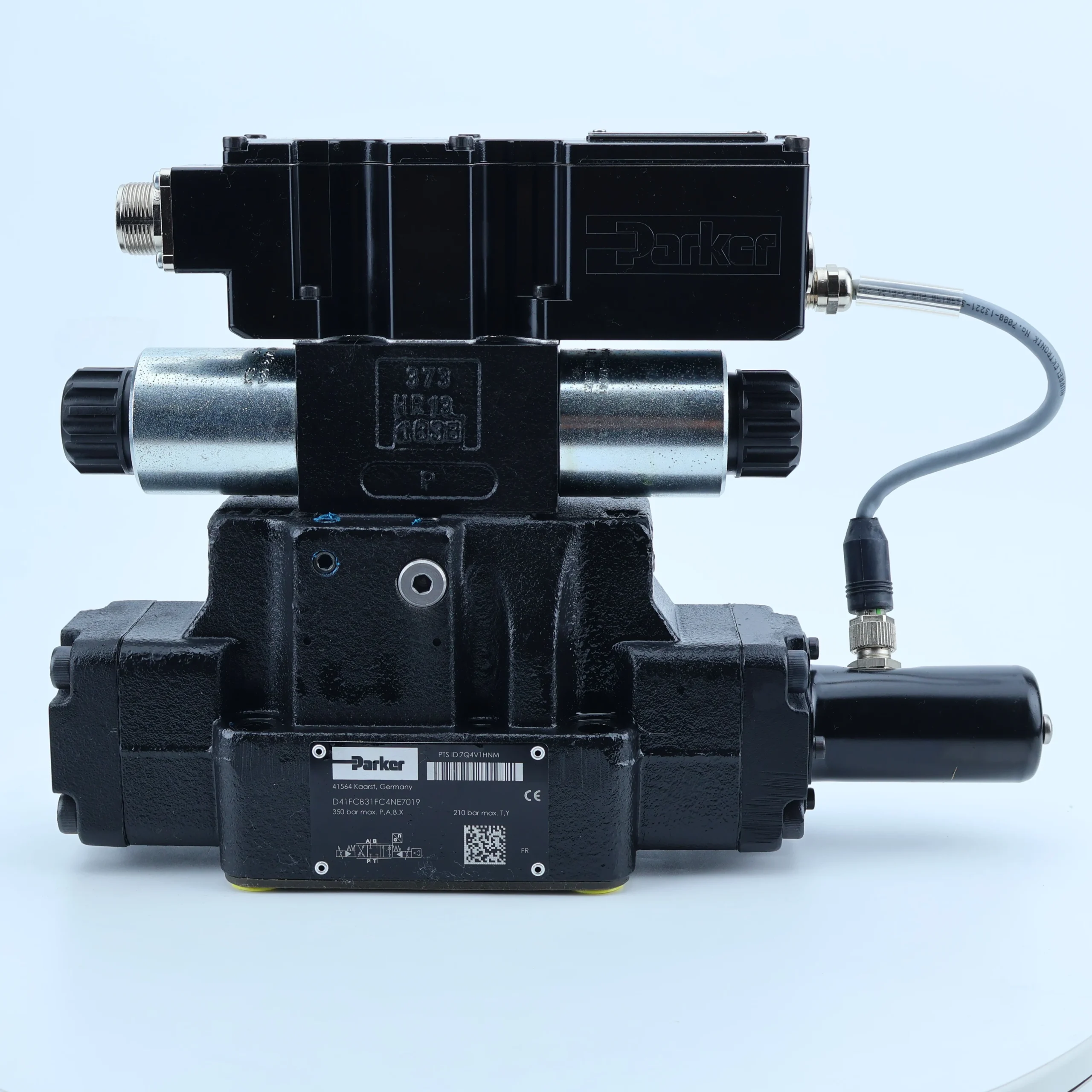
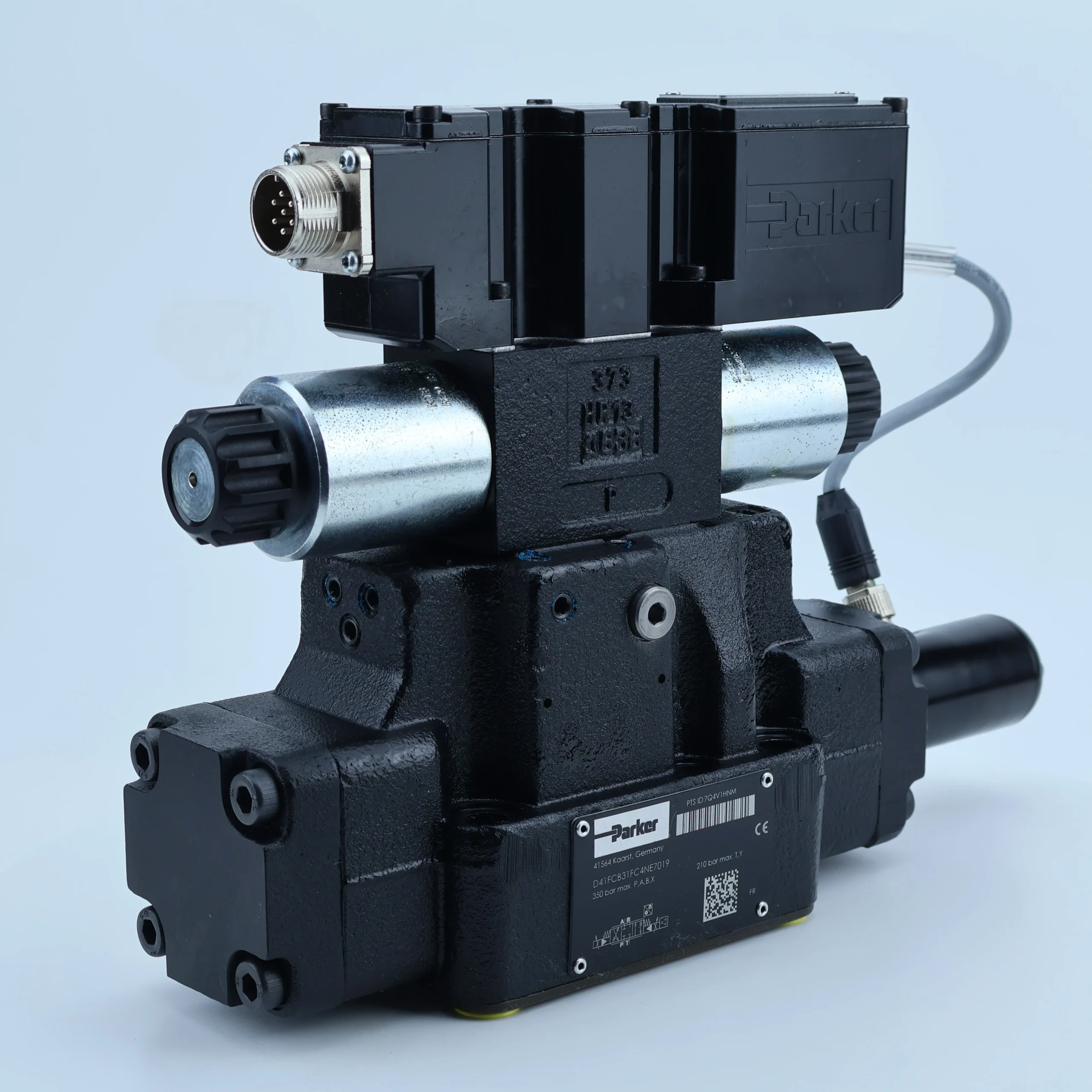
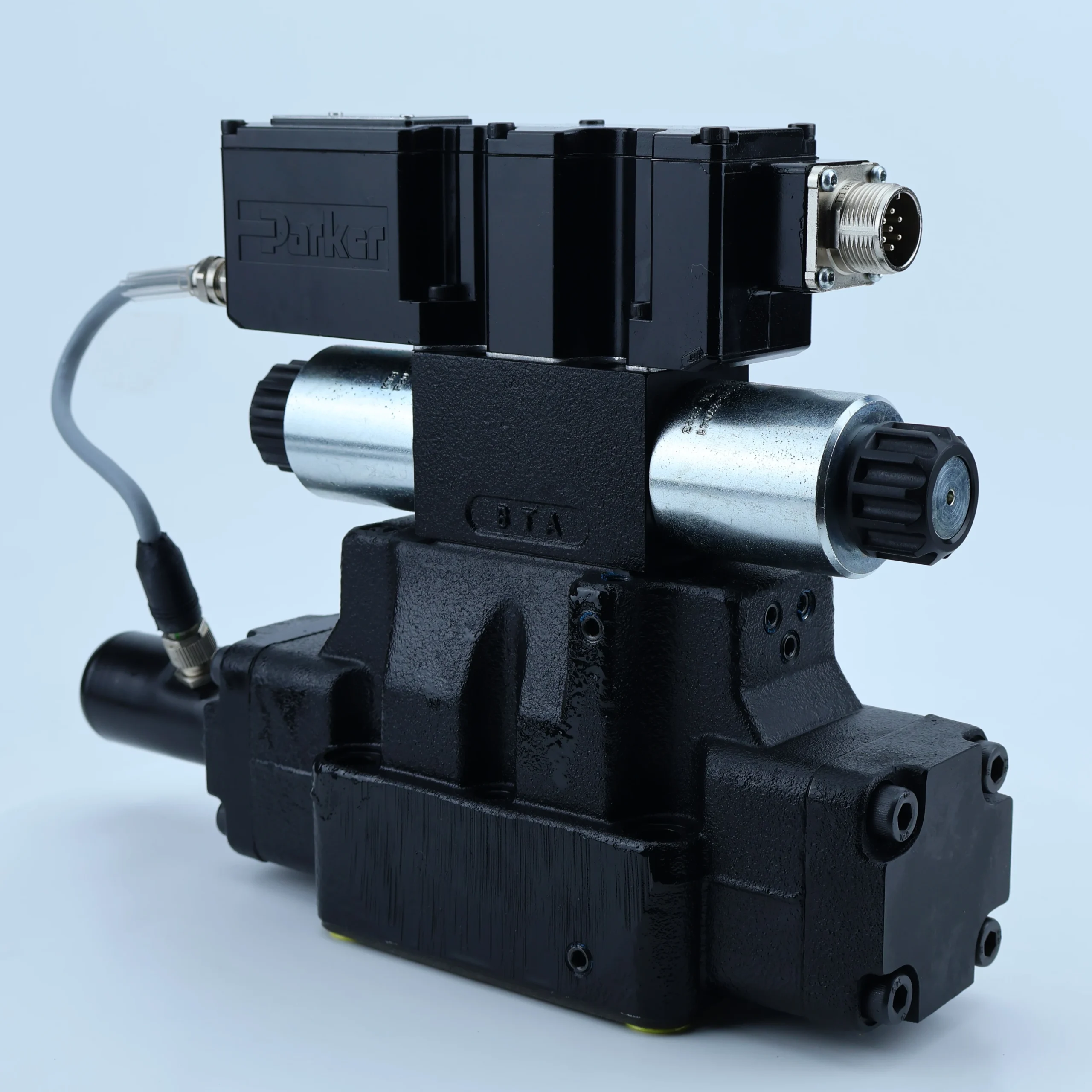


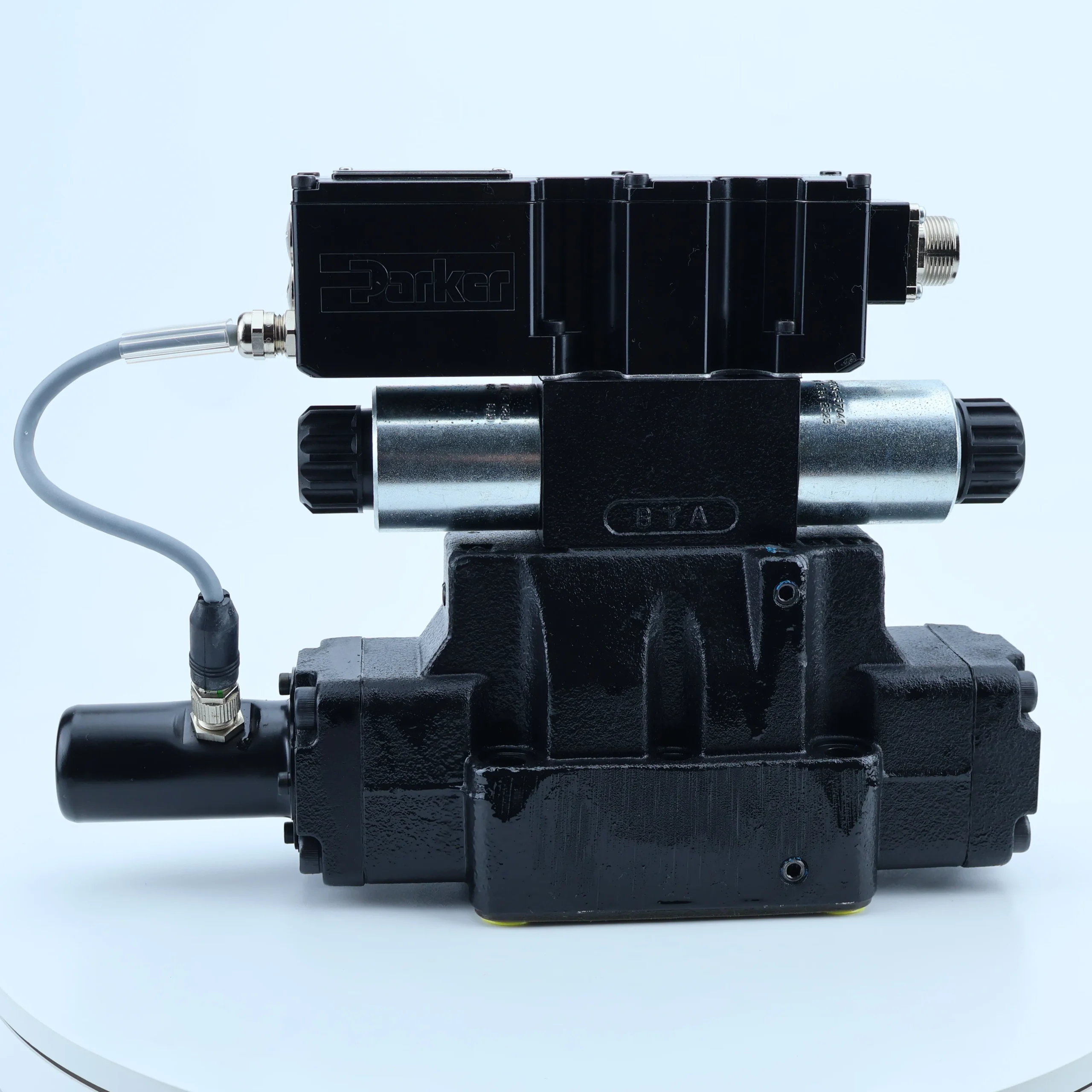
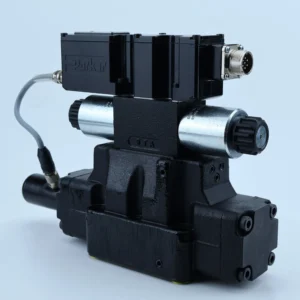
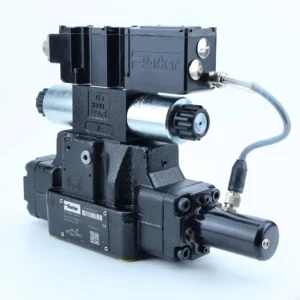
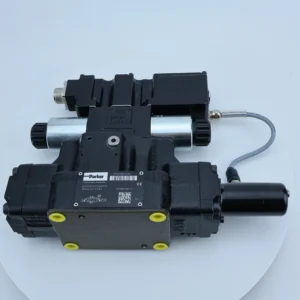
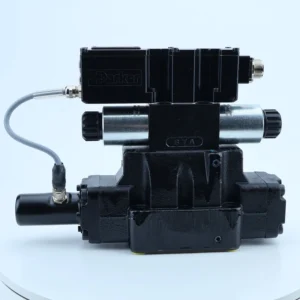
D1 D3 D31 D41 D91 D31F D81 Series D41FCB31FC4NE7019 Hydraulic Proportional Control Valve D41FC
Basic specifications
Type: Pilot-operated proportional directional control valve (with position feedback).
Nominal path: NG16 (CETOP 07), suitable for high-traffic scenarios.
Nominal flow rate: 200 L/min (valve core code B31).
Pressure range: Maximum 350 bar at the P/A/B ports of the main oil circuit, and maximum 210 bar at the X port of the pilot oil circuit (refer to the same series model D41FCB32FC1NS7019).
Control signal: Current input 0-20mA (Type E), supporting EtherCAT® fieldbus communication (optional).
Response time: <15 ms (Pilot design, high dynamic characteristics).
Repeatability accuracy: ±0.5% (closed-loop position feedback system).
Electrical and Interface
Electrical connection: M12×1 connector (4 pins), supporting EtherCAT input/output.
Diagnostic function: Real-time monitoring of valve core position, temperature, operating time and fault codes.
Protection grade: IP65 (dust and water resistant).
Materials and Environment
Valve body material: High-strength cast iron, with surface hardening treatment to enhance wear resistance.
Working oil temperature: -20℃ to + 60℃ (standard hydraulic oil).
Medium viscosity: 20-380 mm²/s.2. Working Principle
Proportional control mechanism
Proportional electromagnet: The input current signal (0-20mA) drives the electromagnet to generate linear displacement, and the position of the main valve core is controlled through the pilot valve.
Closed-loop feedback: The built-in LVDT displacement sensor monitors the position of the valve core in real time. After comparing with the command signal, it corrects the output to ensure high-precision control (hysteresis < 0.5%).
Regeneration mode: Optional hybrid version. Energy consumption can be reduced by switching the regeneration mode (such as the differential circuit of the hydraulic cylinder).
Pilot-operated structure
Pilot valve: Based on the Parker D1FB control valve, it adopts a valve core/sleeve design to provide stable pilot pressure control.
EtherCAT communication: Supports real-time parameter adjustment and status monitoring, compatible with the intelligent requirements of Industry 4.0.
3. Product features and advantages
Core features
High precision: The position feedback system ensures that the flow regulation accuracy reaches ±0.5%, making it suitable for precision processing.
High dynamic response: <15 ms response time, meeting the requirements of rapid start and stop as well as pressure fluctuation suppression.
Energy-saving design: The regeneration mode can reduce the energy consumption of the hydraulic system by 20% to 30%.
Diagnostic function: Provide preventive maintenance data through the EtherCAT interface to reduce downtime.
Reliability and durability
Wear-resistant structure: The surface of the valve core is hard chromium plated, with a service life of over 20 million times (refer to the same series of products).
Anti-pollution capability: The pilot-stage filtration accuracy is 10μm, suitable for harsh industrial environments.
4. Usage functions and purposes
Core function
Flow control: Continuously adjust the oil flow through proportional signals to achieve speed control of the actuator.
Direction control: Four-way electro-hydraulic proportional reversing, supporting the forward and reverse movement of hydraulic cylinders or hydraulic motors.
Pressure compensation: Combined with pressure sensors, independent flow control of the load is achieved, unaffected by load fluctuations.
Typical application scenarios
Construction machinery: Hydraulic systems for excavators and loaders, achieving precise motion control.
Metallurgical equipment: Continuous casting machines and the reduction systems of rolling mills to ensure the consistency of plate thickness.
Injection molding machine: The precise adjustment of the melt speed and pressure during the injection molding process enhances the quality of the products.
Press: Pressure holding and rapid return control of metal forming press to enhance production efficiency.
5. Applicable machines and scenarios
Industrial equipment
Hydraulic press: Suitable for high-pressure and high-flow scenarios such as automotive parts forming and metal forging.
Rubber machinery: Synchronous control of temperature and pressure in tire vulcanizing machines.
New energy equipment: Pressure accuracy control of lithium battery electrode sheet roller press (±0.1 bar).
Intelligent factory
Automated production line: Multi-axis synchronous control, supporting real-time communication between EtherCAT and PLC.
AGV/AMR: Hydraulic-driven automatic guided vehicles that achieve precise steering and load regulation.
6. Relevant models
D111FCB31LC2NE70 D111FCB31LC2NK00 D111FCB31LC2NK70 D111FCB31LC2NN00 D111FCB31LC2NS00 D111FCB31LC2NS70 D111FCB31LC2VB70 D111FCB31LC5NE70
D111FCB32FC1NN00 D111FCB32FC2NN00 D111FCB32HC2NE70 D111FCB32HC5NK70 D111FCB32LC1NB70 D111FCB32LC1NE70 D111FCB32LC1NN00 D111FCB32LC1NS00
D111FCB32LC2NB00 D111FCB32LC2NB70 D111FCB32LC2NE70 D111FCB32LC2NN00 D111FCB32LC2NS00 D111FCB32LC2NS70 D111FCB32LC2VB70 D111FCB32LC4NB00
D111FCB32LC4NB70 D111FCE01FC1NN00 D111FCE01FC2NN00 D111FCE01HC4NB70 D111FCE01LC1NB00 D111FCE01LC1NB70 D111FCE01LC1NE00 D111FCE01LC1NN00
D111FCE01LC1NS00 D111FCE01LC1VB70 D111FCE01LC2NB00 D111FCE01LC2NB08 D111FCE01LC2NB70 D111FCE01LC2NB78 D111FCE01LC2NE00 D111FCE01LC2NE70
D111FCE01LC2NK00 D111FCE01LC2NK70 D111FCE01LC2NN00 D111FCE01LC2NS00 D111FCE01LC2NS70 D111FCE01LC2VB00 D111FCE01LC2VB70 D111FCE01LC2VK00
D111FCE01LC4NB00 D111FCE01LC4NB70 D111FCE01LC4NE00 D111FCE01LC4NS70 D111FCE01LC5NB70 D111FCE01LC5NB78 D111FCE01LC5NS70 D111FCE02FC1NN00
D111FCE02FC2NN00 D111FCE02LC1NB10 D111FCE02LC1NB70 D111FCE02LC1NN00 D111FCE02LC1NS00 D111FCE02LC1NS70 D111FCE02LC2NB00 D111FCE02LC2NB08
D111FCE02LC2NB70 D111FCE02LC2NK70 D111FCE02LC2NN00 D111FCE02LC2NS00 D111FCE02LC2NS70 D111FCE02LC4NB00 D111FCE02LC4NB70 D111FCE02LC4NE00
D111FCR31LC4NS70 D111FCR32LC2NK00 D111FCR32LC2NS00 D111FCZ32LC1NB7L D111FCZ32LC2NS0L D111FCZ32LC4VB0L D31FCB31DC1NE10 D31FCB31DC1NE70
D31FCB31DC2NB08 D31FCB31DC2NB70 D31FCB31DC4NB00 D31FCB31DC4NB70 D31FCB31DC4VB70 D31FCB31DC5NB00 D31FCB31DC5NB70 D31FCB31EC1NK00
D31FCB31EC1NN00 D31FCB31EC1VK70 D31FCB31EC2NB00 D31FCB31EC2NK70 D31FCB31EC2NN00 D31FCB31EC4NB70 D31FCB31EC4NK70 D31FCB32DC1NB70
D31FCB32DC1NS00 D31FCB32DC1NS70 D31FCB32DC2NB70 D31FCB32DC2NE70 D31FCB32DC4NB08 D31FCB32DC4NB70 D31FCB32DC4NE00 D31FCB32DC4NE70
D31FCB32DC4NS70 D31FCB32DC4VB00 D31FCB32DC5NS70 D31FCB32EC1NE00 D31FCB32EC1NN00 D31FCB32EC1NS70 D31FCB32EC2NN00 D31FCB32EC2NS00
D31FCB32EC2NS70 D31FCB32EC2VS00 D31FCB32EC4NB00 D31FCB32EC4VS70 D31FCE01DC1NB00 D31FCE01DC1NB70 D31FCE01DC1NB78 D31FCE01DC1NE70
D31FCE01DC1NS00 D31FCE01DC1VB00 D31FCE01DC1VB70 D31FCE01DC1VE70 D31FCE01DC2NB00 D31FCE01DC2NB70 D31FCE01DC2NB78 D31FCE01DC2NK70
D31FCE01DC2VB00 D31FCE01DC4NB00 D31FCE01DC4NB08 D31FCE01DC4NB70 D31FCE01DC4NB78 D31FCE01DC4NE00 D31FCE01DC4NE70 D31FCE01DC4NS08
D31FCE01DC4NS70 D31FCE01DC4VB70 D31FCE01DC4VE00 D31FCE01DC4VE70 D31FCE01DC5NB00 D31FCE01DC5NB70 D31FCE01DC5NS70 D31FCE01EC1NK00
D31FCE01EC1NN00 D31FCE01EC2NB00 D31FCE01EC2NB70 D31FCE01EC2NK00 D31FCE01EC2NK78 D31FCE01EC2NN00 D31FCE01EC2NS00 D31FCE01EC2NS70
D31FCE01EC2VB00 D31FCE01EC2VS00 D31FCE01EC4NB00 D31FCE01EC4NB70 D31FCE01EC4NB78 D31FCE01EC4NK00 D31FCE01EC4NS00 D31FCE01EC4NS70
D31FCE01EC4VB00 D31FCE02DC1NB00 D31FCE02DC1NB70 D31FCE02DC1NE70 D31FCE02DC1NK00 D31FCE02DC1NS00 D31FCE02DC1NS08 D31FCE02DC1NS70
D31FCE02DC2NB70 D31FCE02DC2NE70 D31FCE02DC2NK00 D31FCE02DC2NS00 D31FCE02DC2NS70 D31FCE02DC2VB70 D31FCE02DC2VS70 D31FCE02DC4NB00
D31FCE02DC4NB70 D31FCE02DC4NE70 D31FCE02DC4NK00 D31FCE02DC4VB00 D31FCE02DC4VB70 D31FCE02DC4VE70 D31FCE02DC5NB00 D31FCE02DC5NB70
D31FCE02DC5NS00 D31FCE02EC1NB00 D31FCE02EC1NN00 D31FCE02EC2NB00 D31FCE02EC2NK00 D31FCE02EC2NN00 D31FCE02EC2NS00 D31FCE02EC2NS70
D31FCE02EC2VS00 D31FCE02EC4NB00 D31FCE02EC4NE00 D31FCE02EC4NK00 D31FCE02EC4NS00 D31FCE02EC4VB00 D31FCR31DC4NB00 D41FCB31EC1NE70
D41FCB31FC1NB00 D41FCB31FC1NB70 D41FCB31FC1NB78 D41FCB31FC1NE00 D41FCB31FC1NE70 D41FCB31FC1NN00 D41FCB31FC1NS00 D41FCB31FC1VB70
D41FCB31FC2NB70 D41FCB31FC2NB78 D41FCB31FC2NN00 D41FCB31FC2VK00 D41FCB31FC2VS70 D41FCB31FC4NB70 D41FCB31FC4NE70 D41FCB31FC4NK00
D41FCB31FC4NK70 D41FCB31FC4NS70 D41FCB32EC1NS70 D41FCB32FC1NB00 D41FCB32FC1NB70 D41FCB32FC1NE00 D41FCB32FC1NE70 D41FCB32FC1NN00
D41FCB32FC1NS00 D41FCB32FC1NS70 D41FCB32FC1VB00 D41FCB32FC1VB70 D41FCB32FC1VE70 D41FCB32FC2NB70 D41FCB32FC2NE70 D41FCB32FC2NN00
D41FCB32FC2NS00 D41FCB32FC2NS70 D41FCB32FC2VK70 D41FCB32FC2VS00 D41FCB32FC2VS70 D41FCB32FC4NB00 D41FCB32FC4NB70 D41FCB32FC4NE78
D41FCB32FC4NS00 D41FCB32FC4NS70 D41FCB32FC4VS70 D41FCB32FC5NB70 D41FCE01EC1NE70 D41FCE01EC2NB70 D41FCE01EC5NB70 D41FCE01FC1NB00
D41FCE01FC1NB70 D41FCE01FC1NE00 D41FCE01FC1NE70 D41FCE01FC1NK00 D41FCE01FC1NN00 D41FCE01FC1NS00 D41FCE01FC1NS70 D41FCE01FC1VB00
D41FCE01FC1VB70 D41FCE01FC1VE70 D41FCE01FC2NB00 D41FCE01FC2NB08 D41FCE01FC2NB70 D41FCE01FC2NB78 D41FCE01FC2NE00 D41FCE01FC2NE70
D41FCE01FC2NK00 D41FCE01FC2NK08 D41FCE01FC2NK70 D41FCE01FC2NK78 D41FCE01FC2NN00 D41FCE01FC2NS00 D41FCE01FC2NS70 D41FCE01FC2VB00
D41FCE01FC2VB08 D41FCE01FC2VB70 D41FCE01FC2VK00 D41FCE01FC2VS00 D41FCE01FC2VS50 D41FCE01FC4NB00 D41FCE01FC4NB70 D41FCE01FC4NK00
D41FCE01FC4NK70 D41FCE01FC4NS00 D41FCE01FC4NS70 D41FCE01FC4VB00 D41FCE01FC4VB70 D41FCE01FC4VK00 D41FCE01FC5NB08 D41FCE01FC5NB70
D41FCE01FC5NK00 D41FCE01FC5NS00 D41FCE02FC1NB00 D41FCE02FC1NB08 D41FCE02FC1NB10 D41FCE02FC1NB70 D41FCE02FC1NB78 D41FCE02FC1NE00
D41FCE02FC1NE70 D41FCE02FC1NN00 D41FCE02FC1NS00 D41FCE02FC1NS70 D41FCE02FC1VB00 D41FCE02FC1VB70 D41FCE02FC1VE70 D41FCE02FC1VS00
D41FCE02FC2NB00 D41FCE02FC2NB70 D41FCE02FC2NE70 D41FCE02FC2NK00 D41FCE02FC2NN00 D41FCE02FC2NS00 D41FCE02FC2NS70 D41FCE02FC2VB00
D41FCE02FC2VB70 D41FCE02FC2VS00 D41FCE02FC4NB00 D41FCE02FC4NB70 D41FCE02FC4NB78 D41FCE02FC4NE70 D41FCE02FC4NK00 D41FCE02FC4NK70
D41FCE02FC4NS00 D41FCE02FC4VB00 D41FCE02FC4VB70 D41FCE02FC4VK00 D41FCE02FC4VS70 D41FCE02FC5NE00 D41FCE02FC5NE70 D41FCE02FC5NK00
D41FCE02FC5NS00 D41FCE02FC5NS70 D41FCR31FC1NB70 D41FCR31FC1NK78 D41FCR31FC2NB00 D41FCR31FC2NK70 D41FCR31FC2NK78 D41FCR31FC4NB00
D41FCR31FC4NB70 D41FCR31FC4NB78 D41FCR32FC1NB00 D41FCR32FC2NK00 D41FCR32FC4NB00 D41FCZ31FC1NB0L D41FCZ31FC2NB08 D41FCZ31FC2NK0L
D41FCZ31FC2NK78 D41FCZ32FC2NB7L D41FCZ32FC4NB0L D91FCB31FC1NN00 D91FCB31FC2NN00 D91FCB31HC1NB70 D91FCB31HC1NE70 D91FCB31HC1NN00
D91FCB31HC2NB00 D91FCB31HC2NB70 D91FCB31HC2NE78 D91FCB31HC2NN00 D91FCB31HC2NS00 D91FCB31HC2NS70 D91FCB31HC2VS70 D91FCB31HC4NB70
D91FCB31HC4NE70 D91FCB32FC1NN00 D91FCB32FC2NN00 D91FCB32HC1NB08 D91FCB32HC1NB70 D91FCB32HC1NE00 D91FCB32HC1NE70 D91FCB32HC1NK00
D91FCB32HC1NN00 D91FCB32HC1NS00 D91FCB32HC1NS70 D91FCB32HC2NB00 D91FCB32HC2NB70 D91FCB32HC2NE70 D91FCB32HC2NN00 D91FCB32HC2NS00
D91FCB32HC2NS70 D91FCB32HC2VS00 D91FCB32HC4NB70 D91FCB32HC4NS70 D91FCB32HC4VB00 D91FCB32HC4VB70 D91FCE01EC2NB70 D91FCE01FC1NN00
D91FCE01FC2NN00 D91FCE01HC1NB00 D91FCE01HC1NB08 D91FCE01HC1NB70 D91FCE01HC1NE00 D91FCE01HC1NE70 D91FCE01HC1NK70 D91FCE01HC1NN00
D91FCE01HC1NS00 D91FCE01HC1NS70 D91FCE01HC1VB00 D91FCE01HC1VE00 D91FCE01HC1VE70 D91FCE01HC2NB00 D91FCE01HC2NB70 D91FCE01HC2NB78
D91FCE01HC2NE70 D91FCE01HC2NK00 D91FCE01HC2NK08 D91FCE01HC2NK78 D91FCE01HC2NN00 D91FCE01HC2NS00 D91FCE01HC2NS70 D91FCE01HC2VB00
D91FCE01HC2VB70 D91FCE01HC2VS00 D91FCE01HC4NB00 D91FCE01HC4NB08 D91FCE01HC4NB70 D91FCE01HC4NS00 D91FCE01HC4NS78 D91FCE01HC4VB00
D91FCE01HC4VB70 D91FCE01HC4VB78 D91FCE01HC4VE70 D91FCE01HC4VK00 D91FCE01HC4VK78 D91FCE01HC4VS00 D91FCE01HC5NB70 D91FCE02FC1NN00
D91FCE02FC2NN00 D91FCE02HC1NB00 D91FCE02HC1NB10 D91FCE02HC1NB70 D91FCE02HC1NB78 D91FCE02HC1NK00 D91FCE02HC1NK70 D91FCE02HC1NN00
D91FCE02HC1NS00 D91FCE02HC1NS70 D91FCE02HC1VB70 D91FCE02HC1VE70 D91FCE02HC1VS00 D91FCE02HC2NB00 D91FCE02HC2NB70 D91FCE02HC2NE00
D91FCE02HC2NE70 D91FCE02HC2NK00 D91FCE02HC2NN00 D91FCE02HC2NS00 D91FCE02HC2NS70 D91FCE02HC2VS00 D91FCE02HC2VS70 D91FCE02HC4NB70
D91FCE02HC4NS70 D91FCE02HC4NS78 D91FCE02HC4VB00 D91FCE02HC4VB70 D91FCE02HC5NE00 D91FCR31HC1NB00 D91FCR31HC1NS00 D91FCR31HC2NB00
D91FCR31HC2NB70 D91FCR31HC4NB70 D91FCR32HC1NB00 D91FCR32HC2NB10 D91FCR32HC2NB70 D91FCR32HC2NS00 D91FCR32HC2NS70 D91FCR32HC2VB00
D91FCZ31HC1NS08 D91FCZ31HC2NB08 D91FCZ31HC2NK08 D91FCZ31HC2NK78 D91FCZ32HC1NK0L D91FCZ32HC2NB0L D91FCZ32HC2VB0L D91FCZ32HC2VB7L D91FCZ32HC4NB7L
1. Installation and connection
Installation direction
It is recommended to install it vertically upwards to prevent foreign objects from depositing in the valve core assembly. If inclined installation is required, it is necessary to ensure that the movement of the valve core is not affected by pipeline stress and that there is no risk of liquid accumulation at the pilot oil port (X port).
The installation location should be far away from vibration sources and high-temperature equipment (such as hydraulic pumps and motors), and sufficient space should be reserved for maintenance.
Pipeline connection
Connect the main oil circuit and the pilot oil circuit correctly according to the valve body markings (P/A/B/T/X) to avoid reverse connection.
Use high-pressure hoses or steel pipes that meet standards and ensure that the pipelines are clean and free of burrs. It is recommended to install a 10μm filter (such as the Parker FH06 series) before the valve to prevent particle contamination of the pilot stage.
When tightening the pipe joint, the wrench should be placed close to the root of the joint to prevent the valve body from bearing torque.
Electrical wiring
Connect the M12×1 connector (4 pins) as per the instruction manual and ensure the correct polarity of the power supply (+24V DC).
Signal cables should be laid separately from power cables to reduce electromagnetic interference. It is recommended to use shielded cables and ground the shielding layer at one end.
If EtherCAT communication is enabled, a compatible master controller (such as the Beckhoff CX series) must be configured and the communication protocol version must be matched.2. Oil management
Medium selection
Use mineral hydraulic oil (such as ISO VG 46/68) or synthetic hydraulic oil, and avoid media incompatible with sealing materials (NBR/FKM).
The viscosity of the oil should be controlled within the range of 20 to 380 mm²/s, and the oil temperature should be maintained at -20℃ to + 60℃.
Cleanliness requirements
The cleanliness of the oil should meet ISO 4406:2017 18/15/12 or higher (particle count: >4μm ≤ 13,000 pieces /mL, >6μm ≤3200 pieces /mL, >14μm ≤400 pieces /mL).
Regularly test the contamination level of the oil. It is recommended to replace the filter element every 200 hours or three months and use offline filtration equipment to maintain cleanliness.
3. Parameter setting and debugging
Basic parameter configuration
Set control parameters through Parker dedicated software (such as Parker IQAN or EtherCAT configuration tools), including:
Signal input range (0-20 mA
Zero point/full-scale calibration of the valve core
Regeneration mode enabled (if necessary).
The pressure compensation function needs to be combined with pressure sensors (such as Parker SCP01 series) for closed-loop regulation to ensure independent flow control of the load.
Regeneration mode operation
The regeneration mode can reduce energy consumption (such as the differential circuit of the hydraulic cylinder), but it should be noted that
Before switching, it is necessary to confirm that the system pressure is stable to avoid shock caused by sudden changes in flow.
The proportion of regenerative flow needs to be adjusted according to the actual working conditions. It is recommended to gradually optimize the parameters through software.
Dynamic response adjustment
If the system experiences oscillation or overshoot, it can be optimized through the following methods:
Increase the Damping Factor of the amplifier.
Reduce the Proportional Gain, but it is necessary to balance the response speed and stability.
4. Operation monitoring and maintenance
Real-time diagnosis
Monitor the following status via the EtherCAT interface or LED indicator lights:
Valve core position deviation (within ±0.5% is normal).
Oil temperature and pressure over-limit alarm (such as oil temperature > 60℃, pressure > 350 bar).
Coil temperature (maximum allowable 100℃) and fault codes (such as short circuit, open circuit).
Regularly record diagnostic data, establish trend analysis models, and predict potential faults in advance.
Preventive maintenance
Daily inspection
Visually inspect whether the pipe joints are leaking oil and whether the electrical connections are loose.
Use an infrared thermometer to detect the temperature of the valve body to ensure there is no local overheating.
Regular maintenance
Clean the external dust every 500 hours and check the wear on the valve core surface (an endoscope can be used for observation).
Replace the seals (such as O-rings and dust rings) every 2,000 hours and clean the internal oil circuit of the pilot valve.
Oil replacement
Change the oil after the first 500 hours of operation, and then every 2,000 hours or based on the results of the contamination test.