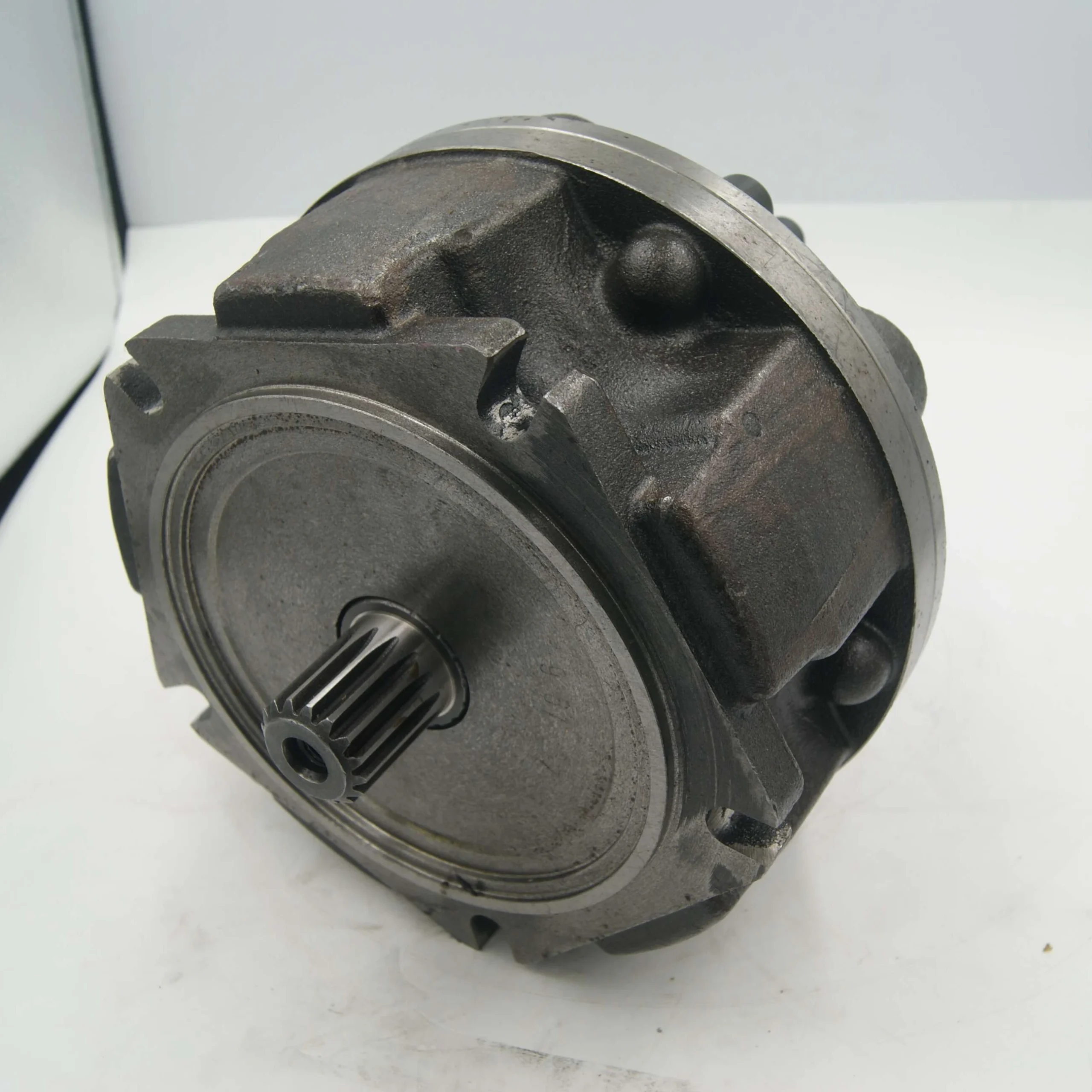

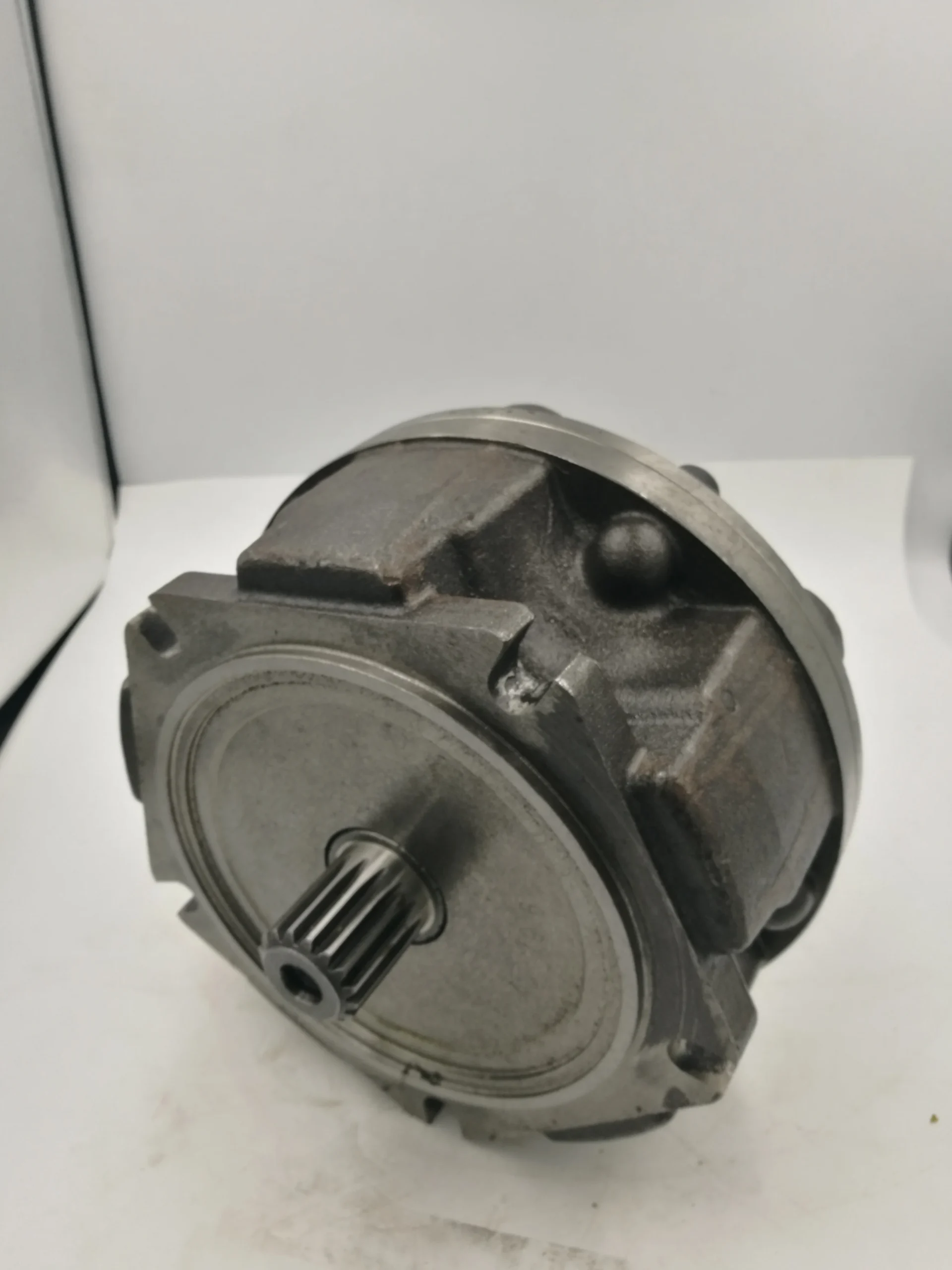
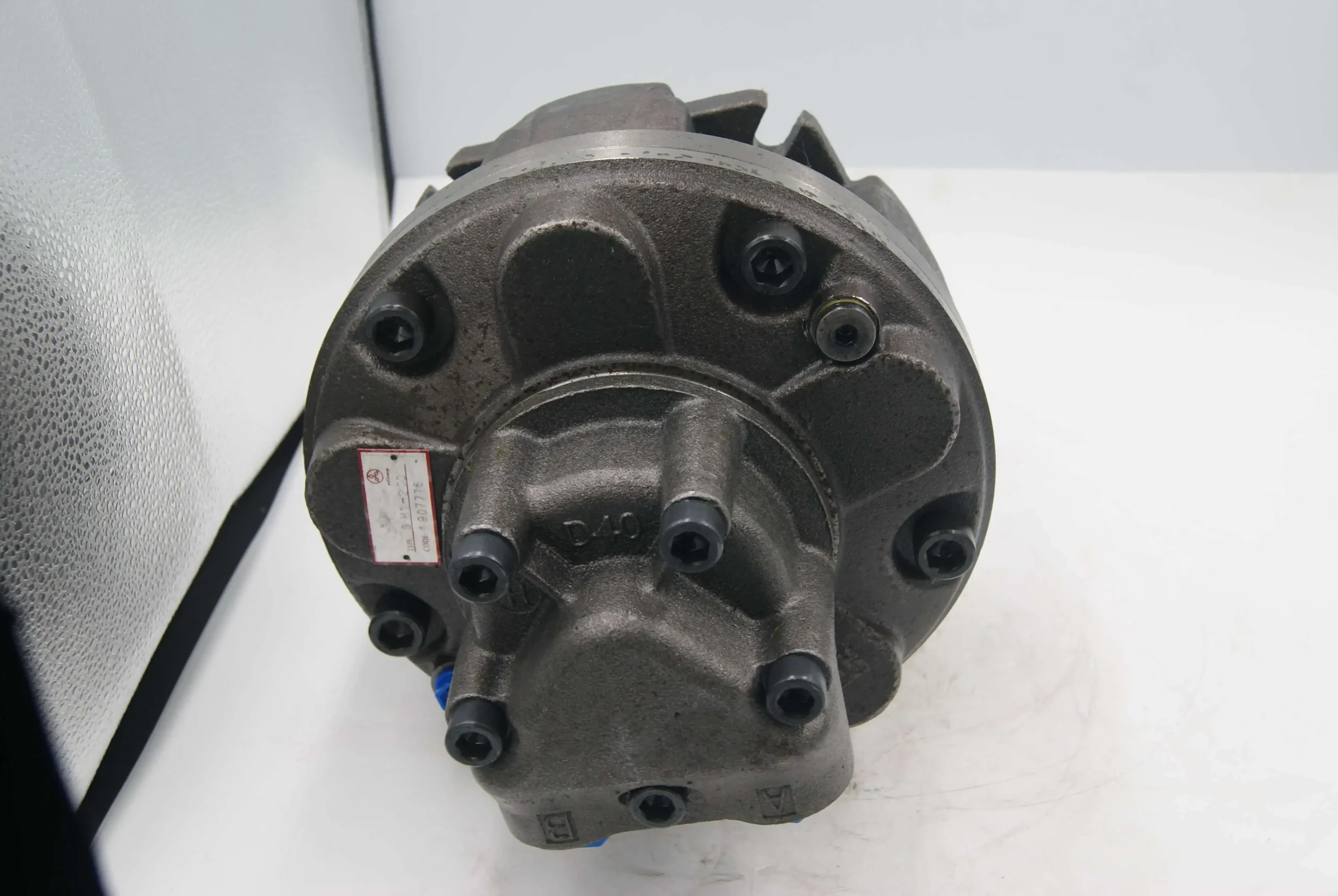
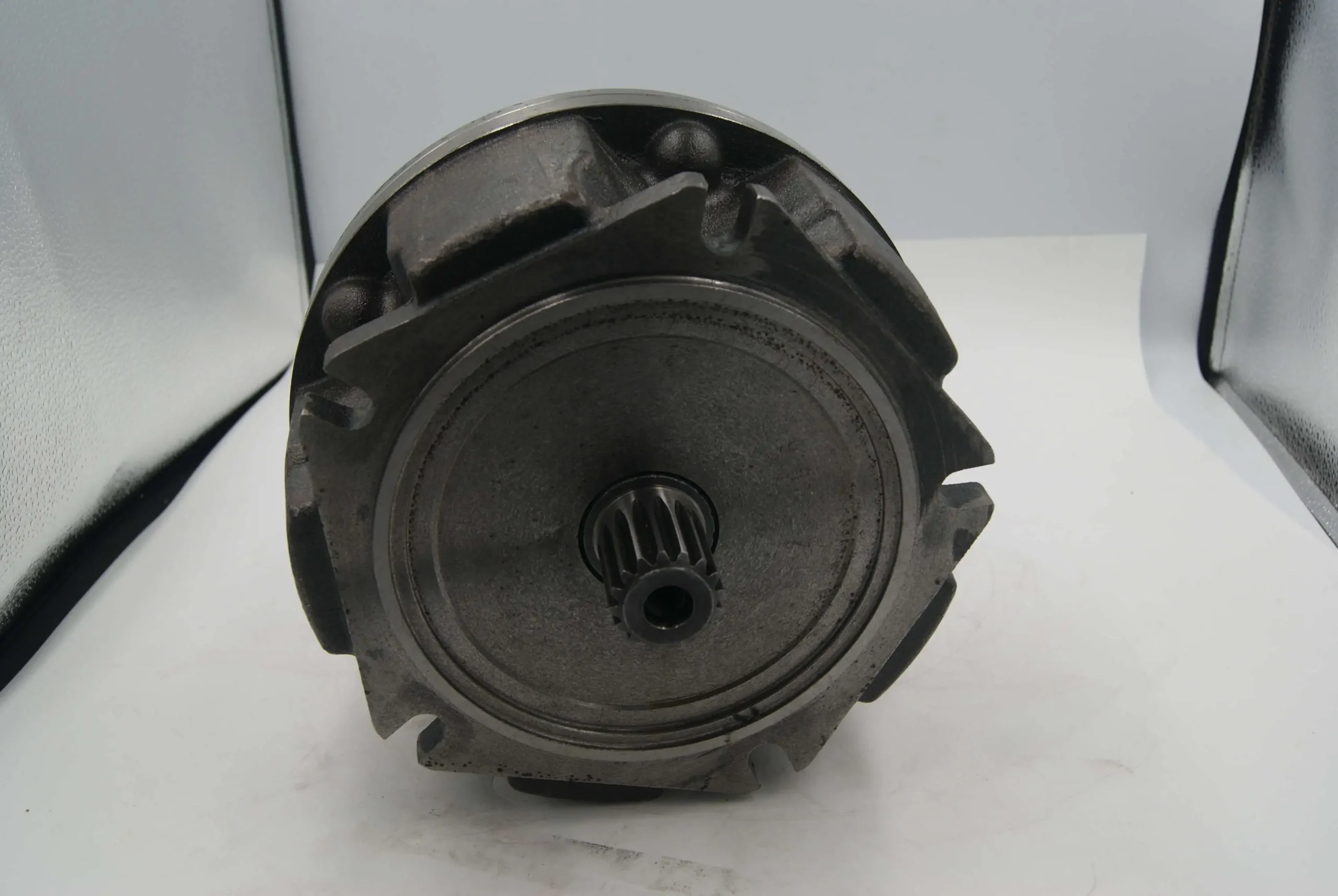

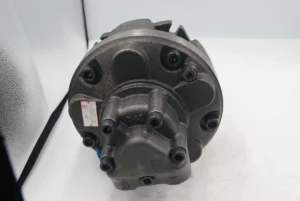
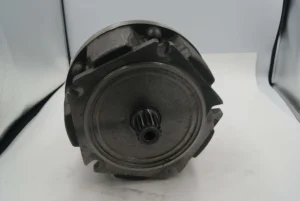
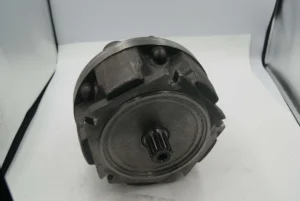

Low Speed Rpm High Torque Hydraulic Radial Piston Motor GM05 GM1 GM2 GM3 GM4 GM5 GM6 GM7 GM9 Hydraulic Motor
Theoretical displacement: 251mL/r
Rated pressure: 25MPa
Peak pressure: 42.5MPa
Rated torque: 980N·m
◦ Unit torsion: 39.2N·m/MPa
Continuous speed range: 0.7-550r/min
Maximum rotational speed: 800r/min2. Working Principle
High-pressure oil enters from the oil inlet of the oil pan, passes through the flow channel of the housing and the ring of the swing cylinder into the upper part of the piston, and then enters the lower balance chamber of the piston through the throttle hole. The piston passing through high-pressure oil, under the action of oil pressure, transmits force to the eccentric shaft through the spherical bearing sleeve and rollers. The crankshaft rotates under the action of eccentric torque. As high-pressure oil enters, the piston moves towards the axis until it reaches the bottom dead center. Then, the piston chamber is connected to the return oil port through the oil distribution plate. Under the push of the crankshaft, the piston is pushed away from the axis, and the volume of the piston chamber decreases. The low-pressure oil is discharged to the return oil port through the channel at the swing cylinder ring, the flow channel of the housing, the oil distribution plate, and the oil passage plate. Each piston is thus connected to high pressure and low pressure. The driving torque generated by the piston under high pressure on the center of the output shaft is added in the same direction, enabling the output shaft of the hydraulic motor to obtain continuous and stable rotational torque. Changing the direction of the oil flow can alter the rotation direction of the hydraulic motor.
3. Product features and advantages
High mechanical efficiency: There is no lateral force between the piston and the swing cylinder. The bottom of the piston is designed for static pressure balance. Torque is transmitted between the piston and the crankshaft through rolling bearings, reducing friction losses during the transmission process. The mechanical efficiency at startup is above 0.92.
High volumetric efficiency: The plane distributor is simple and reliable, with good sealing performance. The piston and the swing cylinder are sealed with plastic piston rings without leakage, and the volumetric efficiency can reach 0.98.
◦ Good low-speed stability: The structure reduces friction loss, improves sealing performance, and can operate smoothly at 1r/min. It has a wide speed regulation range, with a speed regulation ratio of up to 1000.
◦ High pressure: The maximum pressure can reach 45MPa.
Other advantages: light weight, small size, high specific power, reliable operation, long service life, low noise, the drive shaft is allowed to bear radial loads, and the rotation direction is reversible.
4. Usage functions and purposes
◦ Function of use: Convert the pressure energy of hydraulic oil into mechanical energy, output torque and rotational speed, and drive the moving parts of mechanical equipment to rotate.
Application: Widely used in the hydraulic transmission systems of various machinery such as plastic machinery, light industrial machinery, metallurgical machinery, mining machinery, lifting and transportation equipment, heavy machinery, petroleum and coal mining machinery, ship deck machinery, machine tools, geological drilling equipment, etc.
5. Applicable machines and scenarios
◦ Applicable machines: Particularly suitable for the drive of winches, drum machinery, various rotary machinery, and the drive of crawler and wheel traveling mechanisms and other transmission machinery.
◦ Applicable scenarios: It is suitable for hydraulic transmission scenarios that require low speed, high torque, high reliability and stability, such as steering gears, winches, cranes, etc. on ships, as well as fields like construction machinery and mining machinery.
6. Similar models
Other models in the GM2 series, such as GM2-200, GM2-300, GM2-420, etc., as well as motors of different displacements and pressure grades like the GM1 series, GM3 series, GM4 series, etc.
7. Precautions for Use
Installation aspect: Ensure that the motor is installed in the correct position, has a firm connection with the drive equipment and other components, and the coaxiality meets the requirements. Avoid additional stress and vibration caused by improper installation.
In terms of oil: Use hydraulic oil that meets the requirements, maintain the cleanliness of the oil, and regularly inspect and replace the hydraulic oil to prevent oil contamination from causing wear of internal motor parts and seal failure.
◦ Working pressure and speed: Do not exceed the rated pressure and maximum speed of the motor to avoid damaging the motor or affecting its performance and lifespan.
Maintenance and care: Regularly inspect and maintain the motor, including checking the aging and wear of seals, the lubrication and wear of bearings, etc., and promptly identify and address any issues.