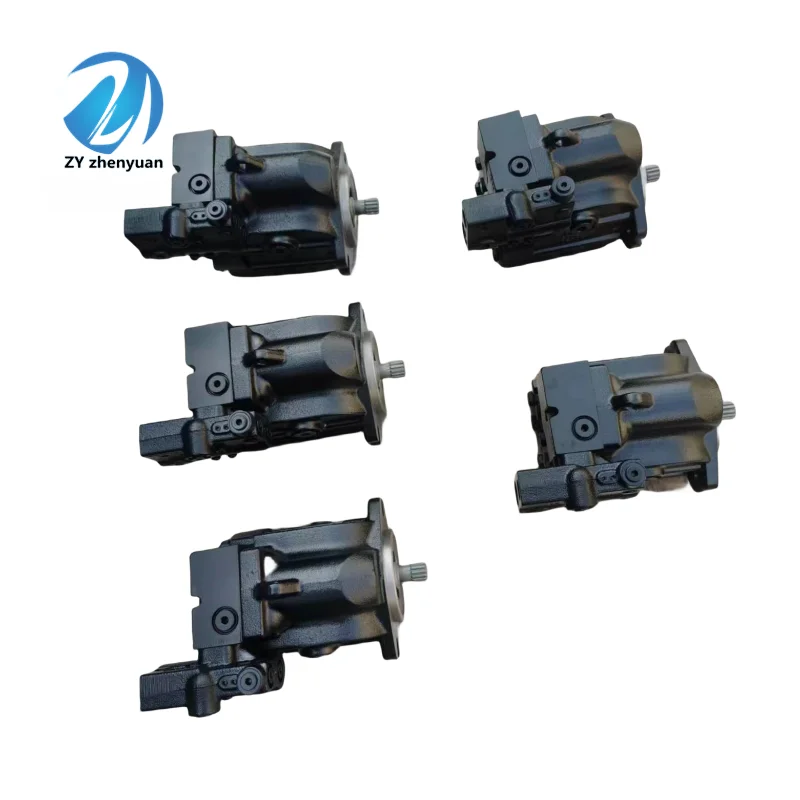
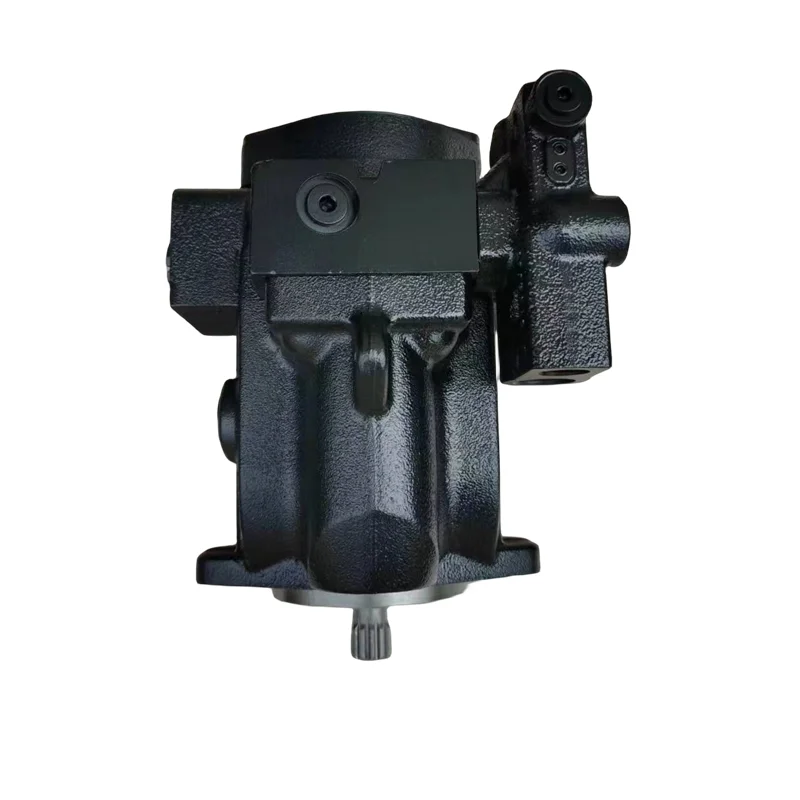
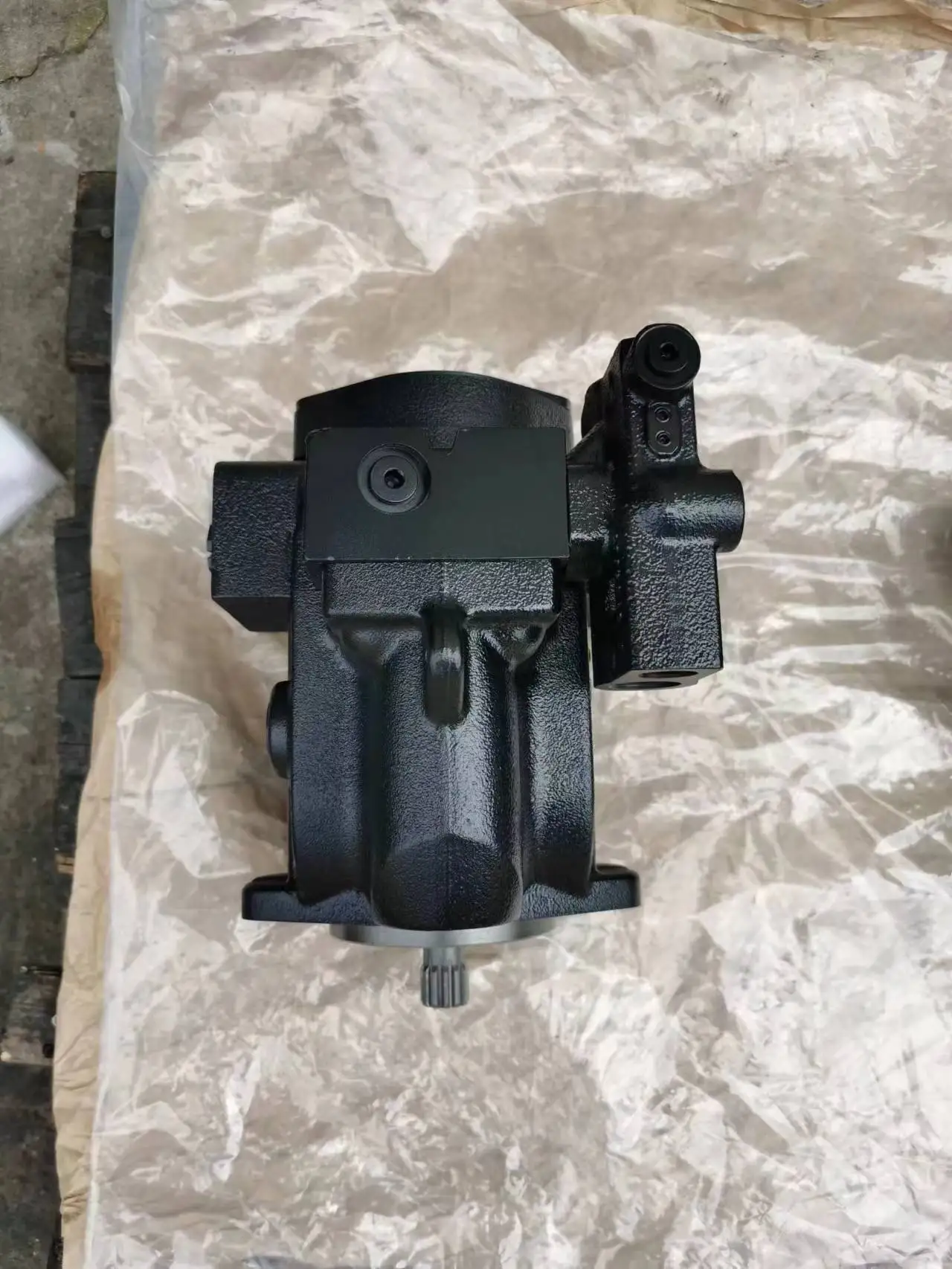

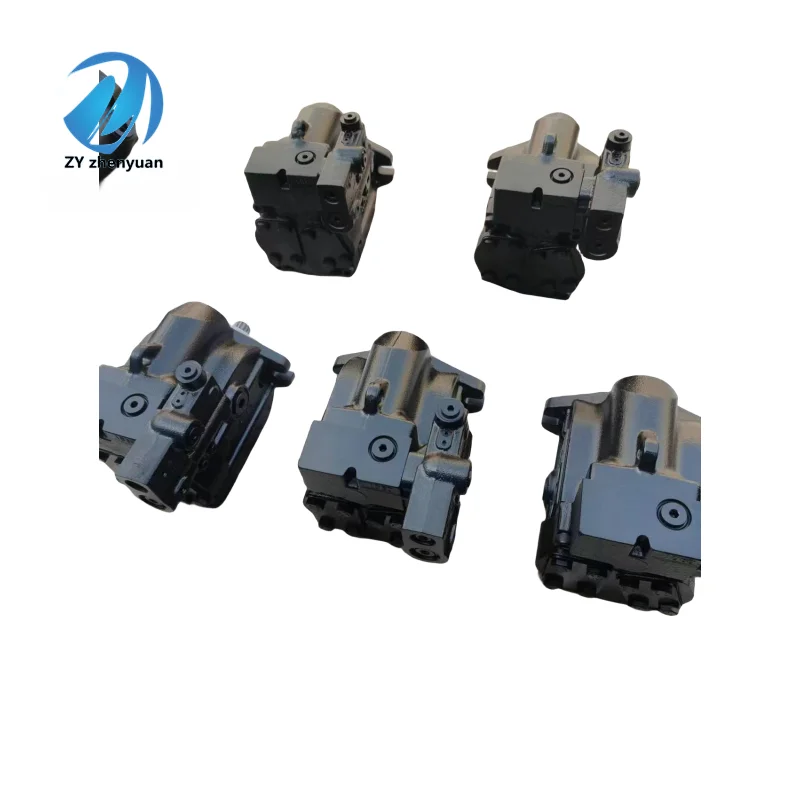
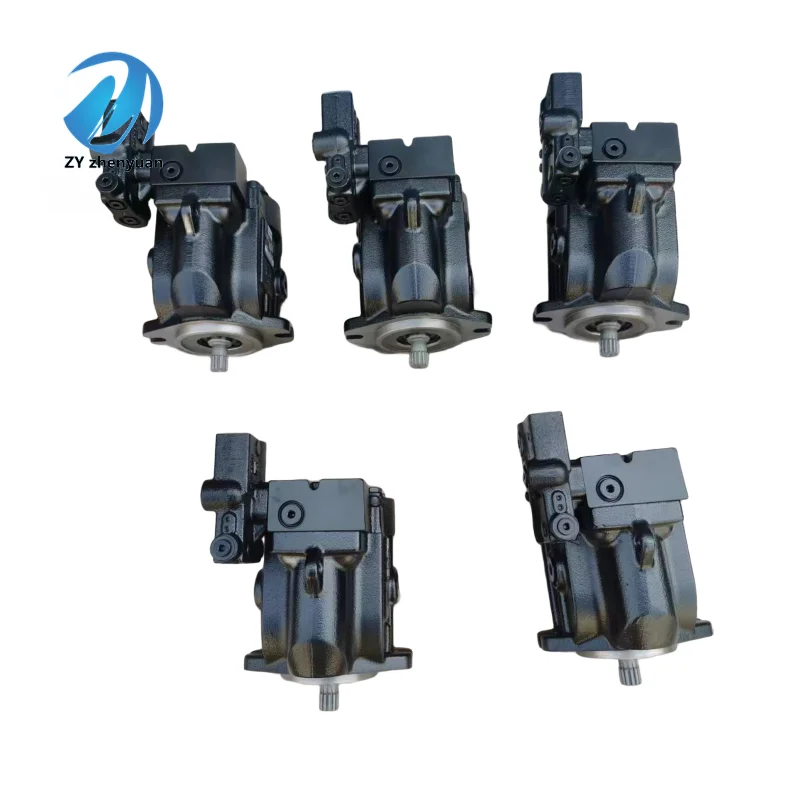
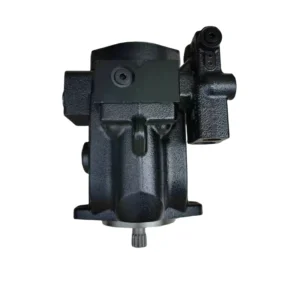
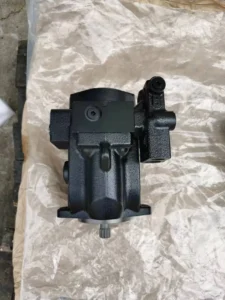

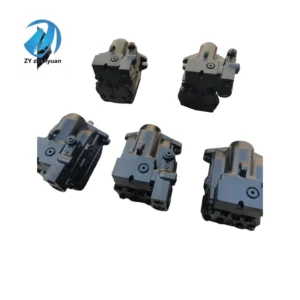
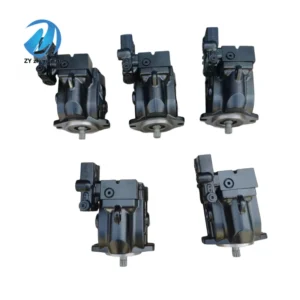
LRR025CLS2020NNN3C2AGA6NPLBNNNNNNN High Pressure Hydraulic Piston Pump KRR LRR025 LRR030 KRR038 KRR045 Variable Hydraulic Pump
Core performance parameters
– Pump type: Axial variable piston pump, swash plate compact structure, right-hand steering, suitable for low-pressure open hydraulic circuits, supports stepless displacement adjustment, providing low-pressure and low-flow oil supply for light-load single/double actuators.
– Displacement and pressure parameters: Rated displacement 25 mL/r (marked with model “025”); Rated working pressure: 16 MPa, maximum allowable pressure: 20 MPa (for a duration of ≤10 seconds); Rated speed: 1500 r/min, maximum speed: 2000 r/min (short time ≤5 minutes).
– Flow and efficiency parameters: Maximum flow at rated speed is 37.5 L/min, and the variable range is continuously adjustable from 0 to 37.5 L/min. Volumetric efficiency ≥92%, total efficiency ≥84%; The rotational speed is within the range of 800 to 1500 r/min, and the flow regulation accuracy is ±3%.
– Operating characteristics: Continuous operating oil temperature ≤80℃, rated working condition inlet vacuum degree ≤ 0.02MPa; Noise value ≤75 dB (measured at 1 meter); The fault-free operating life is ≥ 10,000 hours (under rated conditions).
2. Structure and connection parameters
– Structural type: Swash plate axial piston structure, integrating the piston cylinder body, variable swash plate, return plate and built-in low-pressure relief valve; It adopts constant pressure control mode and supports manual or remote proportional adjustment of displacement. Flange installation, with a built-in simple oil-absorbing filter screen.
– Core material: The plunger is made of stainless steel 304 (quenched and tempered, hardness HRC35-38); The cylinder block is made of alloy cast iron HT300 (aged treatment, hardness HB240-280). The swash plate is made of bearing steel GCr15 (quenched treatment, hardness HRC58-62). The sealing part is a fluororubber combination (temperature resistance ≤100℃).
– Connection specifications: The oil suction port (S) is a DN40 flange, and the oil outlet port (P) is a DN32 flange. The drive shaft is spline connected (specification: 6×22×25). The center distance of the flange bolts is 120×80 mm. The weight of the pump body is approximately 45 kg, and its external dimensions (length × width × height) ≈380×220×260 mm.
3. Medium and Environmental requirements
– Medium requirements: Compatible with L-HM 46 anti-wear hydraulic oil (L-HM 32 can be selected in low-temperature environments), allowable medium viscosity 15-350 mm²/s, moisture content ≤0.03%, acid value ≤0.5 mgKOH/g. It is strictly prohibited to use media containing solid particles (particle size > 10 μm) or corrosive media.
– Cleanliness standard: The oil cleanliness should reach ISO 4406 17/14 grade. It is recommended to install a 10 μm filter in front of the oil suction port. The filter should be replaced immediately when the pressure difference of the filter is greater than 0.05 MPa.
– Environmental parameters: Operating environment temperature -20℃ to 85℃, relative humidity ≤95% (short-term condensation is allowed); With a protection grade of IP54, it is suitable for light-load working conditions such as small construction machinery, micro hydraulic stations, and agricultural machinery.Ii. Working Principle
This pump is a swashplate type axial variable piston pump. The core achieves low-pressure oil supply through the mechanism of “axial reciprocating volume change of the piston – swashplate Angle adjustment of the displacement”. The specific process is as follows:
1. Core process of oil suction and discharge
The drive shaft rotates the cylinder block, and the plunger inside the cylinder block is always in close contact with the surface of the swash plate under the action of the spring force of the return disc. When the plunger rotates with the cylinder body to the side of the swash plate that is farther from the center, the plunger extends outward, the volume of the plunger chamber increases to form a negative pressure, and the hydraulic oil is sucked in through the oil suction port and the filter screen. When the plunger rotates to the side of the swash plate closer to the center, the swash plate compresses the plunger to retract inward, reducing the volume. The oil is then squeezed out from the oil outlet, completing the oil suction and discharge cycle.
2. Variables and Safety Protection
– Stepless variable adjustment: By adjusting the mechanism to change the inclination Angle of the swash plate (adjustable from 0 to 15°), as the Angle increases, the plunger stroke increases, and the flow rate also increases accordingly. When the Angle is reduced, the flow rate decreases, achieving stepless adjustment from 0 to 37.5L /min, which is suitable for the dynamic flow rate requirements under light load.
– Safety Assurance: Built-in low-pressure relief valve automatically unloads when the system pressure exceeds 18 MPa, preventing overpressure damage. The oil replenishment valve in the oil suction chamber prevents cavitation caused by excessive vacuum and extends the service life of the pump body.
Iii. Product Features and Advantages
– Small displacement precise matching: 25 mL/r small displacement + 37.5L /min maximum flow rate, precisely matching the single/dual actuator requirements of small equipment (such as small loader lifting, micro clamping devices), avoiding energy waste caused by using large pumps for small purposes.
– Low-pressure stable operation: A rated pressure of 16 MPa is suitable for low-pressure systems, and a peak pressure of 20 MPa can withstand short-term shocks. The flow regulation accuracy is ±3%, and the oil supply stability in scenarios such as micro hydraulic stations is superior to that of ordinary small-displacement pumps.
– Compact, lightweight and easy to install: Weighing only 45 kg, with a small design, it supports quick flange installation and is suitable for small equipment with limited installation space. The installation efficiency is 40% higher than that of similar large pumps.
– Low noise, energy-saving and long service life: The swash plate adopts a modified design, with small meshing impact. The noise at 1 meter is ≤75 dB, which is 4 dB lower than that of ordinary pumps of the same displacement. The volumetric efficiency is ≥92%, with an annual energy saving of approximately 15%, and the rated working condition fault-free life is ≥ 10,000 hours.
– Easy maintenance and low cost: Built-in filter screen and relief valve, reducing the configuration of external valve components; The vulnerable parts (seals, filters) have strong versatility and are easy to replace. The annual maintenance cost is 25% lower than that of similar pumps.
Iv. Usage Functions and Purposes
1. Core usage functions
Low-pressure variable oil supply: It provides adjustable flow rates ranging from 0 to 37.5 L/min for light-load systems, meeting the full range of requirements from rapid action of actuators (such as small lifting platforms) to low-pressure pressure holding (such as micro presses).
– System pressure stabilization protection: The built-in relief valve automatically stabilizes the system pressure, making it suitable for simple hydraulic systems without independent pressure regulating valves and preventing the actuator from being overloaded and damaged.
– Single-pump dual-circuit drive: By distributing oil through multi-way valves, it can drive two light-load actuators to act in coordination (such as lifting and tilting of a small forklift), simplifying the system structure.
2. Main application fields
In the field of small-scale construction machinery: 1-3 ton small loaders (lifting circuit), 2-5 ton electric forklifts (lifting + tilting circuit), and micro hydraulic transporters (lifting drive), suitable for short-distance light-load operations.
In the field of micro industrial equipment: 100-500 ton micro hydraulic presses (main cylinder drive), benchtop CNC equipment (fixture clamping circuits), small injection molding machines (ejection mechanisms), suitable for precision and light-load production.
– Agriculture and special fields: 30-50 horsepower small tractors (suspension adjustment circuit), small orchard operation platforms (lifting drive), small irrigation equipment (hydraulic valve control), suitable for outdoor light-load scenarios.
V. Applicable Machines and Scenarios
1. Adapt to the core machine
– Small construction machinery: 1-3 ton small loaders, 2-5 ton electric forklifts, micro hydraulic transporters, small lifting platforms.
– Micro industrial equipment: 100-500 ton micro hydraulic presses, bench CNC lathes (hydraulic fixtures), small injection molding machines under 500 tons.
– Agricultural and special equipment: 30-50 horsepower tractors, orchard lifting operation platforms, small plant protection machinery (hydraulic regulation).
2. Typical application scenarios
– Small forklift scenario: As the main pump of a 3-ton electric forklift, it provides 14 MPa pressure oil. When lifting, it outputs a flow rate of 37.5 L/min, and drops to 18 L/min when tilting. It is suitable for loading and unloading goods in warehouses and can work continuously for 8 hours without pressure fluctuations.
– Micro press scenario: It is used for 300-ton micro presses, with a rapid mold closing output of 37.5L /min flow rate. During pressing, it is reduced to 10L /min for pressure holding (pressure 16 MPa), with a pressure holding accuracy of ± 0.4MPa, suitable for the stamping of small parts.
– Tractor suspension scenario: Equipped with a 40-horsepower tractor, it supplies fuel to the suspension adjustment circuit (pressure 12 MPa, flow 25 L/min), achieving precise height adjustment of agricultural tools and adapting to farmland cultivation.
Six. Similar models
1. Alternative models of the same series
– LRR020CLS2020NNN3C2AGA6NPLBNNNNNNN: with a smaller displacement model structure, the rated capacity of 20 mL/r, 30 L/min, flow stress parameters are consistent, adaptation ultra small flow system (such as micro clamp), the cost is low 18%.
– LRR032CLS2020NNN3C2AGA6NPLBNNNNNNN: series with larger displacement model, rated capacity 32 mL/r, 48 L/min, flow pressure parameters, the same adapter medium light load system (e.g., 5 ton forklift truck), 22% higher than the cost.
2. Cross-series alternative models
– LRR025LLS2020NNN3C2AGA6NPLBNNNNNNN: left rotation to the model, the structure parameters are consistent, adapter left-handed power source (e.g., part of the imported mini-motor), cost and the original model.
– LRR025CLS2020NNN3C2AGA6NPLBNNNNNNN – H: high temperature upgrade model, seals and heat-resistant up to 140 ℃, adaptation of small metallurgical auxiliary equipment, high cost of 40%.
– LRR025CLS2020NNN3C2AGA6NPLBNNNNNNN – D: quantitative models, fixed displacement 25 mL/r, adapter flow stabilizing system, the cost is low 15%.
Vii. Precautions for Use
1. Medium management
– L-HM 46 anti-wear hydraulic oil must be selected. Mixing oil or using deteriorated oil is strictly prohibited. Before the first use of the new pump, flush the pump body and pipelines with clean oil for ≥15 minutes to ensure that the cleanliness reaches ISO 4406 17/14 grade.
– Check the pressure difference of the oil suction filter every month (replace if > 0.05 MPa), and measure the moisture content of the oil (≤0.03%) and cleanliness every quarter. When the oil emulsifies, changes color or contains impurities, stop the machine to change the oil and clean the pump body.
2. Installation and commissioning
When installing, the coaxiality of the drive shaft and the motor shaft should be no more than 0.05mm (for elastic couplings), and the flange bolts should be tightened with a torque of 300 N·m. The diameter of the oil suction pipeline should be no less than DN40, the length no more than 1.5m, and the number of elbows no more than 2 to avoid excessive oil suction resistance.
Before debugging, add oil to the upper limit of the oil level and manually turn the wheel 2-3 times without any jamming. Jog to verify the turning direction (right rotation), run at a low speed (800 r/min) for 10 minutes, and then monitor the no-load pressure (≤0.6 MPa is qualified).
The oil suction port is more than 300mm lower than the oil level in the oil tank, and a 0-25MPa pressure gauge is installed at the oil outlet. Install a rain cover outdoors to ensure a protection level of IP54.
3. Operation and Maintenance
During operation, monitor temperature (normal ≤75℃, maximum ≤85℃), pressure and noise. When the temperature rises sharply by more than 10℃, the pressure fluctuates by more than 1 MPa, or the noise is abnormal, the machine should be shut down to check for oil contamination or wear of the plunger.
– Maintenance every 1500 hours: Clean the filter screen and relief valve, and check the gap between the plunger and the cylinder block (replace if > 0.015mm). Replace the seals and oil, and calibrate the pressure of the relief valve to 18 MPa.
– Do not run without oil (sintering for more than 5 seconds); It is strictly prohibited to exceed the rotational speed (> 2000 r/min) or to operate under long-term overpressure (> 20 MPa). Before shutting down, first relieve the pressure to below 0.5 MPa.
4. Storage protection
For long-term storage, seal the oil suction port with a plug, fill the pump body with anti-rust oil, and apply grease to the drive shaft. Store in a warehouse with a temperature ranging from 0 to 45℃ and a humidity of no more than 60%. Rotate the vehicle once a month to prevent adhesion.
Before being put into use after being idle for more than 12 months, clean the inner cavity and replace the sealing parts. After adding new oil and conducting a low-speed trial run for one hour, if there are no abnormalities, connect to the system.