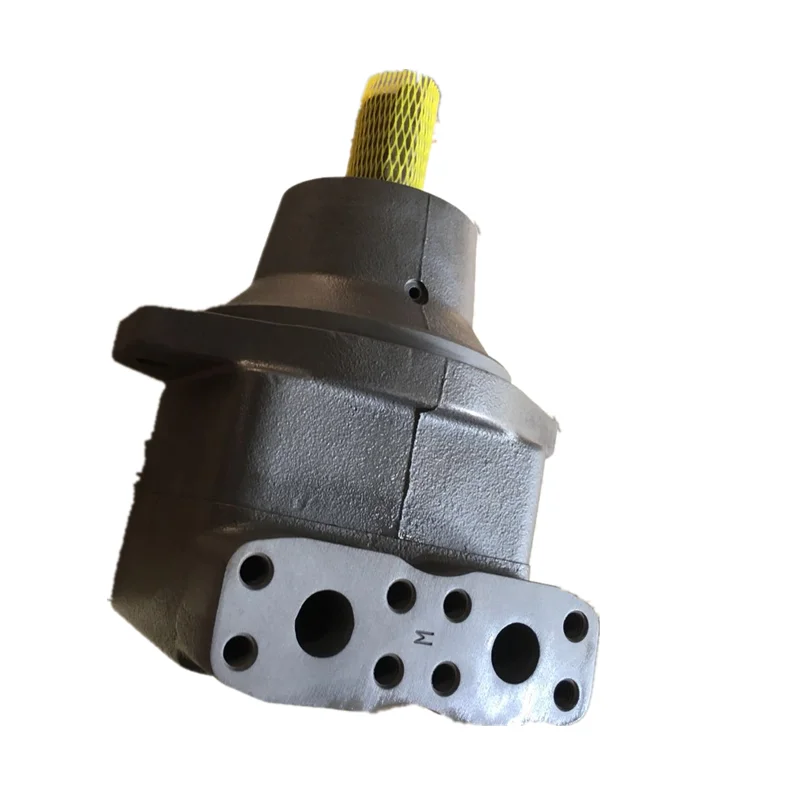

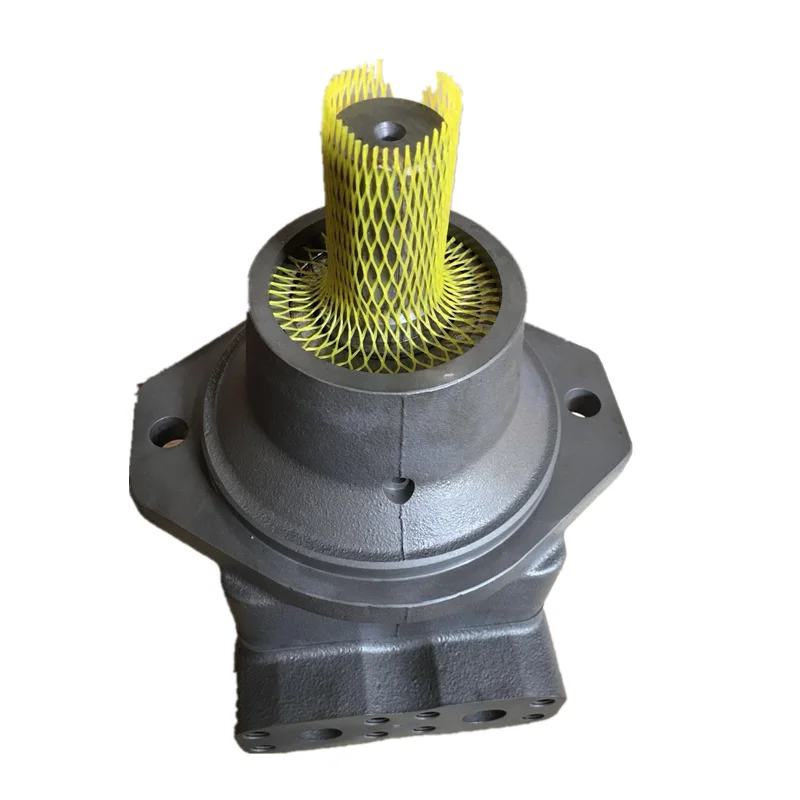

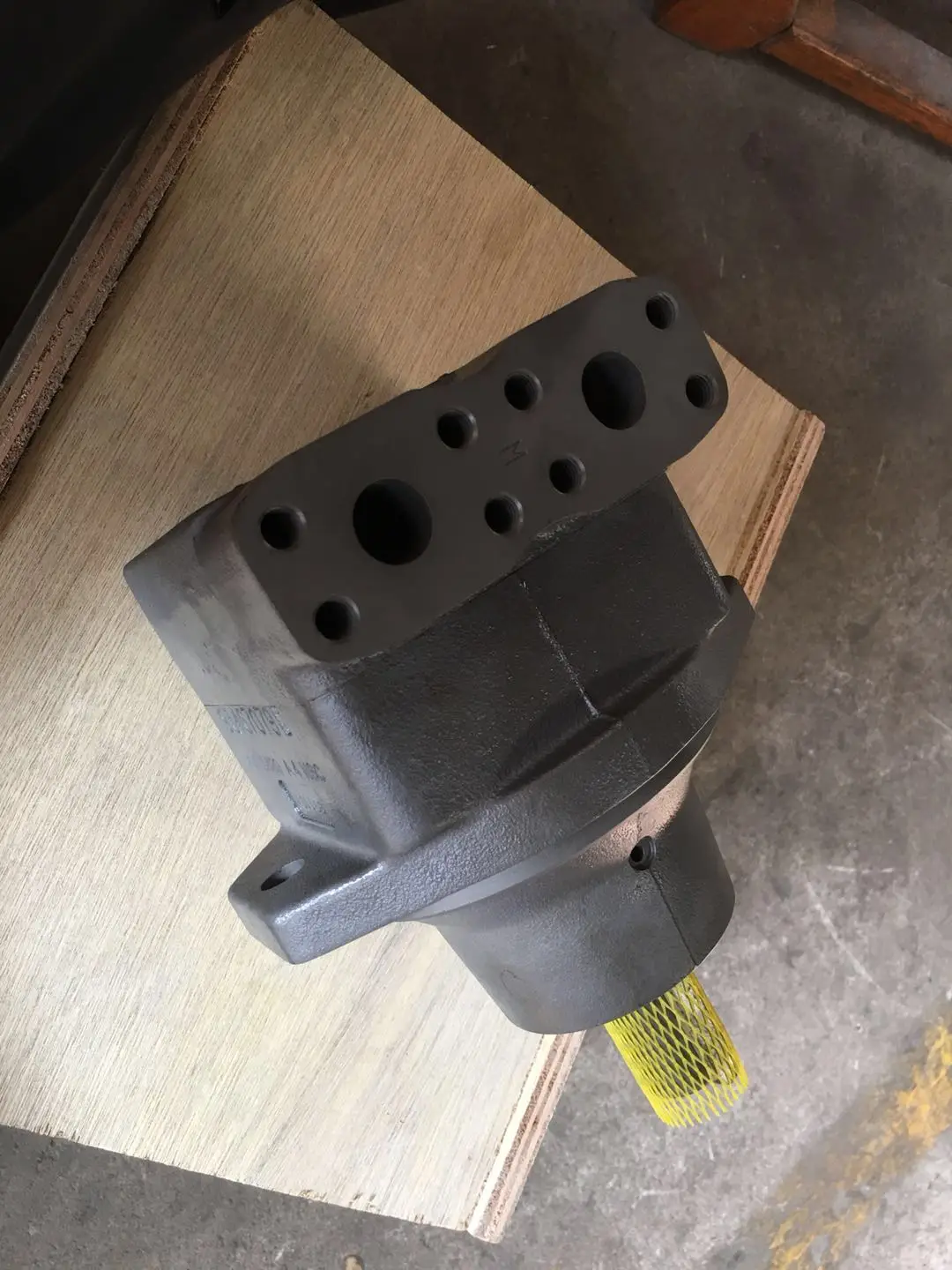




M5 M5A M5AF M5B M5BS M5BF Hydraulic Oil Pump M5BF 028 1N02 B1M3 M534168 Hydraulic Fixed Displacement Vane Pump Motor
Displacement and pressure performance
Theoretical displacement: 28 mL/r, suitable for stable drive requirements of medium and high-pressure hydraulic systems.
Pressure rating: Continuous rated pressure 320 bar (32 MPa), instantaneous peak pressure 350 bar (35 MPa), single duration ≤10 seconds, capable of withstanding short-term heavy-load impact.
◦ Speed range: 100-6000 rpm, suitable for high-speed rotation scenarios (such as cooling fan drive), low-speed stability error ≤±2%.
2. Structure and installation parameters
◦ Structural type: Double-blade design, the inner wall of the stator is a special curved contour, the rotor is eccentrically installed to form a variable volume cavity, and the blade material is high-strength aluminum alloy + tungsten carbide coating (hardness HV1200-1400).
◦ Installation method: SAE type B flange (4 holes), positioning pin diameter Φ 12mm, compatible with general power interface; The shaft extension type is involute spline (ISO 4156), and the torque transmission is ≥120 N · m.
Weight and dimensions: The overall weight of the machine is approximately 18.5kg, with a length × width × height of 280×160× 140mm. The compact structure is suitable for equipment with limited space.
3. Oil and environmental requirements
◦ Oil type: L-HM 46 anti-wear hydraulic oil is recommended. L-HV 46 hydraulic oil should be selected for low-temperature environments below -20℃. The viscosity range of the oil is 15-400 mm²/s.
◦ Cleanliness standard: ISO 4406 18/15 grade (NAS 7 grade). A 10μm filter should be installed at the oil inlet, and a 5μm fine filter should be added at the oil return port.
◦ Working environment: Ambient temperature -20 ℃ to + 80℃, relative humidity ≤95% (no condensation), suitable for harsh working conditions such as dust and oil stains.
4. Output characteristics
Output torque: Maximum torque at rated pressure is 280 N · m (320 bar×28 mL/r× 90% mechanical efficiency), and low-speed torque pulsation is ≤±1.5%.
◦ Volumetric efficiency: ≥95% (under rated conditions), mechanical efficiency ≥90%, total efficiency ≥85%.Ii. Working Principle
This motor achieves the transmission of hydraulic energy to mechanical energy through the core mechanism of “pressure difference drive – blade sealing – energy conversion”. The specific process is as follows:
1. Volume change and power transmission: Pressure oil enters the eccentric cavity between the stator and rotor from the oil inlet, pushing the blades to extend along the rotor grooves. Under the action of centrifugal force and hydraulic pressure, the blades closely adhere to the inner wall of the stator, forming multiple sealed working chambers. As the rotor rotates, the volume of the working chamber gradually decreases in the high-pressure area (oil pressure process) and gradually expands in the low-pressure area (oil suction process), thus achieving continuous rotation.
2. Double-blade sealing technology: Each blade adopts a double-lip edge structure, forming a dynamic seal with the inner wall of the stator. Pressure oil is introduced into the bottom of the blade. Through the balance between the spring preload and the hydraulic pressure, it ensures that the blade maintains good sealing performance even when rotating at high speed, reducing internal leakage (leakage volume ≤5 mL/min).
3. High-speed stability design: The rotor adopts a dynamic balance design (G2.5 grade), combined with high-precision bearings (radial runout ≤ 0.02mm). At A high speed of 6000 rpm, the vibration value is ≤5 mm/s, and the noise is ≤75 dB (A). It is suitable for scenarios such as cooling fans and high-speed centrifuges.
4. The gap between the anti-pollution mechanism blade and the slide groove is designed to be 0.05-0.1 mm, allowing a small amount of particles to pass through without getting stuck. Meanwhile, the surface roughness Ra of the tungsten carbide coating is no more than 0.2 μm, which reduces wear and extends the service life (the fault-free operating life exceeds 10,000 hours).
Iii. Product Features and Advantages
1. High speed and low pulsation
The maximum speed reaches 6000 rpm, which is 30% higher than similar products. It is compatible with high-speed cooling fan drives and can reduce system power consumption by more than 20%.
The 12-blade structure, combined with a specially curved stator, has a torque ripple of ≤±1.5%, which is 50% lower than that of the traditional 6-blade motor. It is suitable for scenarios with high stability requirements, such as precision stirring and metering pumps.
2. Wide pressure range and shock resistance
The continuous working pressure is 320 bar, and the instantaneous peak pressure is 350 bar. It can withstand hydraulic shock (shock frequency ≤10 times per minute), and is suitable for heavy-duty working conditions such as construction machinery and mining machinery.
It adopts pressure-balanced bearings, which can withstand radial loads of no more than 8000 N and axial loads of no more than 3000 N, reducing the need for external support.
3. Energy conservation and reliability
The double-blade sealing technology reduces internal leakage, with a volumetric efficiency of ≥95%, and is 15% more energy-efficient than single-blade motors.
The modular design facilitates maintenance. Replacing blades or bearings does not require disassembling the entire motor, reducing maintenance time by 50%.
4. Standardization and Compatibility
It complies with the ISO 3019-2 standard installation interface and can directly replace similar products (such as A series, PVH series), reducing the difficulty of modification.
It supports bidirectional rotation (clockwise/counterclockwise), and the steering switch can be achieved by changing the distribution plate.
Iv. Usage Functions and Purposes
1. Core usage functions
◦ Speed regulation: The speed can be adjusted steplessly from 0 to 6000 rpm by controlling the input flow rate (0-168 L/min), with a response time of no more than 100 ms.
Overload protection: Built-in relief valve (set pressure 350 bar) automatically unloads when the load exceeds the limit to prevent motor damage.
Fault diagnosis: The temperature sensor (PT100) monitors the oil temperature in real time and issues an alarm when the temperature exceeds the threshold (80℃) to prevent seal failure due to overheating.
2. Main application fields
◦ Construction machinery: Power sources for cooling fans of 20-30 ton excavators and lubrication pumps of loader gearboxes.
◦ Industrial equipment: 1000-3000-ton hydraulic press mold cooling systems, injection molding machine screw pre-plasticizing drives.
Specialized machinery: Ship deck machinery (such as winches, anchor machines), and spray dust suppression systems for mine tunnel boring machines.
V. Applicable Machines and Scenarios
1. Adapt to the core machine
◦ Construction machinery: hydraulic excavators, loaders, rollers, pavers.
◦ Industrial equipment: hydraulic presses, injection molding machines, centrifuges, mixing plants.
Specialized machinery: ship deck machinery, mining machinery, oil drilling RIGS.
2. Typical application scenarios
High-speed cooling system: It drives a 1.2-meter diameter cooling fan at 3000 rpm, with an air volume of up to 15,000 m³/h, reducing the engine oil temperature by more than 30℃.
Precision stirring control: Torque pulsation ≤±1.5% is achieved at 500 rpm, suitable for scenarios such as food processing (like chocolate refining) and pharmaceuticals (like cream mixing).
High-pressure and high-torque drive: It outputs 280 N · m of torque at 320 bar pressure to drive the mining machinery breaker, with an impact frequency of up to 600 times per minute.
Six. Similar models
1. Alternative models of the same series
M5BF 018: Displacement 18 mL/r, rated pressure 320 bar, flow rate 108 L/min at 6000 rpm, suitable for small cooling fans and metering pumps.
M5BF 045: Displacement 45 mL/r, rated pressure 280 bar, flow rate 180 L/min at 4000 rpm, suitable for driving large construction machinery.
2. Cross-series alternative models
A10VM028: Axial piston motor, displacement 28 mL/r, rated pressure 400 bar, suitable for ultra-high pressure systems (such as deep-sea exploration equipment).
◦ PM30: Swashplate variable motor, displacement 25-35 mL/r, rated pressure 400 bar, stronger anti-pollution ability (ISO 19/16 grade), suitable for harsh working conditions such as mines and ports.
Vii. Precautions for Use
1. Oil and fluid management norms
Strictly select L-HM 46 or L-HV 46 hydraulic oil. The first oil change cycle is 500 hours, and subsequent oil changes should be made every 1000 hours. When changing the oil, the oil tank and pipelines need to be cleaned (the flushing oil volume should be ≥ twice the system volume).
When the pressure difference of the oil inlet filter exceeds 0.35 bar, replace the filter element immediately to avoid dry grinding of the blades due to blockage (shortening the service life by more than 50%).
2. Installation and commissioning requirements
The elastic coupling is adopted for connection, with the coaxiality error of the two shafts being no more than 0.1mm, to prevent radial force from causing bearing damage. The pre-tightening torque of the SAE B flange installation bolts is uniformly controlled at 200-250 N · m.
The diameter of the oil suction pipeline should be no less than Φ 38mm, the length no more than 1.5m, and the number of elbows no more than 2 to prevent excessive oil suction resistance from causing cavitation (inspection is required when the noise abnormally increases).
3. Operation monitoring and maintenance
During operation, monitor the oil temperature (35-80℃), pressure (≤320 bar), and rotational speed (≤6000 rpm). If any abnormality is detected, stop the machine immediately for inspection.
Check the wear of the blades every 2000 hours. When the thickness of the blade wear exceeds 0.2mm, it needs to be replaced. At the same time, check the gap of the slide groove (which should be ≤ 0.15mm).
4. Startup and shutdown specifications
Before the first start, manually turn the wheel 3 to 5 times to ensure smooth rotation. When starting at a temperature below -20℃, it should run without load for 15 minutes. Load only when the oil temperature rises above 10℃.
Before shutting down, the system pressure should be unloaded first to prevent high-pressure oil from impacting the blades and seals.
5. Electromagnetic compatibility protection
The control lines and power lines should be laid separately (with a spacing of ≥ 300mm), using shielded cables and grounded at one end to prevent signal interference from causing speed fluctuations.
When there are strong interference sources such as frequency converters and welding machines nearby, an EMC filter (recommended model: LC-200/24) needs to be installed.