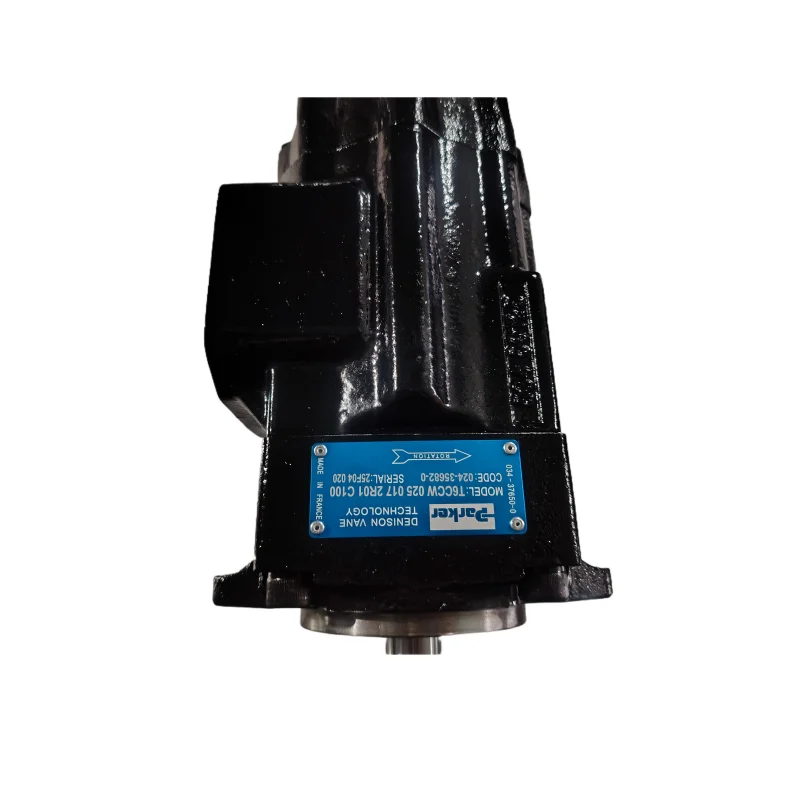
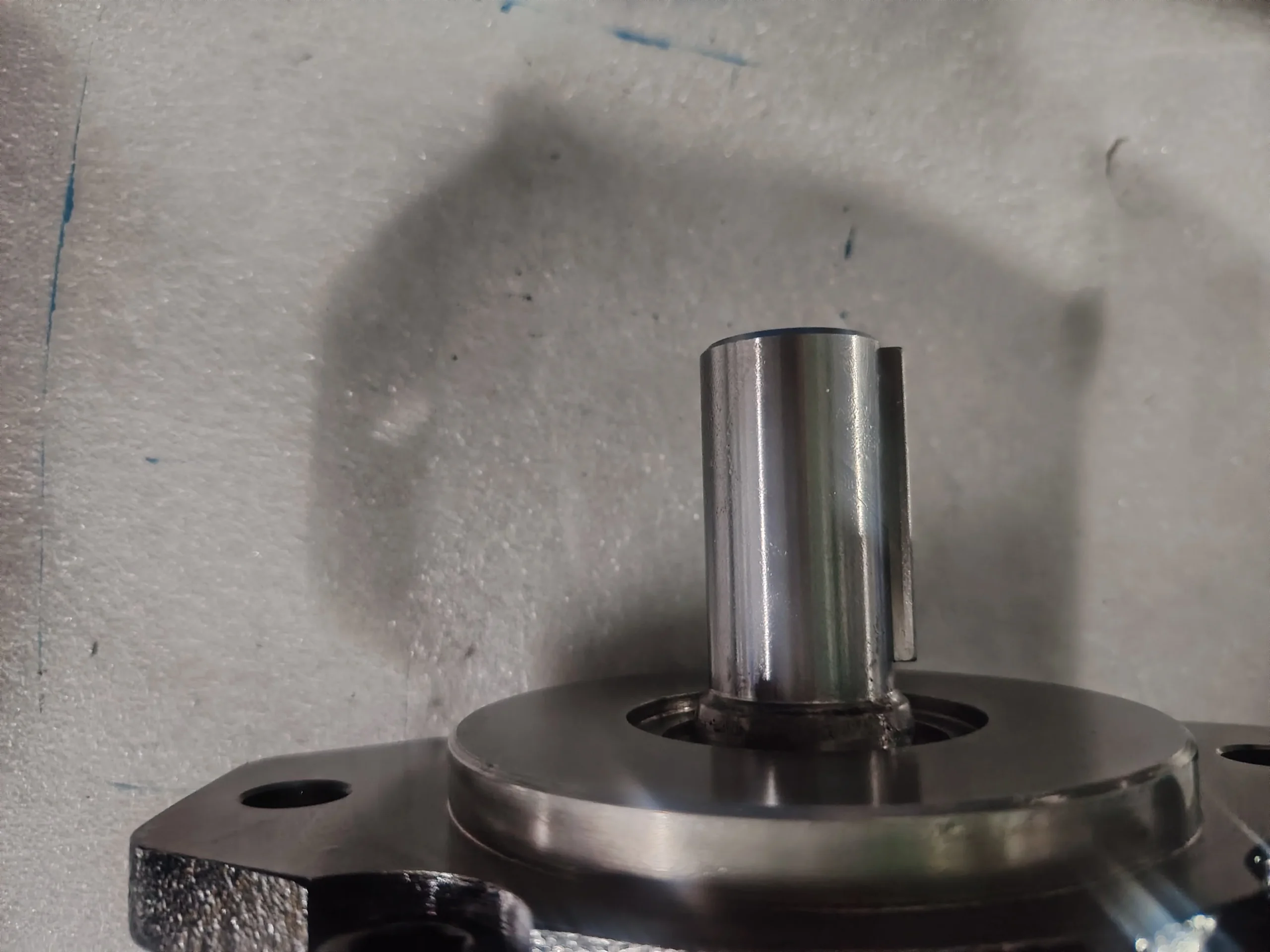
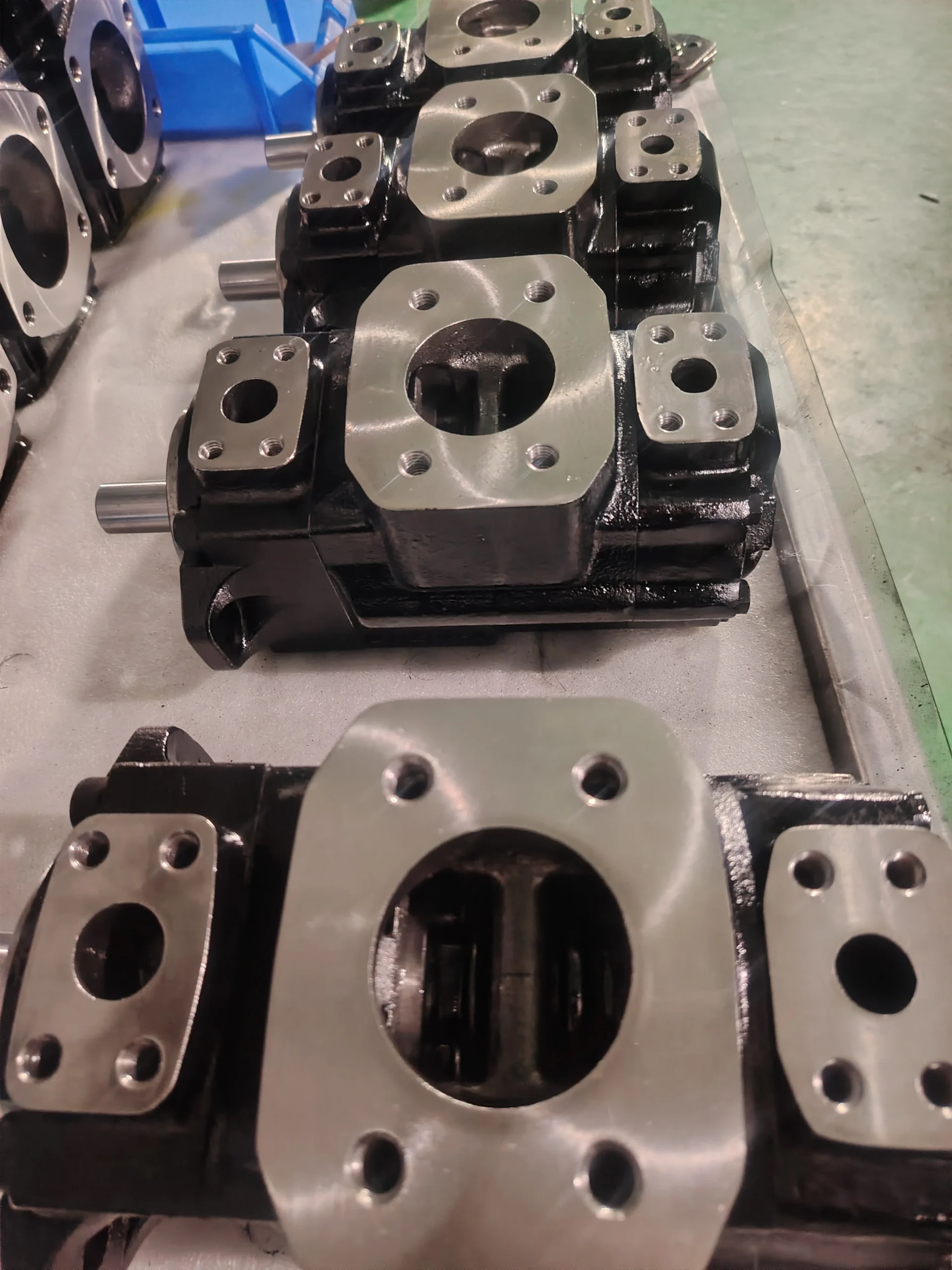
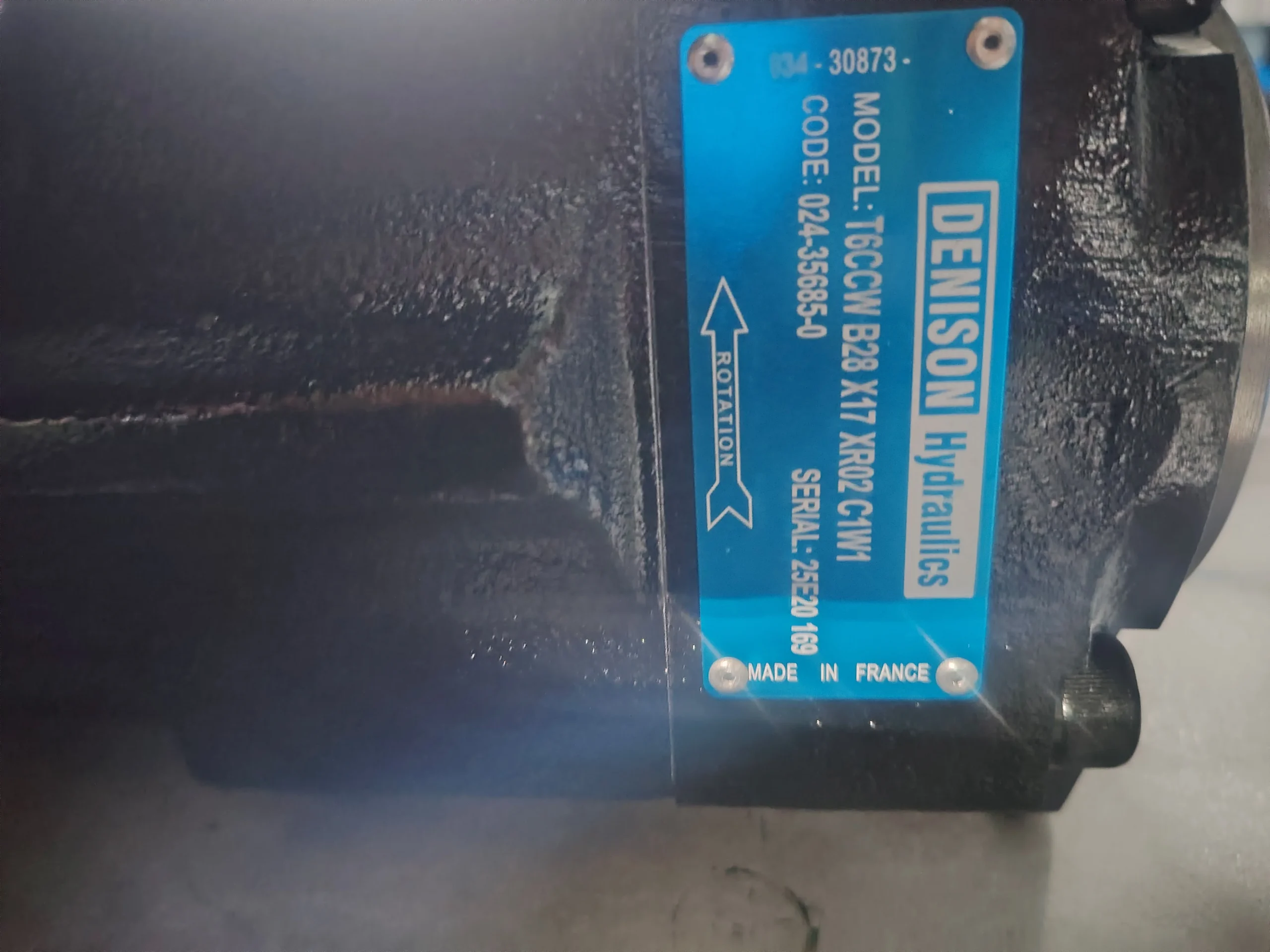
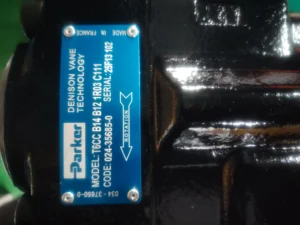
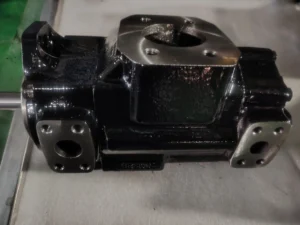
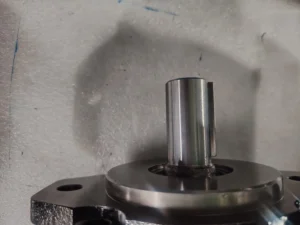
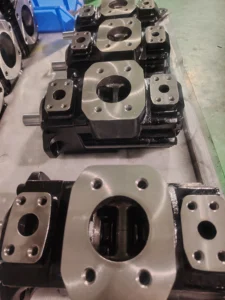
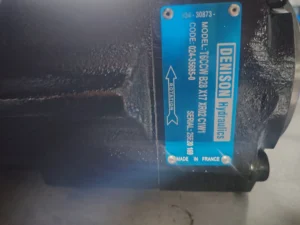
Parker Hydraulic Pump T6CCW B28 X17 XR02 C1W1 High Pressure Vane Pump T6C T6D T6E T6CC T6DC T6ED T6CCW
Displacement: In the T6C series, the displacement code “B28” corresponds to a geometric displacement of approximately 88.8mL/r, and “X17” corresponds to a geometric displacement of approximately 58.2mL/r.
Maximum pressure: The maximum working pressure of the T6C series vane pump can reach 28MPa.
Speed range: The minimum speed is 600rpm and the maximum speed is 2800rpm.2. Working Principle
The vane pump T6CCW B28 X17 XR02 C1W1 is a double-acting vane pump. When the rotor rotates driven by the transmission shaft, the tips of the blades, under the action of centrifugal force and the pressure oil at the bottom of the blades, tightly adhere to the inner surface of the stator. The stator surface is composed of two long-radius arcs, two short-radius arcs and four transition curves, and the stator and rotor are concentric. During the rotation of the rotor, the volume of the sealed working chamber gradually increases at the upper left and lower right corners, forming an oil absorption zone. The oil is drawn in through the oil absorption window on the oil distribution plate. At the lower left and upper right corners, the volume gradually decreases, forming the oil pressure zone, and the oil is pushed out through the oil pressure window on the oil distribution plate. With each revolution of the rotor, each sealed working chamber performs two oil suction and two oil pressure actions respectively.
3. Product features and advantages
High pressure: With a pin type blade structure, the working pressure is higher, which can meet the requirements of high-pressure systems.
Low noise: The pin vane structure and the optimized design of the movement further reduce pressure, flow pulsation and noise.
Long service life: The double-lip blade design has strong anti-pollution ability. The bottom of the blade is pushed by pins, reducing the wear of the blade and stator curve, which greatly increases the service life of the vane pump.
Strong adaptability: It can adapt to a wide range of viscosities of hydraulic media, start at low temperatures and operate at high temperatures. It can also use water-ethylene glycol or phosphate ester flame-retardant hydraulic fluids in high-pressure environments.
Easy maintenance: This series of pumps adopts a cartridge structure, allowing for on-site replacement of the core kit, which reduces downtime and enhances productivity.
4. Usage functions and purposes
Usage function: It provides stable pressure and flow for the hydraulic system, realizes the transmission and control of hydraulic energy, and drives the operation of hydraulic actuating components such as hydraulic cylinders and hydraulic motors.
Application: Widely used in hydraulic systems of plastic machinery, die-casting machinery, metallurgical machinery, oil refining machinery, pressure machinery, construction machinery and Marine machinery, etc.
5. Applicable machines and scenarios
Applicable machines: Suitable for various mechanical equipment that require hydraulic transmission, such as plastic molding machines, die-casting machines, forging machines, excavators, cranes, etc.
Applicable scenarios: It is suitable for industrial scenarios where there are high requirements for the stability of pressure and flow in the hydraulic system, certain requirements for noise control, and the working environment may have certain pollution.
6. Similar models
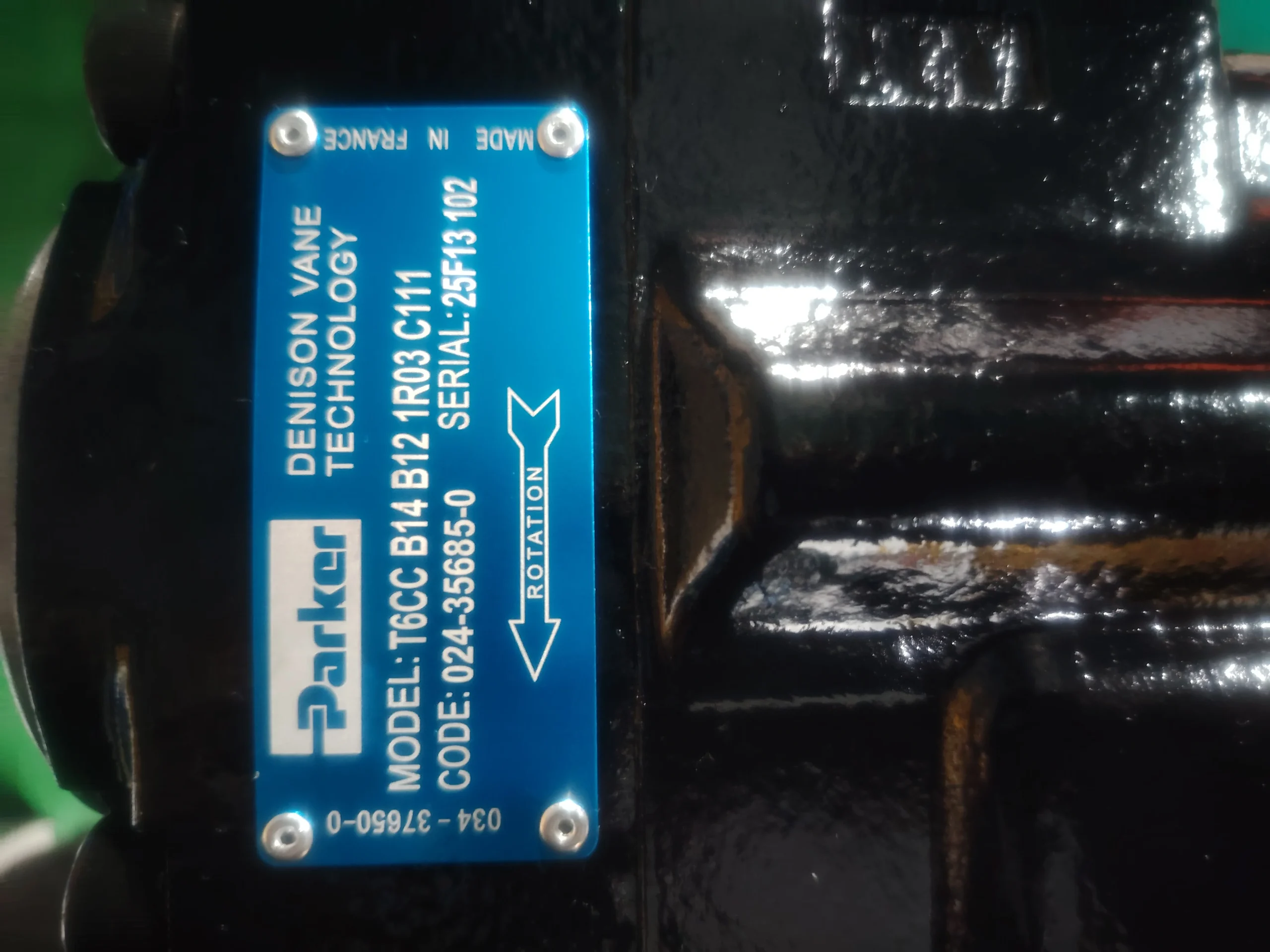
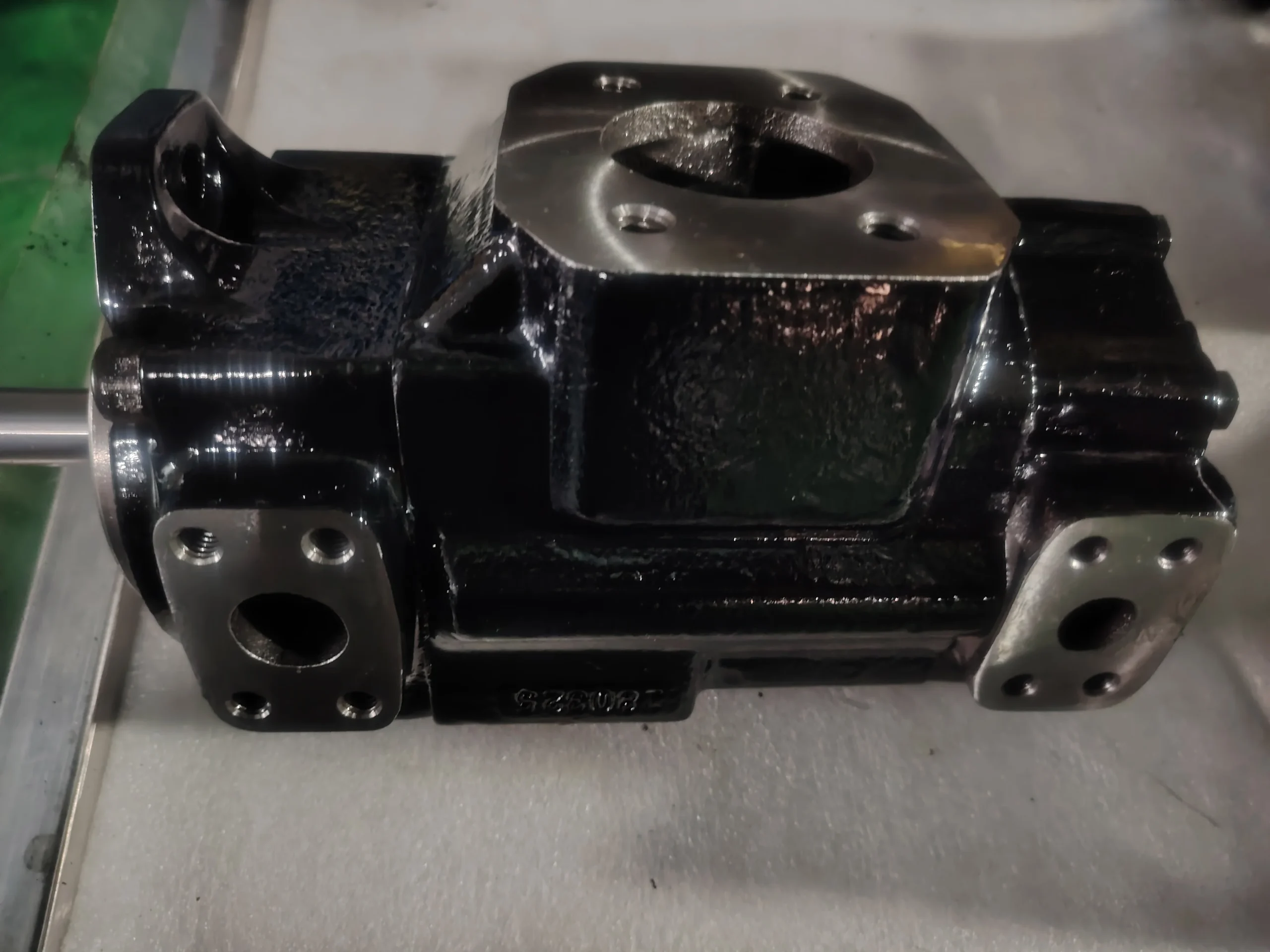
Other models in the T6C series, such as T6CCB14, B121R03C111, etc., as well as the T6D and T6E series vane pumps, have similar structures and working principles, but differ in parameters such as displacement, shaft extension form, rotation direction, and oil port direction.
T6C-010-1R00-B1
T6DC-042-010-1R03-C1
T7EDS-085-B38-1R03-A1M0
T7 B17 2R00 A104 R11720
T6D035-2R02-A1
T6D050-2R03-A1
T6C003-1R02-A1
T6C003-1R00-A1
T6E052-1R00-A1
T6E066-1L03-A1
T6CCW 017014 2C03 C100
T6E062 1R02A1
T7DS-E35-1R02-A1MW
T7BS-B02-1R00-A100
T6DR-035-1R01B21A1 ALG G
T67CB-005-B02-1RO0-A1M1
Installation requirements: The oil pump should be driven on the same axis. The coaxiality between the oil pump shaft and the drive shaft must be ensured to be within 0.2 millimeters. Elastic couplings must be used, and the holes of the couplings need to be machined to isoh7 grade hole tolerance.
Pipeline requirements: The terminals of the oil suction, return or discharge pipelines must be located below the oil level in the oil tank. The oil suction pipes should be flexibly connected. The suction inlet height of the oil pump should not exceed 1.5 meters above the oil level line in the oil tank, and the suction inlet pressure should not be lower than 1.8bar (relative pressure -0.2bar).
Oil requirements: Petroleum-based hydraulic oil with a viscosity of 10-65 mm²/s should be used. Anti-wear hydraulic oil is recommended. The cleanliness grade of the working fluid should reach NAS1638 grade 8 (or ISO18/14).
Start-up note: Check the rotation direction of the drive motor, which should be the same as the arrow direction on the oil pump nameplate. Before the oil pump supplies oil to the system, the air inside the pump must be expelled.