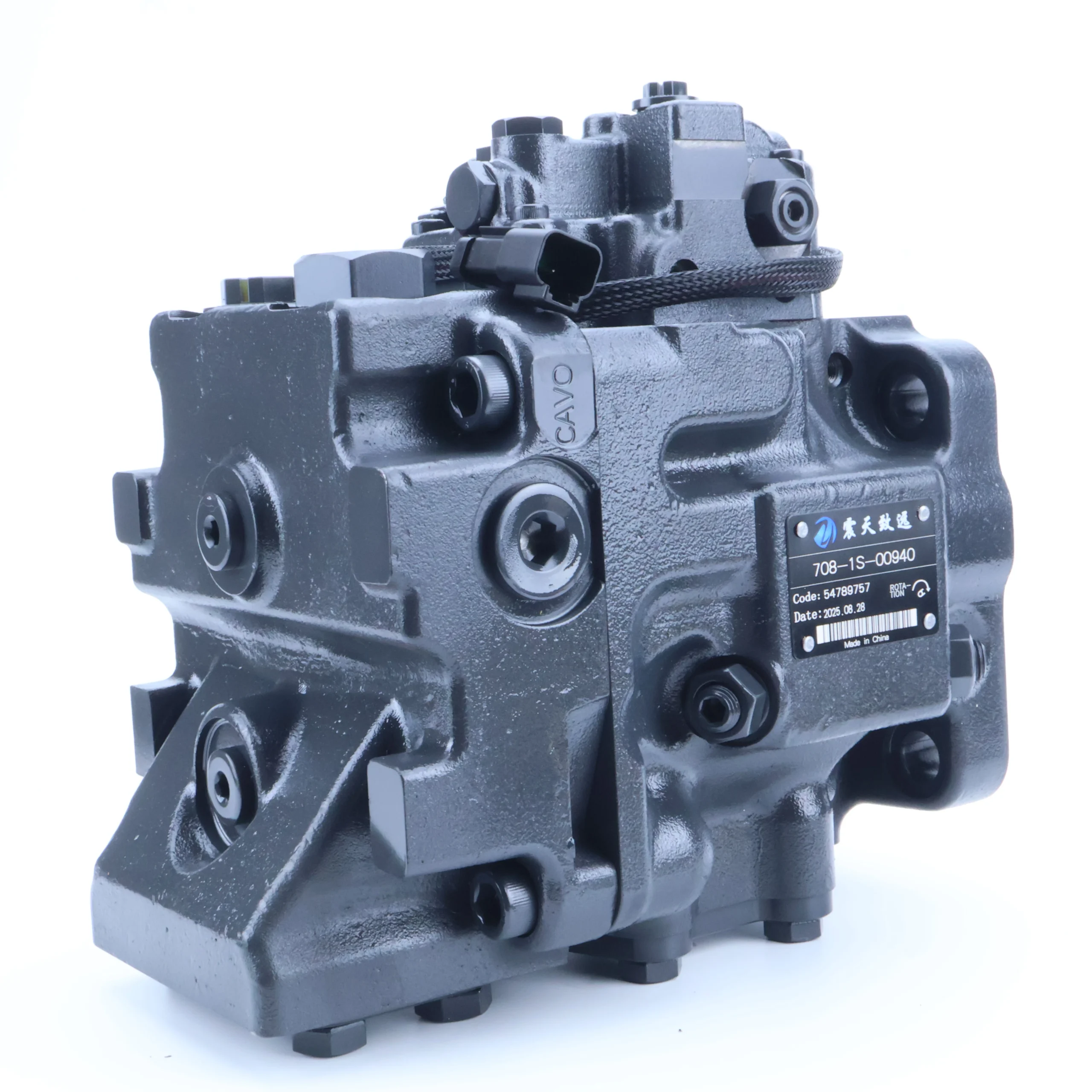
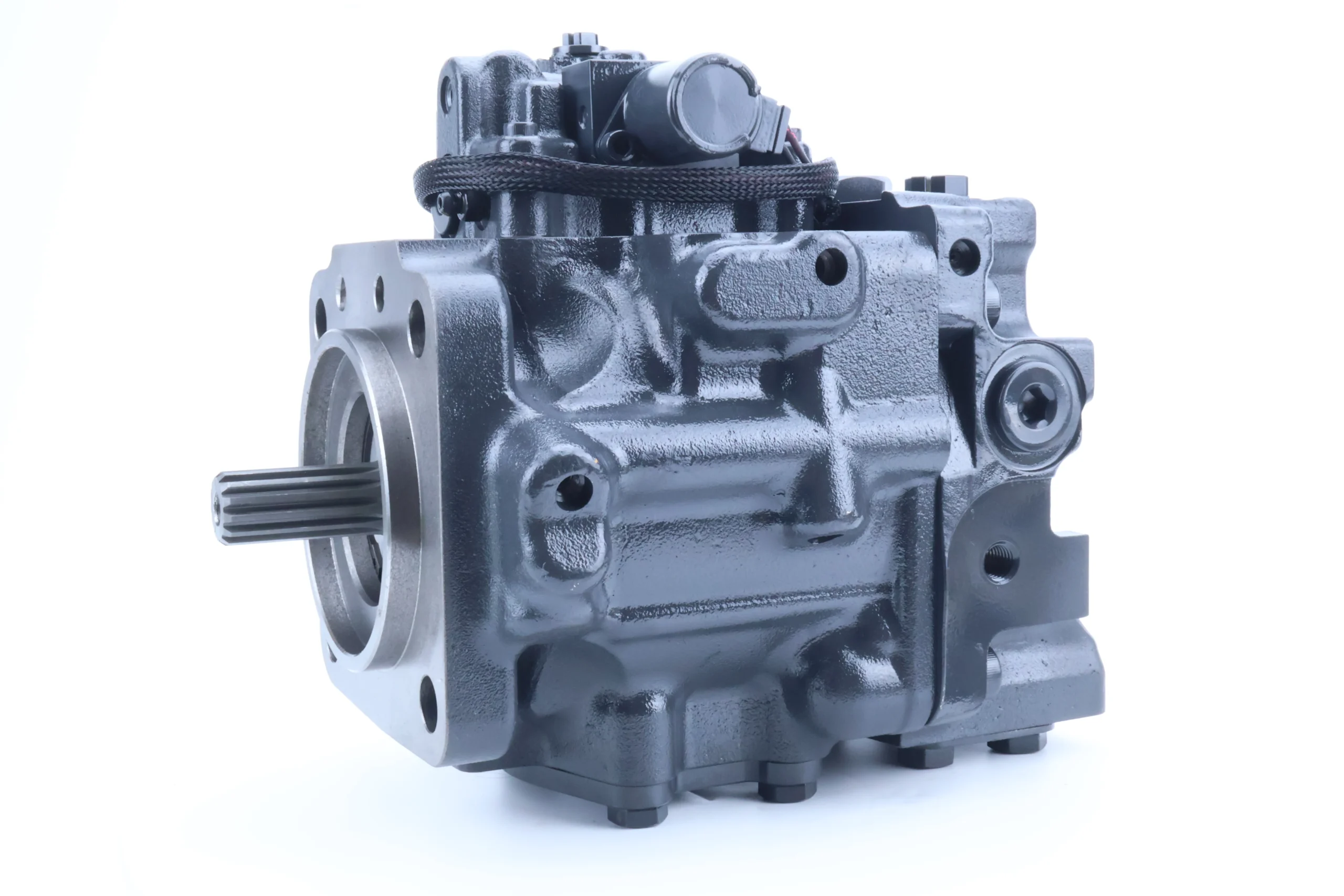
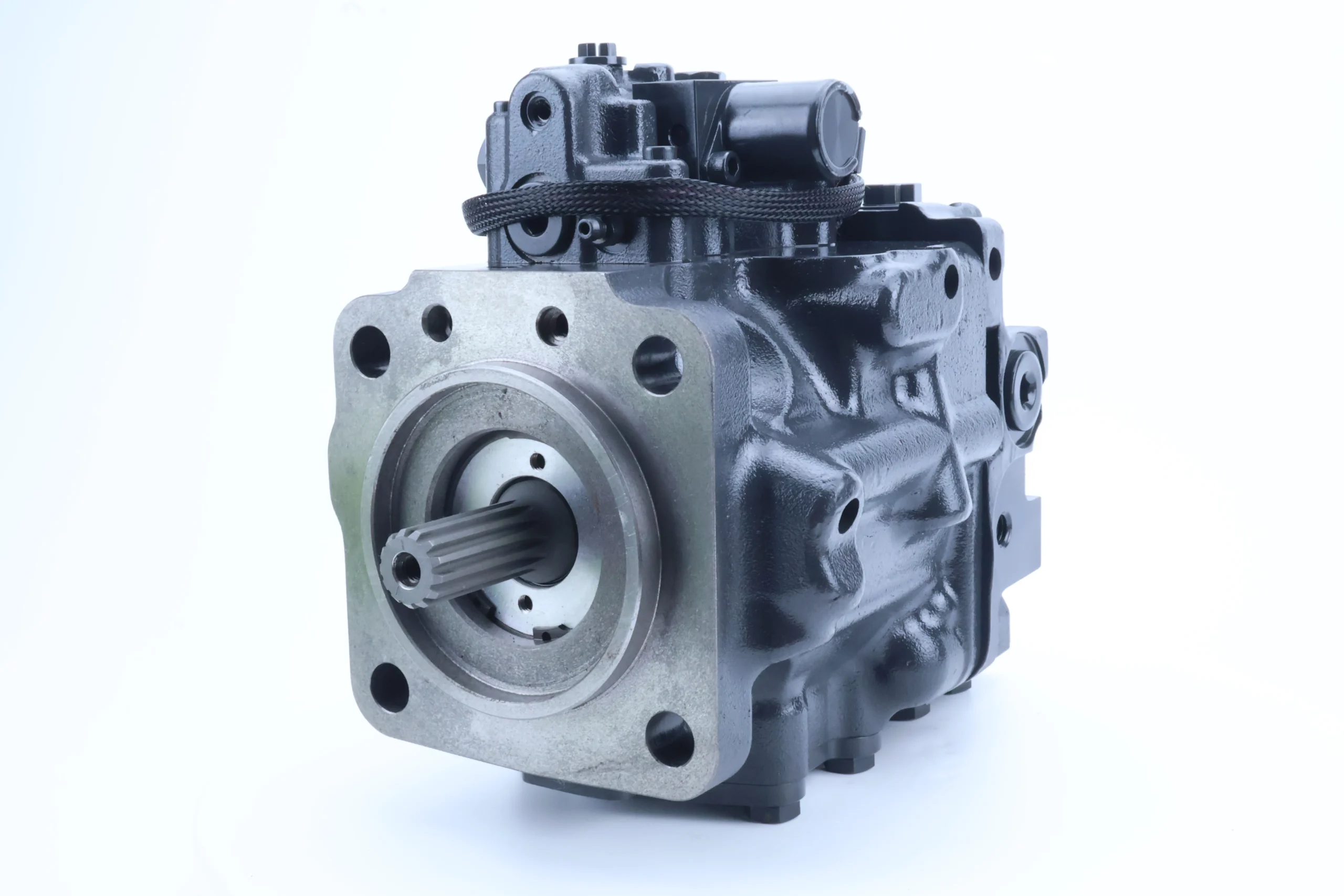
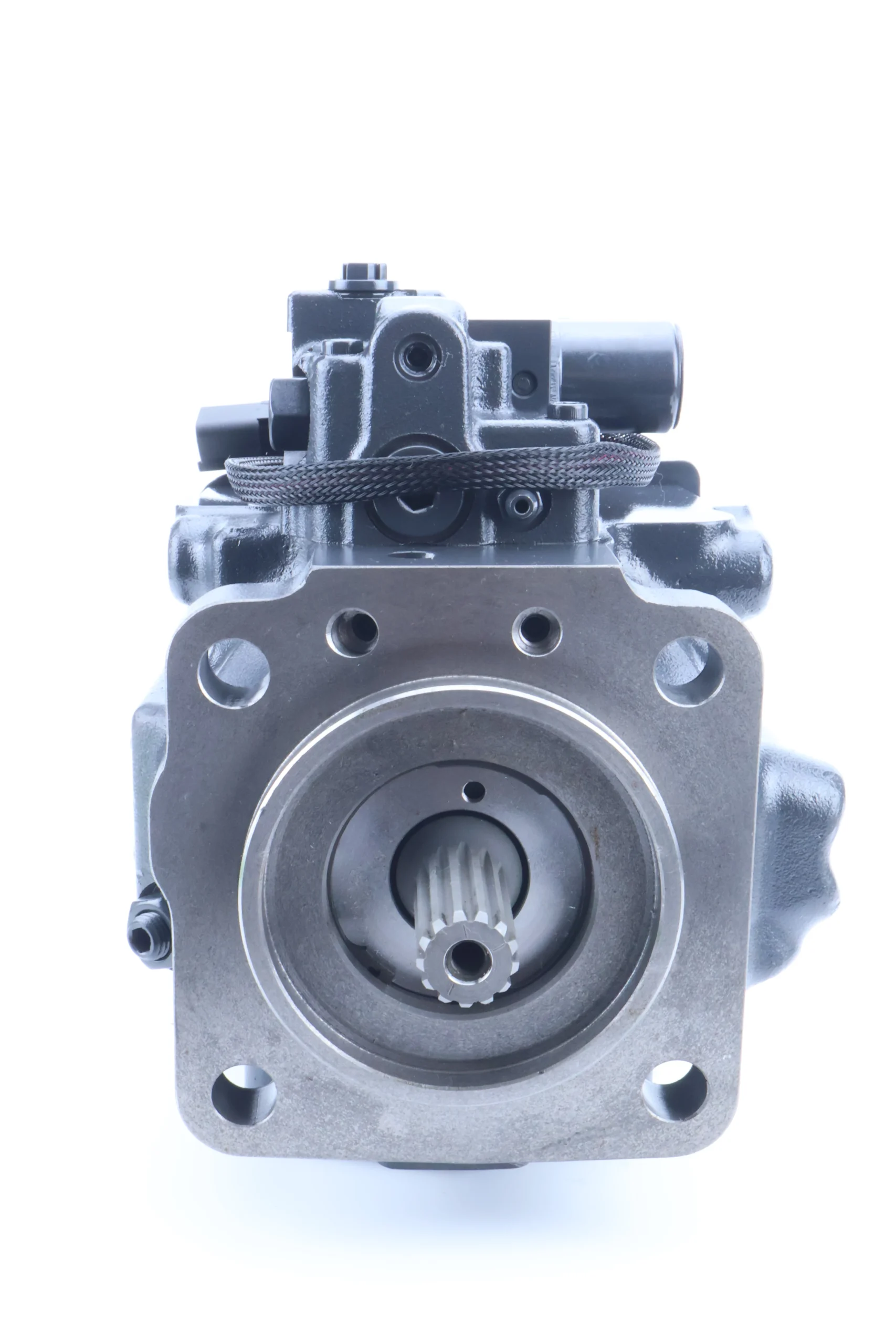
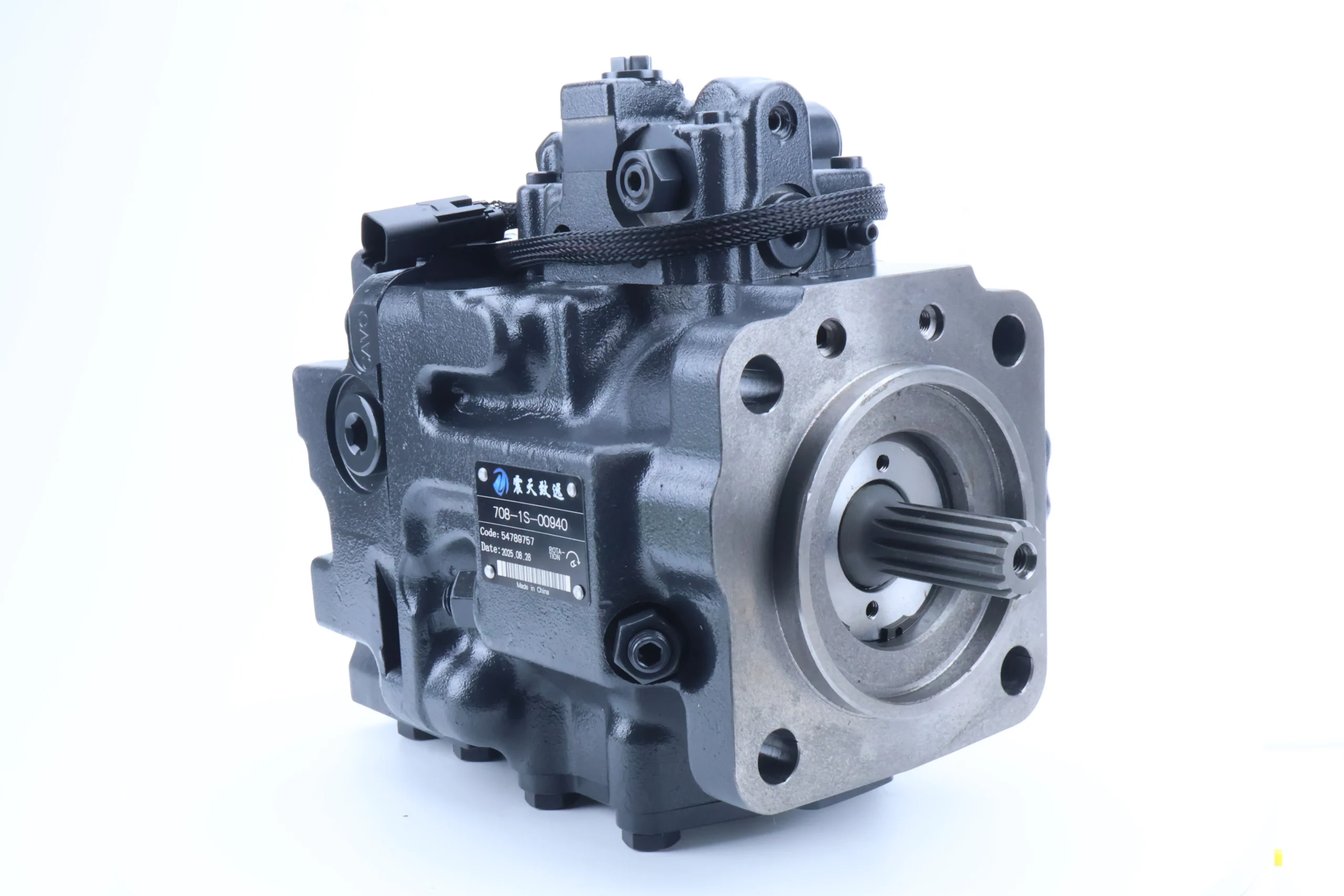
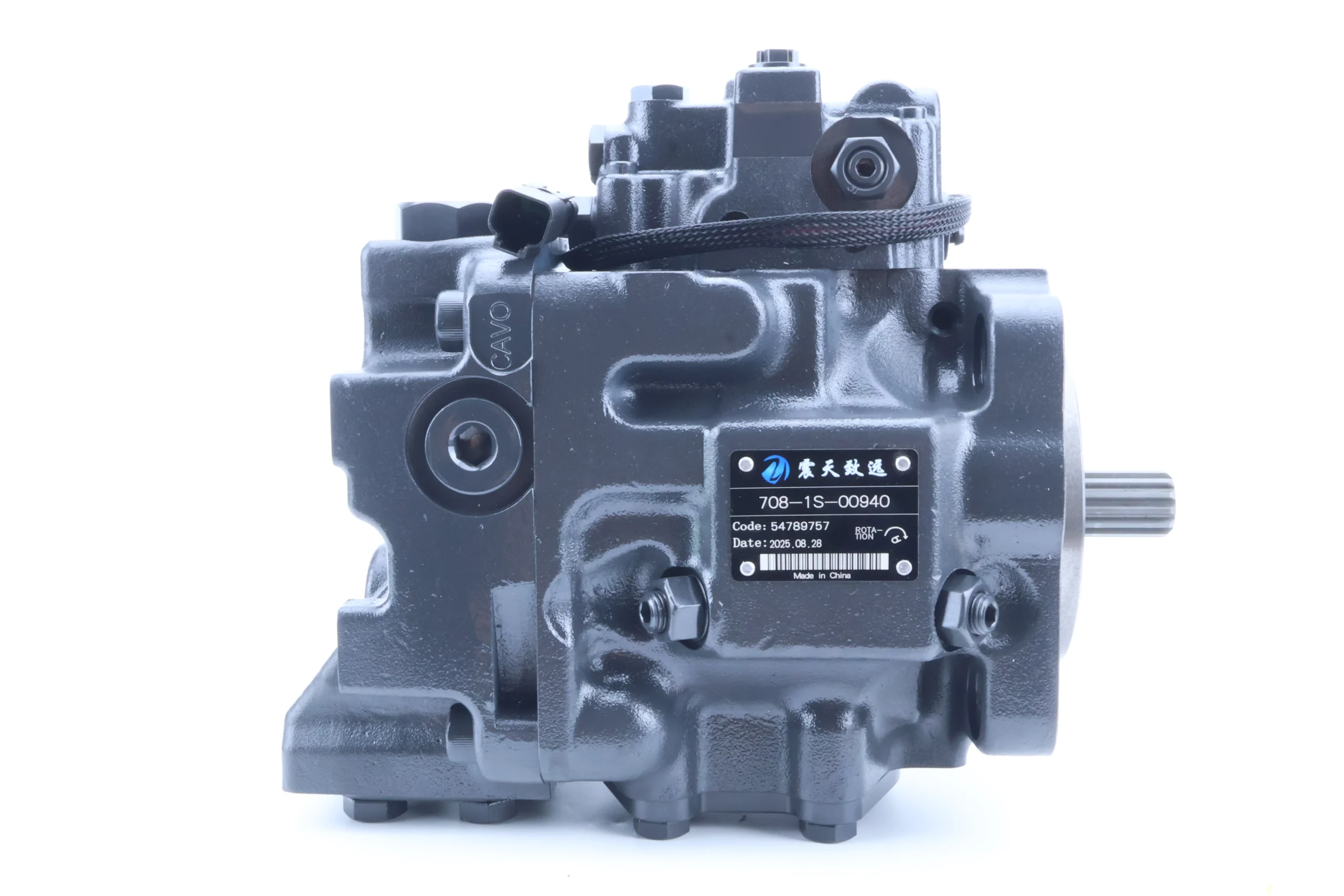
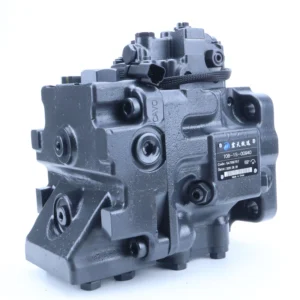
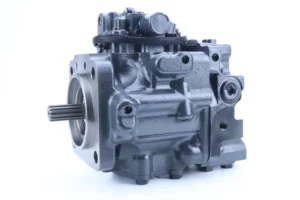

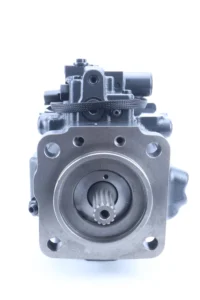
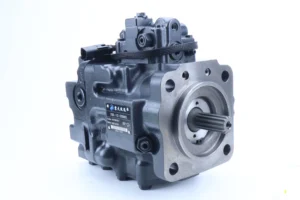
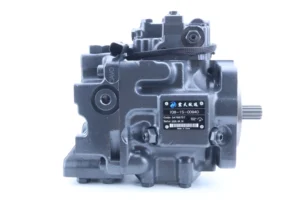
Excavator Parts PC27 PC28 PC27MR PC27MR-3 Hydraulic Main Pump 708-1S-00310 708-1S-00212 708-1S-00160 Piston Pump Part
Core performance parameters•
Displacement specification: Axial variable piston pump, theoretical displacement 140 mL/r, variable adjustment range 30%-100% (42-140 mL/r), suitable for the hydraulic systems of medium and large excavators, variable response time ≤0.4 seconds, meeting the rapid switching requirements of compound actions.
•
Pressure rating: Rated working pressure 35 MPa (350 bar), stable volumetric efficiency under continuous working pressure; The peak pressure is 42 MPa (420 bar), with a single peak duration of no more than 10 seconds. It can withstand the heavy impact of excavation operations, and the safety valve setting pressure matches the peak pressure requirements.
•
Flow output: At a rated speed of 2000 rpm, the rated flow is 280 L/min. At the maximum rotational speed of 2200 rpm, the maximum flow rate is 308 L/min. When the variable is adjusted, the flow rate changes linearly, with a flow fluctuation rate of no more than 3%, ensuring the smooth operation of the actuator.
2. Rotational speed and power parameters
•
Speed range: Rated speed 2000 rpm, maximum allowable speed 2200 rpm (duration ≤30 seconds), minimum stable speed 800 rpm (self-priming condition). The speed is adapted to the common working range of the engine to avoid cavitation and cavitation.
•
Efficiency indicators: Under rated working conditions, volumetric efficiency ≥93%, mechanical efficiency ≥95%, and total efficiency ≥88%. Within the load range of 50% to 100%, the overall efficiency remains above 85%, effectively reducing fuel consumption.
•
Power matching: The rated working condition input power is approximately 163 kW, matching the power output of medium and large excavator engines. The input torque is about 770 N·m, meeting the power transmission requirements at the engine flywheel end.
3. Structure and Physical Parameters
•
Structural type: Swash plate axial piston pump, featuring a symmetrical distribution design of 9 pistons, with a piston diameter of 25mm and a stroke of 18mm. The maximum inclination Angle of the swash plate is 18°. The distribution plate is made of copper-based alloy inlaid with silicon carbide, which has self-lubricating properties.
•
Core material The pump body is made of high-strength ductile iron (QT600-3, tensile strength ≥600 MPa), the plunger is made of stainless steel (17-4PH, surface chrome-plated, hardness HRC50-55), the swash plate is 40CrNiMoA quenched and tempered (surface hardness HRC58-60), and the sealing parts are made of fluororubber (temperature resistance -20℃ to 120℃).
•
Physical parameters: Net weight 45 kg, external dimensions (length × width × height) 680×420×350 mm, installation method is flange type fixed, compatible with SAE B type installation flange, oil suction port diameter Φ80 mm, oil outlet port diameter Φ65 mm.
4. Medium and Environmental requirements
•
Medium requirements: It is recommended to use L-HM 46 or L-HM 68 anti-wear hydraulic oil. The kinematic viscosity range of the oil is 15-400 mm²/s, the acid value of the oil is ≤0.08 mgKOH/g, and the moisture content is ≤0.1%. It is compatible with L-HV series hydraulic oil in low-temperature environments.
•
Cleanliness standard: The oil cleanliness is required to reach ISO 4406 16/13 grade (NAS 7 grade). A 60 μm coarse filter should be installed at the oil suction port, and a 10 μm high-pressure filter should be equipped at the oil outlet. The rated pressure of the filter should be ≥45 MPa.
•
Environmental parameters: Operating environment temperature -25℃ to 80℃, relative humidity ≤95% (no condensation); The protection grade is IP54, which can adapt to vibration (vibration acceleration ≤10 m/s²), dust and oil contamination working conditions, but is not suitable for strongly corrosive environments.
Ii. Working Principle
This pump is a swashplate axial variable piston pump. Its core working mechanism converts mechanical energy into hydraulic energy through “the engine drives the cylinder block to rotate – the piston reciprocates to suck and discharge oil – the variable mechanism regulates the displacement”, achieving on-demand flow output. The specific process is as follows:
1. Oil suction and discharge circulation
The engine drives the pump shaft to rotate through a coupling, and the pump shaft drives the cylinder block to rotate synchronously. Under the action of the return spring, the ball heads of the nine evenly distributed plungers in the cylinder block are always in close contact with the end face of the swash plate. When the plunger rotates with the cylinder body to the lower side of the swash plate (the oil suction zone), the inclination Angle of the swash plate causes the plunger to extend outward, increasing the volume of the plunger hole and creating a negative pressure. The hydraulic oil enters the plunger hole through the oil suction port and the oil suction window of the distribution plate, completing the oil suction process. When the plunger rotates to the upper side of the swash plate (the oil pressure zone), the swash plate forces the plunger to retract into the cylinder, reducing the volume of the plunger hole. The oil is then squeezed and discharged through the oil pressure window and the oil outlet of the distribution plate into the hydraulic system, achieving oil pressure.
2. Variable adjustment mechanism
The inclination Angle of the swash plate is adjusted through the electric control or hydraulic control variable mechanism to achieve stepless adjustment of the displacement. When the inclination Angle of the swash plate increases, the reciprocating stroke of the plunger increases, the pump displacement increases, and the output flow increases. When the inclination Angle decreases, the plunger stroke shortens, the displacement reduces, and the flow rate drops. When the swash plate is in a vertical position (with an inclination Angle of 0°), the plunger has no reciprocating motion and the pump stops outputting flow. The variable mechanism adopts closed-loop control, automatically adjusting the swash plate Angle according to the system pressure or the speed requirement of the actuator. The response time is ≤0.4 seconds, ensuring precise matching of flow and load.
3. Flow distribution and sealing guarantee
The distribution plate and the end face of the cylinder block adopt a dual design of “oil film seal + mechanical seal”. The axial clearance is controlled at 0.015- 0.03mm. High-pressure oil from the oil pressure zone enters the clearance to form a dynamic oil film, which not only isolates the oil suction and discharge chambers but also reduces wear. The internal leakage is ≤ 1.5L /min (under rated conditions). The plunger and the cylinder block hole adopt a precise clearance fit (fit clearance 0.008- 0.012mm), and a sealing oil film is formed by the viscosity of the oil, ensuring high-pressure sealing performance while reducing friction loss.
Iii. Product Features and Advantages
High pressure, large flow rate and high efficiency energy saving
The rated pressure reaches 35 MPa, the peak pressure is 42 MPa, and the rated flow rate of a single pump is 280 L/min. It can meet the flow requirements of multiple actuators such as the rotation, boom, and boom of 50-ton excavators operating simultaneously, without the need for multiple pumps to be connected in parallel, simplifying the system structure. The total efficiency is ≥88%, which is 5% to 8% higher than that of ordinary plunger pumps. Calculated based on an 8-hour daily operation, it can save approximately 8,000 liters of fuel consumption annually, meeting energy-saving requirements.
2. It has strong adaptability to a wide range of variables and loads
It supports stepless adjustment of displacement from 30% to 100%, with a linear flow rate ranging from 84 L/min to 280 L/min. It can automatically match the flow rate according to different working conditions such as excavation operations (heavy load and low speed), rotary operations (medium load and medium speed), and walking operations (light load and high speed), avoiding system throttling losses and increasing operation efficiency by 15% to 20%. The variable response speed is fast, and it can be quickly switched to idle energy-saving mode to reduce energy consumption in non-operational states.
3. High reliability and extremely long service life
The design adopts a symmetrical distribution of 9 plungers to reduce pressure pulsation. The silicon carbide inlaid structure of the distribution plate reduces the wear coefficient to 0.0015, and the wear resistance of the plungers is improved by 30% after chrome plating. The key components have undergone fatigue strength tests, with a cycle life of over 20 million times and a fault-free operation life of 10,000 hours under rated conditions, which is 40% longer than similar products. It is suitable for heavy-load continuous operation scenarios such as mines.
4. Strong environmental adaptability and convenient maintenance
Fluororubber seals are suitable for a wide temperature range from -25℃ to 80℃. They can start without jamming in cold regions and maintain stable sealing performance under high-temperature conditions. The pump body adopts a modular design. The replacement of vulnerable parts (such as seals and return springs) does not require disassembling the overall structure, and the maintenance time is shortened to within 2 hours. Coupled with a 12-month warranty period, the operation and maintenance costs are reduced.
Iv. Usage Functions and Purposes
1. Core usage functions
•
Hydraulic power output: It converts the mechanical energy of the engine into hydraulic energy, providing high-pressure oil sources for the actuating components such as the lifting and lowering of the excavator boom, the extension and retraction of the bucket arm, the flipping of the bucket, the rotation of the rotary platform, and the walking mechanism. A single pump can drive the compound actions of multiple mechanisms, with a power transmission efficiency of ≥88%.
•
Intelligent flow regulation: Through the variable mechanism, the system pressure and load demand are perceived in real time, and the output flow is automatically adjusted. When the load of the actuator increases, the flow automatically rises; when the load decreases, the flow decreases, avoiding the “big horse pulling a small cart” phenomenon and achieving significant energy-saving effects.
•
System protection function: Built-in pressure compensation valve and overload relief valve. When the system pressure exceeds the peak pressure of 42 MPa, the relief valve quickly opens to relieve pressure, protecting the pump body and pipelines from high-pressure impact. The pressure compensation valve ensures stable flow output under different loads.
2. Main application fields
•
Excavating machinery: Compatible with 40-60 ton crawler excavators and 30-50 ton wheeled excavators, it serves as the main hydraulic pump to provide power for excavation operations, supporting heavy-load working conditions such as deep foundation pit excavation and rock crushing.
•
Loading machinery: It is used for 30-50 ton class wheel loaders (such as models WA380-6, WA470-6, etc.), driving the boom lifting and bucket flipping, and is suitable for efficient operation scenarios such as bulk cargo handling in ports and mine loading and unloading.
•
Bulldozer machinery: Compatible with large bulldozers (such as models like D375A-5, etc.), it provides hydraulic power for the lifting of the bulldozer blade and the movement of the soil loosener, meeting the requirements of working conditions such as site leveling for infrastructure construction and mine stripping.
V. Applicable Machines and Scenarios
1. Adapt to the core machine
•
Excavating machinery: 40-ton, 50-ton and 60-ton crawler excavators, 35-ton and 45-ton wheeled excavators.
•
Loading machinery: Wheel loaders of models such as WA380-6, WA430-6, WA450-6, WA470-6, and WA480-6.
•
Bulldozer machinery: Large bulldozers of models such as D375A-5.
2. Typical application scenarios
•
Mine excavation operation: In the rock excavation scenario of mines, the pump outputs a flow rate of 280 L/min at a rated pressure of 35 MPa, driving the bucket to complete the crushing and excavation actions. It can operate continuously for 12 hours without pressure attenuation and is suitable for rock conditions with a hardness of ≤f12.
•
Port loading and unloading operations: When used by wheel loaders to load and unload containers or bulk cargo, the pump achieves rapid bucket flipping (flow rate 280 L/min) and precise alignment (flow rate 84 L/min) through variable adjustment. The operation efficiency is 25% higher than that of fixed displacement pumps.
•
In infrastructure construction scenarios: In the excavation of highway roadbeds and foundation pits for buildings, pump-driven excavators perform multi-mechanism compound actions (such as the boom lifting and rotating simultaneously), achieving precise flow distribution, enhanced movement coordination, and a 10% reduction in construction periods.
•
Bulldozer operation scenario: Provide high-pressure oil for the dozer blades of D375A-5 and other bulldozers, and push the bucket to complete site leveling under a pressure of 32 MPa. The variable mechanism automatically adjusts the thrust according to the load of the bucket to prevent engine overload.
Six. Similar models
1. Alternative models of the same series
•
708-1S-00920: It has the same structure as the original model, with a theoretical displacement of 120 mL/r, a rated flow rate of 240 L/min, and a rated pressure of 35 MPa. It is compatible with 30-40 ton excavators and 25-35 ton loaders. The installation dimensions are fully compatible and can be directly replaced for use.
•
708-1S-00970: A large-displacement model of the same series, with a theoretical displacement of 160 mL/r, a rated flow rate of 320 L/min, and a rated pressure of 35 MPa. It is suitable for 60-80 ton excavators and 50-60 ton loaders, offering stronger power output and is ideal for ultra-heavy-load working conditions.
2. Cross-series alternative models
•
K3V112: Swashplate axial piston pump, theoretical displacement 112 mL/r, rated pressure 34 MPa, rated flow 224 L/min, compact structure (net weight 38 kg), suitable for upgrading and transformation of medium and small tonnage excavators, with a cost 15% lower than the original model.
•
A4VG125: Electrically controlled variable piston pump, theoretical displacement 125 mL/r, rated pressure 35 MPa, rated flow 250 L/min, equipped with electro-hydraulic proportional control function, compatible with intelligent excavators, and capable of remote flow regulation.
Vii. Precautions for Use
1. Oil and fluid management norms
•
Anti-wear hydraulic oil of L-HM 46 or L-HM 68 must be selected. It is strictly prohibited to mix oils of different grades. The first oil change cycle is 500 hours, and subsequent oil changes should be made every 1000 hours. Before changing the oil, the oil tank and pipelines should be flushed with new oil of the same grade, and the flushing oil volume should be no less than 1.5 times the system volume.
•
The oil suction filter should be inspected every 200 hours. It should be replaced immediately when the pressure difference exceeds 0.2 bar. The high-pressure filter should be replaced every 500 hours to ensure that the oil cleanliness remains within ISO 4406 16/13 grade, avoiding wear of the plunger and distribution plate due to oil contamination.
•
Check the moisture content and acid value of the oil every month. When the moisture content exceeds 0.1% or the acid value exceeds 0.15mgKOH /g, the oil should be changed in time. In winter low-temperature environments (below -20℃), L-HV 68 low-temperature anti-wear hydraulic oil should be replaced to prevent the increase in oil viscosity from causing difficulties in starting.
2. Installation and commissioning requirements
•
The pump shaft is connected to the engine by an elastic coupling. The coaxiality error between the pump shaft and the engine output shaft should be no more than 0.1mm (radial), and the angular error should be no more than 0.2°. Rigid connection or drive through a pulley is strictly prohibited to prevent the pump shaft from bending and causing uneven wear of the cylinder block.
•
The diameter of the oil suction pipeline is ≥Φ 80mm, the length is ≤ 2.5m, the number of elbows is ≤2, the pipeline interface adopts flange sealing and is equipped with sealing gaskets to ensure no air leakage. The height between the oil suction port and the bottom of the oil tank should be no more than 500mm to avoid excessive oil suction resistance and cavitation.
•
Before the first start-up, the pump body should be filled with hydraulic oil, and the pump should be manually turned by hand for 3 to 5 turns (with uniform rotational resistance and no jamming). After startup, run no-load for 10 minutes. Wait until the oil temperature rises above 30℃ before gradually loading. The pressure increase rate should be no more than 1 MPa/ minute to prevent high-pressure impact from damaging the distribution plate.
3. Operation monitoring and maintenance
•
During operation, the pump body temperature (normal ≤75℃, maximum ≤80℃), outlet pressure (≤35 MPa) and operating noise (≤85 dB(A)) should be monitored in real time. If there is a sudden temperature rise, abnormal pressure or sharp abnormal noise, the machine should be stopped immediately for inspection, with a focus on checking for jamming of the variable mechanism or wear of the plunger.
•
Regular maintenance should be carried out every 2000 hours: replace the seals and return springs, check the wear of the plunger surface (replace if the wear exceeds 0.05mm), and grind the sealing surface of the distribution plate (when the flatness error exceeds 0.01mm). The variable mechanism is calibrated every 1,500 hours to ensure the accuracy of flow regulation.
•
Before long-term parking (more than 3 months), the hydraulic oil in the pump body should be drained, anti-rust oil should be injected and the pump should be manually turned by hand for 5 turns. Before reactivating, the anti-rust oil should be drained and new oil injected. Run it idle for 15 minutes before loading and using it again to avoid internal rust causing jamming.
4. Safety operation specifications
•
When performing maintenance, the system pressure must be released first (lower the actuator to the lowest position, turn off the engine and wait for 10 minutes). Disassembly under pressure is strictly prohibited to prevent injury from high-pressure oil injection. Replacement of components should be carried out in a clean environment to prevent impurities from entering the interior of the pump body.
•
Strictly prohibited at speeds exceeding 2200 rpm or 42