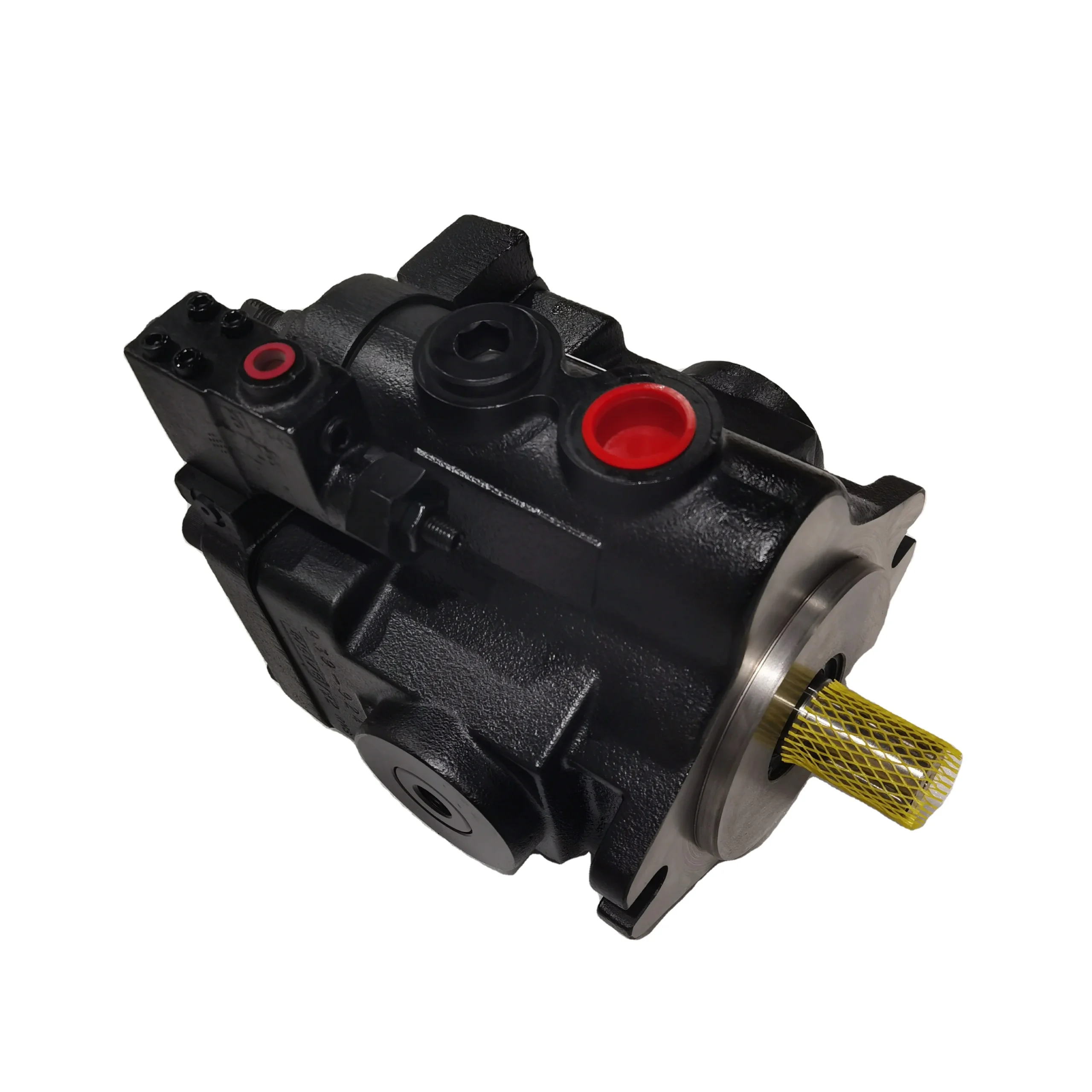
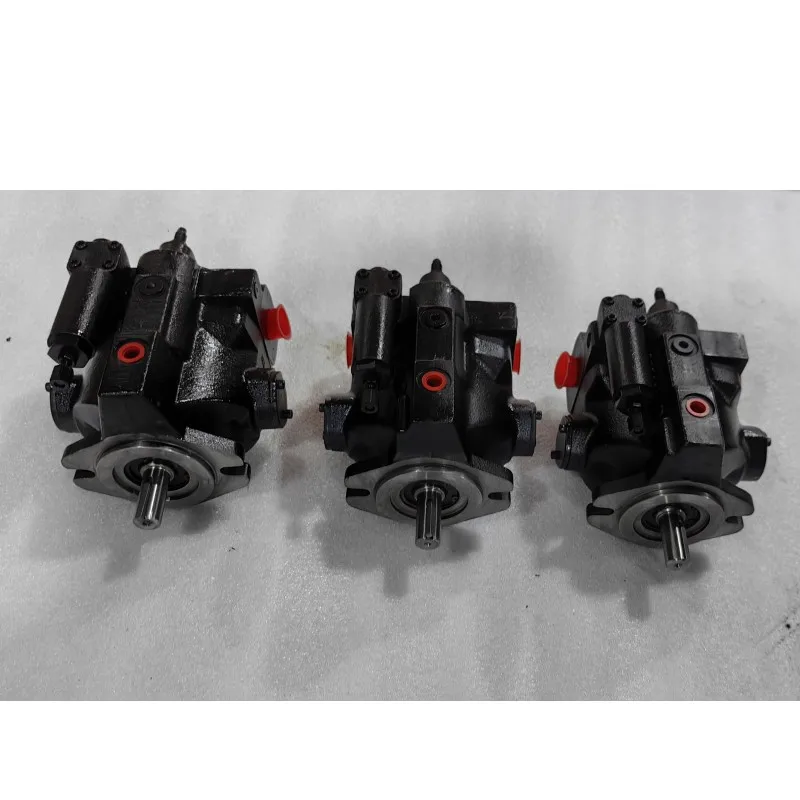
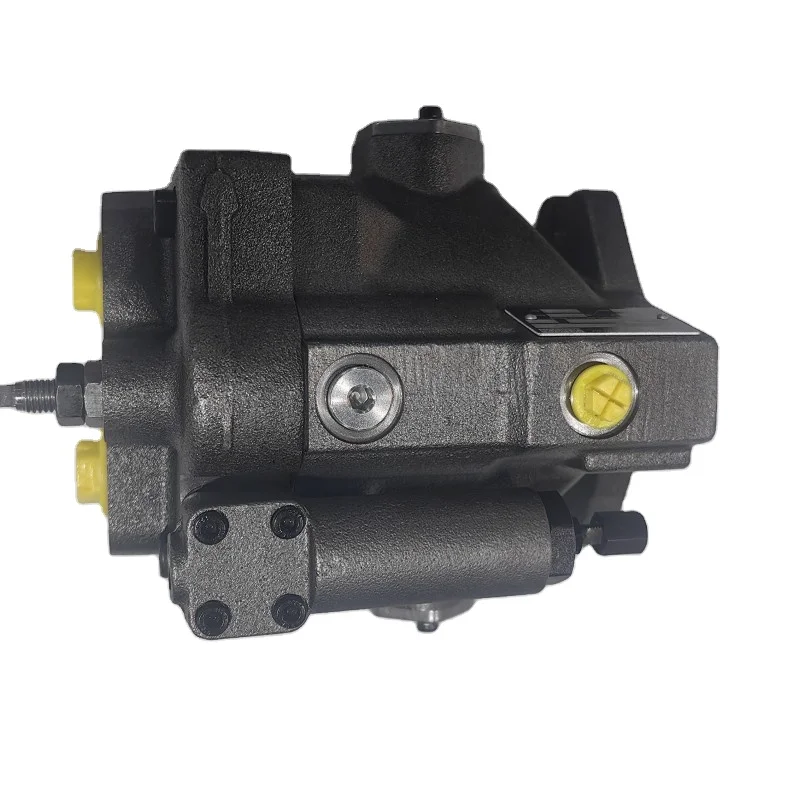
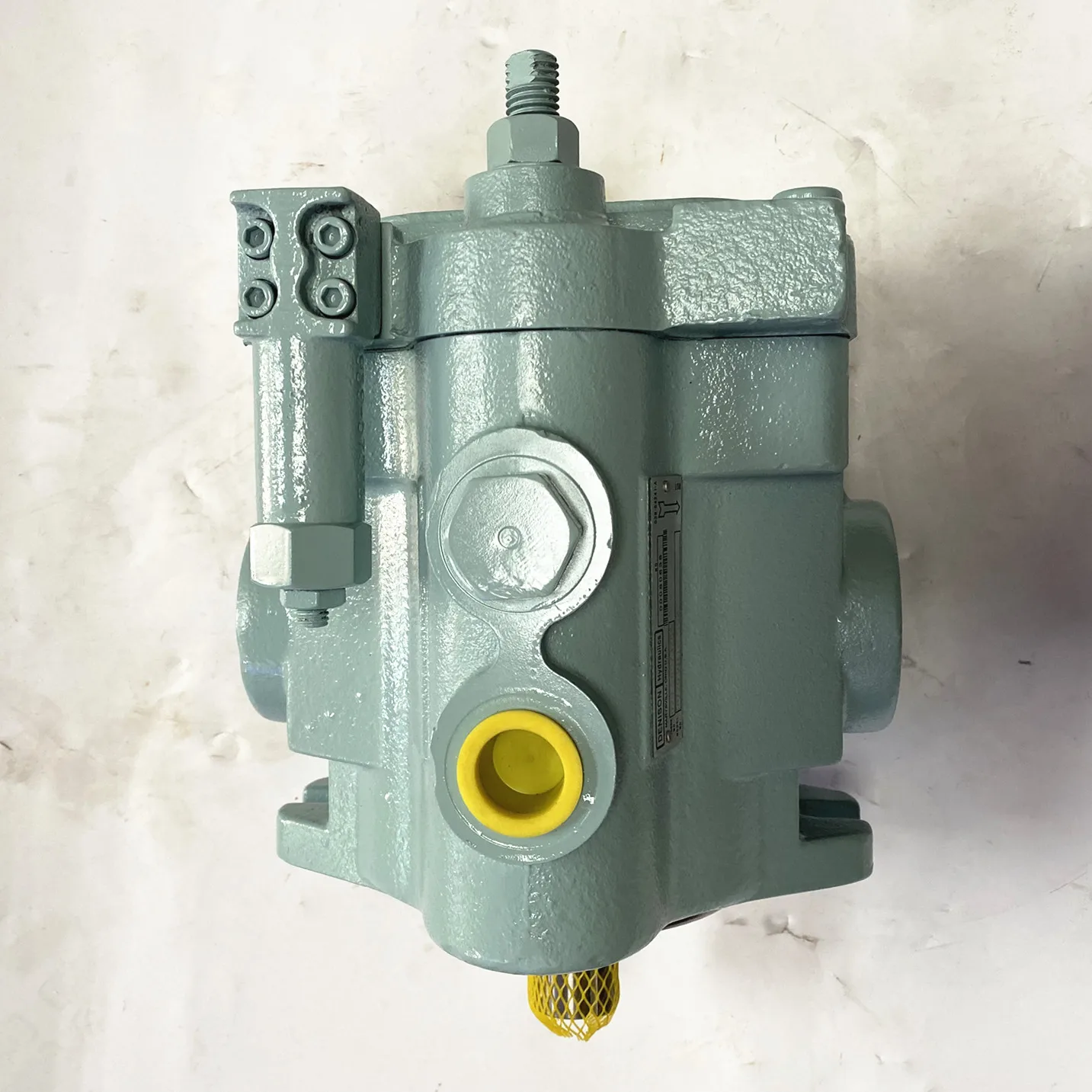
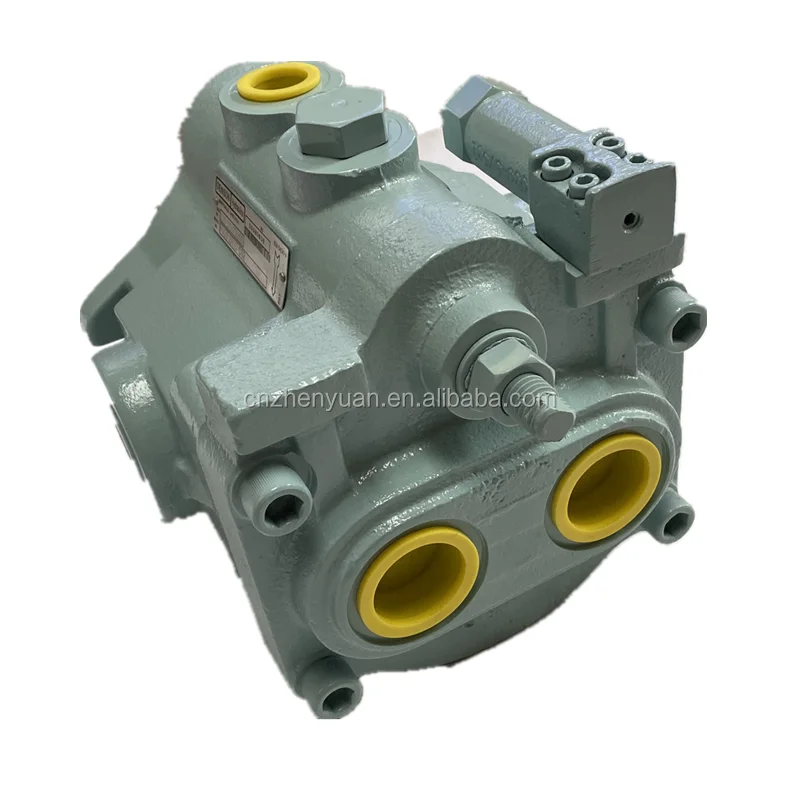
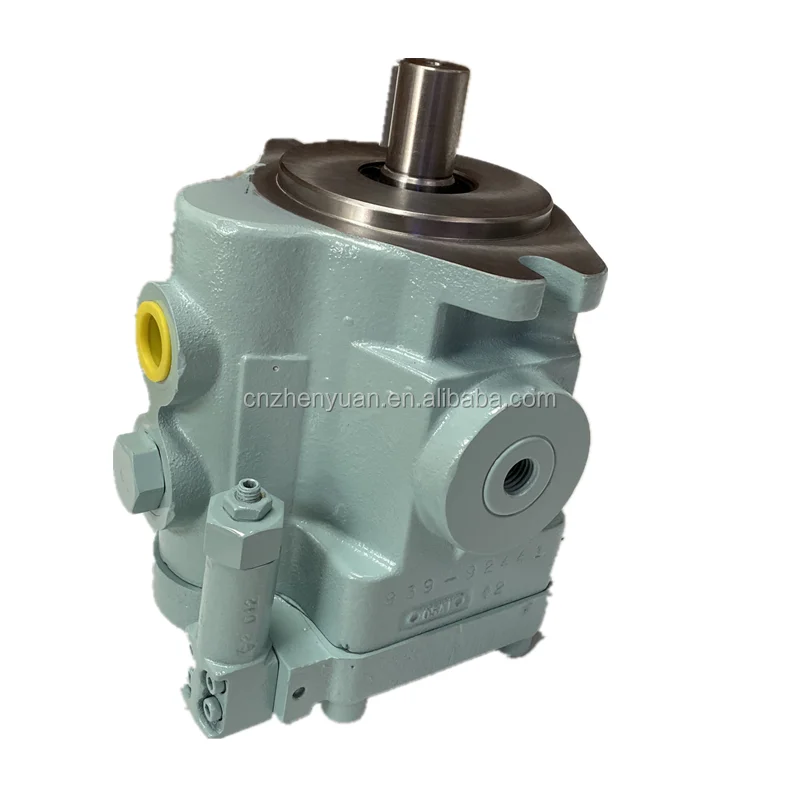
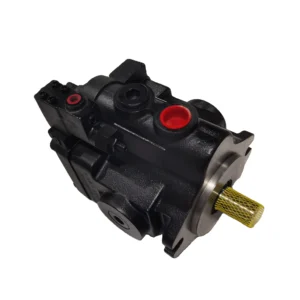
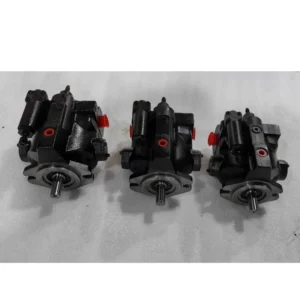
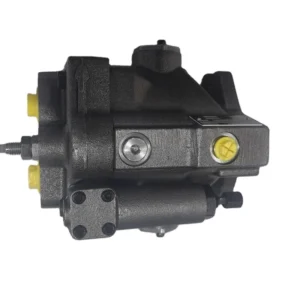
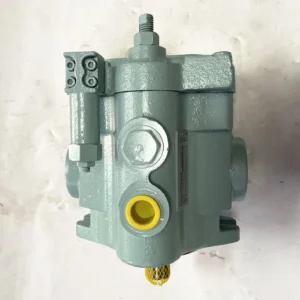
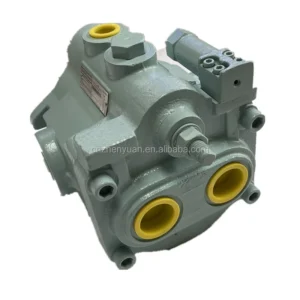
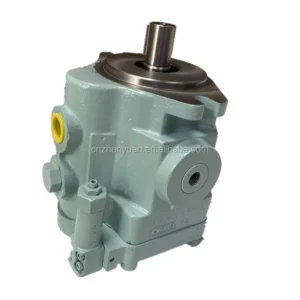
Hot Sell Hydraulic Pump PVT PV PVP PV6 PV10 PV15 PV20 PV29 Series PV202R1EC02 High Pressure Axial Hydraulic Piston Pump
1.
Core parameters of displacement and pressure: Theoretical displacement: 42.9 mL/r (ml/RPM), which belongs to the medium displacement specification and is suitable for medium and small-sized heavy-duty hydraulic systems
2.
Pressure rating: Continuous rated pressure 240 bar (24 MPa), capable of long-term stable operation. The indirect peak pressure is 310 bar (31 MPa), with a single duration of no more than 10 seconds, suitable for load impact scenarios
3.
Regulation characteristics: Minimum regulation pressure ≤10 bar, supporting precise control of low pressure and small flow
4.
Rated speed: 1500-2500 rpm, suitable for the output speed of small and medium-sized engines and industrial motors
5.
Flow output: At a rated speed of 2500 rpm, the maximum flow rate can reach 77.3 L/min (20.4 gpm), meeting the requirements for collaborative operation of multiple actuators
6.
Steering requirements: Rotate clockwise for operation, and the shaft end adopts a flat key transmission structure
7.
Structure and material Specifications: Structural type: Axial piston variable pump, adopting a 9-piston design + pre-compression volume conversion technology, reducing the flow pulsation rate by more than 30%
8.
Core material: The pump body adopts FEM (Finite Element) optimized design, with a 25% increase in rigidity. The sealing parts are made of fluororubber, which has excellent oil resistance and high-temperature resistance
9.
Control mode: Pressure compensation (constant pressure) variable control, equipped with variable auxiliary control devices
10.
Installation and adaptation parameters Installation specifications: Shaft transmission type flat key connection, oil port adopts SAE threaded interface, compatible with standardized hydraulic pipeline
11.
Shell features: Supports high shell pressure operation, with continuous shell pressure up to 20 bar, suitable for complex installation Spaces
twelve
Weight and dimensions: The overall weight of the machine is 26 kg. The structure is compact and convenient for integrated installation
13.
Oil and environmental requirements: Oil specification: L-HM 46/68 anti-wear hydraulic oil is recommended. The cleanliness of the oil should reach ISO 16/13 grade (NAS 7 grade).
fourteen
Working oil temperature: -20℃ to 80℃. No jamming during low-temperature start-up and excellent stability during high-temperature operationIi. Working Principle
This pump is an axial piston variable pump. Its core achieves high-pressure oil output and precise control through a closed-loop mechanism of “piston reciprocation – volume change – pressure compensation”. The specific process is as follows:
1.
Power transmission and suction oil circulation: The power source drives the transmission shaft to rotate through the flat key, which in turn drives the cylinder block to rotate synchronously. Under the action of centrifugal force and return spring, the ball heads of the 9 plungers are always in close contact with the surface of the swash plate. Due to the inclined Angle of the swash plate, when the plunger rotates with the cylinder block, it moves back and forth along the cylinder block holes. When it moves from the lower position to the higher position of the swash plate, the volume of the sealed cavity increases to form a vacuum, and oil is sucked through the SAE threaded oil suction port. When moving from a high position to a low position, the cavity volume is compressed, and high-pressure oil is output to the system through the oil pressure port.
2.
9-plunger flow stabilization mechanism: By adopting a symmetrical layout design of 9 plungers and combining with pre-compression volume conversion technology, the flow fluctuation range during the oil absorption and conversion process of adjacent plungers is reduced to less than 5%. Compared with the traditional 6-plunger structure, it operates more smoothly and significantly reduces system vibration and noise.
3.
Pressure compensation variable adjustment: The built-in pressure compensation valve monitors the system pressure in real time. When the pressure reaches the set value (240 bar), the compensation valve pushes the swash plate to reduce the tilt Angle and lower the displacement to maintain pressure stability. When the load decreases and the pressure drops, the swash plate Angle automatically increases, raising the displacement to meet the flow demand and achieving the energy-saving effect of “fuel supply on demand”.
4.
High shell pressure adaptation design: The optimized pump body sealing structure and FEM reinforced shell can withstand a continuous shell pressure of 20 bar, avoiding the problem of excessive shell pressure caused by limited installation space and enhancing the adaptability to complex working conditions.
Iii. Product Features and Advantages
1.
High-pressure stability and low pulsation characteristics: 240 bar rated pressure is suitable for heavy-duty operations, and 310 bar peak pressure is suitable for shock loads. The 9-plunger + pre-compression technology makes the flow pulsation rate extremely low, reduces the system hydraulic shock by 40%, and extends the service life of the valve group and actuator.
2.
Energy-saving and precise control advantages: Pressure compensation variable control enables flow distribution as needed, saving 20%-25% energy compared to fixed displacement pumps. Minimum adjustable pressure below 10 bar, suitable for low-pressure precision control scenarios (such as fixture fine-tuning, material conveying).
3.
High rigidity and low noise design: The pump body structure optimized by FEM has strong impact resistance and can withstand frequent load fluctuations. The optimized flow channel and plunger layout reduces the operating noise to below 75 dB (at 2000 rpm), which is 10% better than the industry average.
4.
Wide operating condition adaptability: The fluororubber sealing parts are suitable for operation within a wide temperature range of -20℃ to 80℃, and the 20 bar high shell pressure design supports installation in narrow Spaces. ISO 16/13 grade oil cleanliness compatibility requirements, reducing maintenance costs in harsh environments.
5.
Standardization and maintenance convenience: SAE threaded oil ports, flat key transmission and other standardized designs are compatible with general hydraulic systems. The modular variable control device has reduced the troubleshooting time to within 30 minutes and increased the maintenance efficiency by 50%.
Iv. Usage Functions and Purposes
1. Core usage functions
•
Heavy-duty power output: With a rated pressure output of 240 bar, it provides stable power for small and medium-sized hydraulic systems, driving the actuating elements to perform heavy-duty actions such as lifting, digging, and pressing, and supports the coordinated operation of 2-3 actuating elements.
•
Dual control of pressure and flow: The pressure compensation variable control achieves “constant pressure energy supply”. When the system pressure reaches the standard, it automatically reduces capacity to save energy. Meanwhile, the 10 bar low-pressure regulation capability is suitable for precise control scenarios (such as hydraulic chuck clamping).
•
Continuous and stable operation: The FEM reinforced pump body, in combination with the fluororubber sealing parts, supports 24-hour continuous operation, with a trouble-free working time of over 10,000 hours.
2. Main application fields
•
In the field of construction machinery: Oil supply for the main hydraulic systems of small and medium-sized excavators (10-20 tons), the lifting/tipping mechanisms of loaders, and the lifting systems of forklifts.
•
In the field of industrial manufacturing: small and medium-sized hydraulic presses (500-1000 tons), clamping mechanisms of injection molding machines, and power sources for injection systems of die-casting machines.
•
In the field of special equipment: luffing mechanisms of small port cranes, hydraulic suspension systems of agricultural machinery, drive systems of small mine loaders.
V. Applicable Machines and Scenarios
1. Adapt to the core machine
•
Construction machinery: 10-20 ton excavators, 3-5 ton loaders, 10-15 ton forklifts, small road rollers.
•
Industrial equipment: 500-1000 ton hydraulic press, 100-300 ton injection molding machine, small die-casting machine, hydraulic baling machine.
•
Special machinery: small port cranes, large tractors, small mine loaders, hydraulic lifting platforms.
2. Typical application scenarios
•
Medium and small-sized heavy-duty operation scenarios: Excavators for earthwork excavation, loaders for material loading and unloading, and other medium and high-intensity operations. A pressure of 240 bar and a flow rate of 77.3 L/min can meet the requirements of single-action efficient operation, and the operation efficiency is 15% higher than that of pumps of the same level.
•
Precision control scenarios: Injection molding machine clamping pressure control, hydraulic chuck clamping positioning. A low adjustable pressure of 10 bar enables control accuracy to reach ±1%, and increases product qualification rate by 8%.
•
Complex installation scenarios: Equipment integration in confined Spaces (such as the slewing mechanism of small cranes), with a 20 bar high shell pressure design and a 26 kg lightweight structure, suitable for restricted installation environments.
•
Continuous operation scenarios: The hydraulic system of the assembly line (such as baling machines, conveyor lines) operates continuously for 24 hours. The high-rigidity pump body and wear-resistant sealing parts are designed, with a monthly failure rate of less than 0.5%.
Six. Similar models
1. Alternative models of the same series
•
PV202R5EC02: It belongs to the PV series like PV202R1EC02, with the same displacement (42.9 mL/r). The difference lies in that the variable control method is electro-hydraulic proportional control, making it suitable for scenarios that require remote precise adjustment, such as automated production lines.
•
PV180R1EC02: With the same control mode (pressure compensation), the displacement is reduced to 38 mL/r, the rated pressure is 240 bar, and it is suitable for small construction machinery under 10 tons. The installation dimensions are compatible with PV202R1EC02.
2. Cross-series alternative models
•
CO1MDP32VL0OM6: Axial piston structure, rated pressure 250 bar, displacement 32 mL/r, high-precision flow control design, suitable for precision industrial scenarios such as injection molding machines, with a lifespan 30% longer than that of the PV series.
•
HZ-A4VSO71LR2N: Swashplate axial piston pump, displacement 71 mL/r, rated pressure 350 bar, suitable for heavy-duty industrial scenarios (such as small metallurgical equipment), and can be used as a substitute through displacement matching.
•
PD060: It belongs to the same high-pressure plunger pump series as PV202R1EC02, with a displacement of 60 mL/r and a rated pressure of 310 bar. It is suitable for medium and small-sized heavy-duty equipment with higher flow requirements.
Vii. Precautions for Use
1.
The oil management specification strictly selects L-HM 46/68 anti-wear hydraulic oil. It is prohibited to mix different grades or inferior oils to avoid abnormal wear of the plunger and the oil distribution plate. The first oil change cycle is 1,000 hours, and it should be changed every 2,000 hours thereafter.
2.
A 10μm high-pressure filter must be installed at the oil inlet, and a 20μm fine filter at the oil return port. The contamination level of the filter should be checked every 800 hours. When the pressure difference exceeds 0.3 bar, the filter element should be replaced immediately.
3.
The installation and commissioning requirements require the use of elastic couplings for connection. The coaxiality error of the two shafts should be ≤ 0.15mm, and the angular error should be ≤0.5° to avoid the bending of the transmission shaft caused by radial force. When installing the SAE threaded oil port, sealant should be applied to prevent high-pressure leakage.
4.
Before the first start-up, the pump body should be filled with clean hydraulic oil, and manually turned by hand for 5 to 8 turns to confirm there is no jamming. After startup, run at a low speed of 1000 rpm without load for 5 minutes. When the oil temperature rises above 30℃, gradually load (pressure increase rate ≤3 bar/ minute).
5.
Key points of operation monitoring: Monitoring parameters during operation: Oil temperature 30-80℃ (if the temperature exceeds 85℃, the machine should be shut down to check the cooling system), system pressure ≤240 bar (peak value not exceeding 310 bar and single time ≤10 seconds), shaft end leakage ≤3 drops per minute.
6.
If the operating noise suddenly increases (exceeding 85 dB), the pressure drops sharply or the flow fluctuates, the machine should be stopped immediately for inspection. The focus should be on checking the wear of the plunger, the scratches on the oil distribution plate or the jamming of the pressure compensation valve.
7.
Check the condition of the fluororubber seals every 1500 hours. Replace them immediately if they show signs of aging, cracking or excessive leakage. Disassemble and inspect every 6,000 hours. Replace the plunger when the surface scratch is greater than 0.02mm or the flatness error of the oil distribution plate is greater than 0.01mm.
8.
Calibrate the pressure compensation valve every 2000 hours and adjust the pressure regulating screw to keep the rated pressure error within ±2 bar. Regularly clean the variable auxiliary control device to prevent impurities from getting stuck and affecting the adjustment accuracy.
9.
Safety and storage requirements: Before maintenance, the power source must be cut off, the system unloading valve opened to release pressure to 0 bar, and disassembly can only be carried out when the oil temperature drops below 40℃. When disassembling, make proper alignment marks on the parts to avoid poor fit after reassembly.
10.
When the pump is out of service for a long time (more than 3 months), drain the oil in the pump and inject anti-rust oil. Seal the oil inlet and return ports. Store it in a dry environment with a humidity of no more than 60%. Manually rotate the pump once every 2 months to prevent rust.