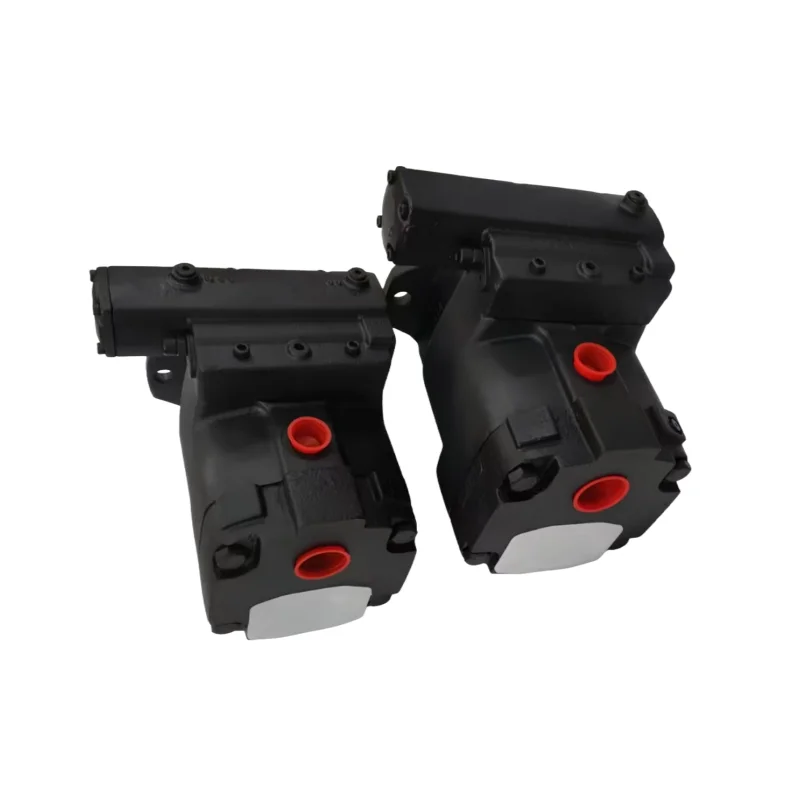
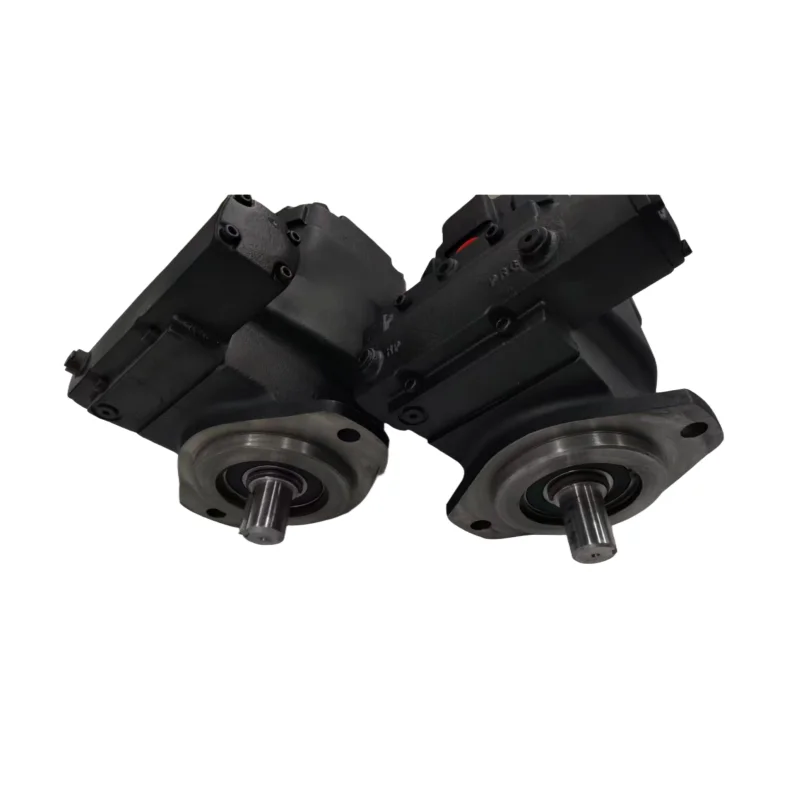
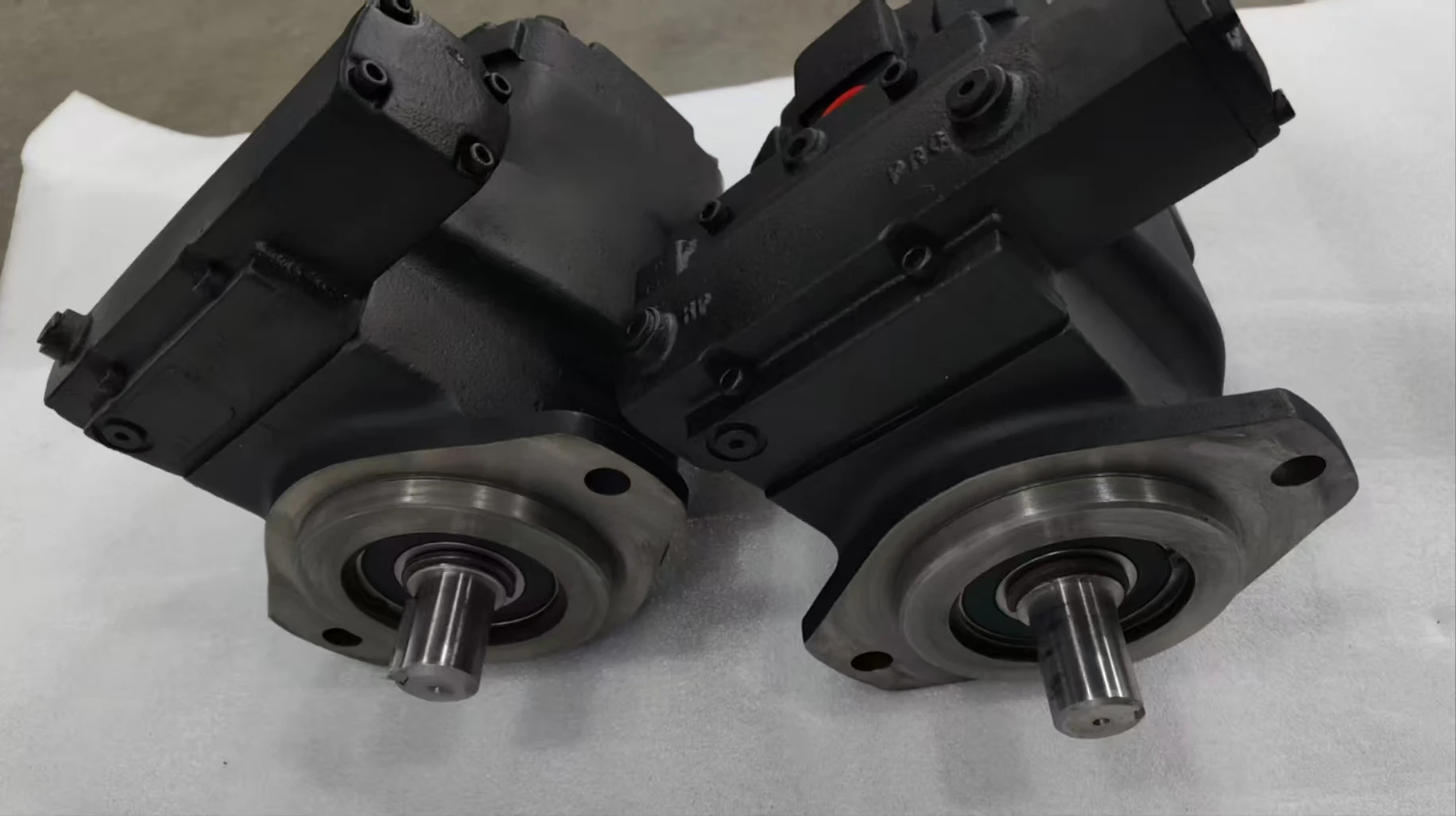
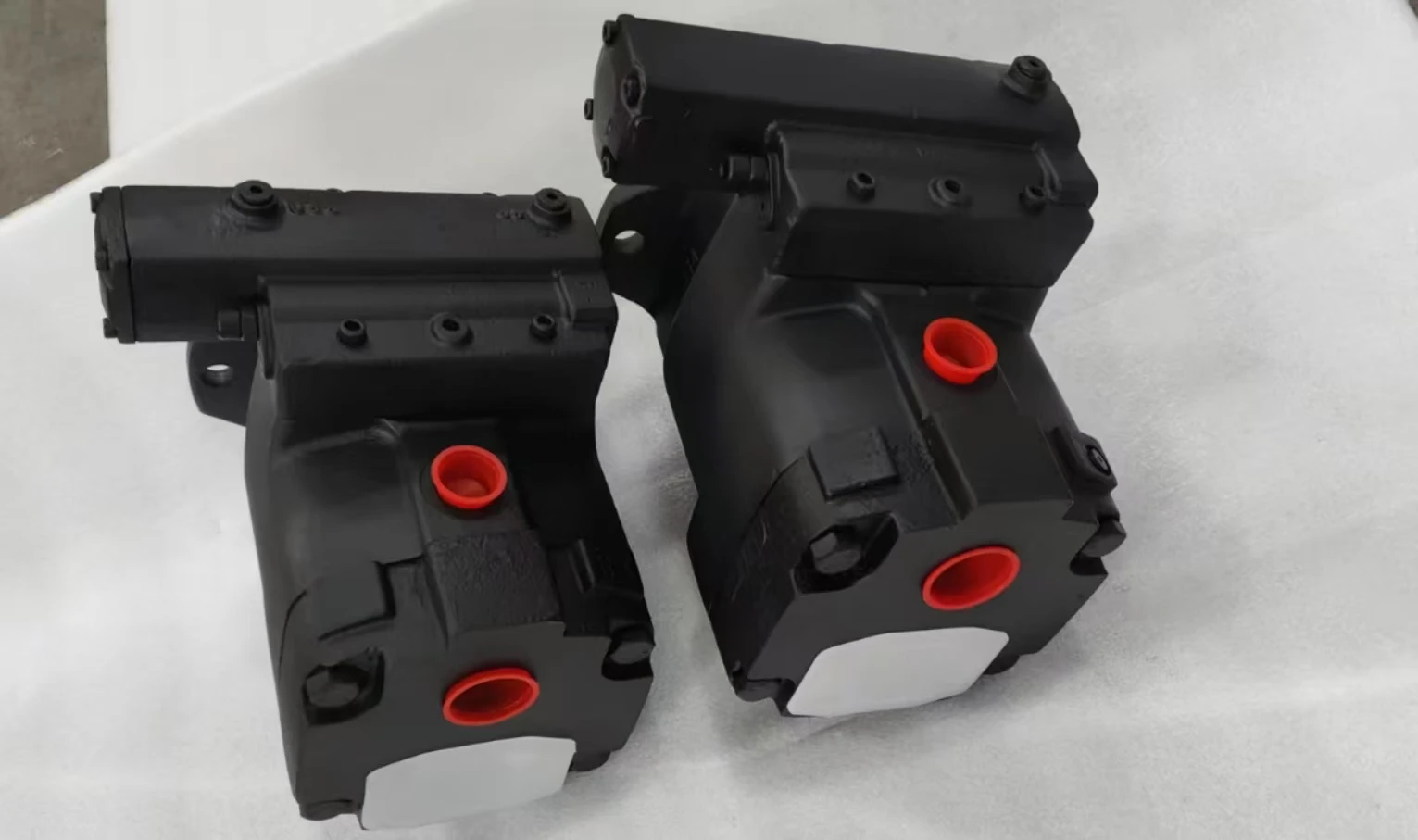
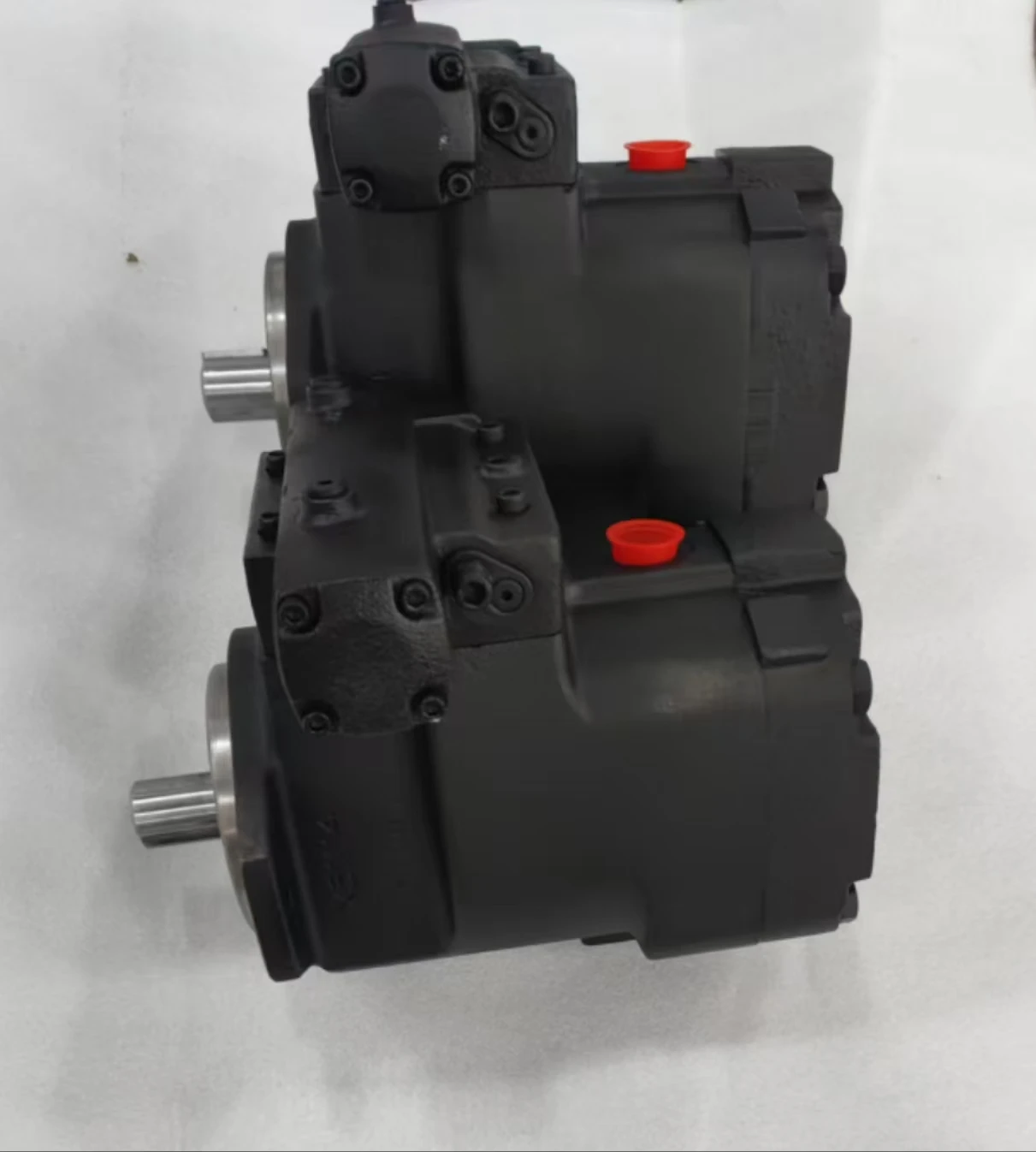
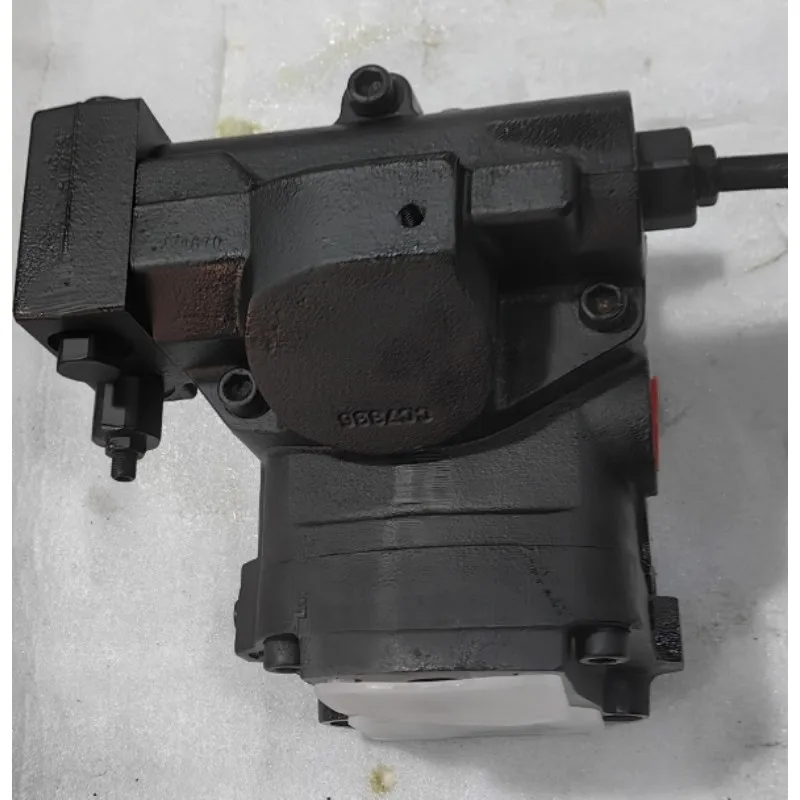


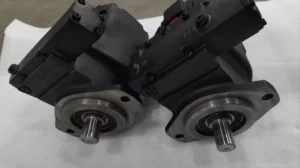
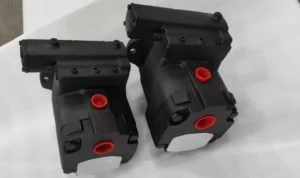

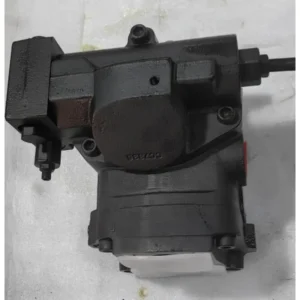
PVWJ-098-A1UV-LSAY-P-1NNNN Hydraulic Pump PVWJ PVWH PVWW PVWC PVWJ-098 PVWJ-076 PVG High Pressure Variable Piston Pump
I. Technical Parameters
Displacement: The theoretical displacement corresponding to “098” in the model is 98.3 ml/rev.
•
Working pressure: It adopts pressure compensation control mode. According to the characteristics of the same series of products, the rated working pressure can reach 210 bar, and the peak pressure can be adapted to the requirements of high-pressure working conditions.
•
Speed range: The maximum speed is 2100 rpm, and it can operate stably at 1800 rpm. The minimum stable speed can meet the requirements of medium and low-speed working conditions.
•
Circuit type: Open circuit design, compatible with common hydraulic system circuit architectures.
•
Medium compatibility: It is suitable for low-lubricity hydraulic oil, with a wide range of oil viscosity compatibility. The sealing parts are made of fluororubber material, which has good oil resistance and high-temperature resistance.
•
Control response: Medium control response speed, which can meet the dynamic regulation requirements under most working conditions.
•
Oil port configuration: The tail oil port design complies with SAE standards for connection and is compatible with the connection requirements of conventional hydraulic pipelines.
Displacement: The theoretical displacement corresponding to “098” in the model is 98.3 ml/rev.
•
Working pressure: It adopts pressure compensation control mode. According to the characteristics of the same series of products, the rated working pressure can reach 210 bar, and the peak pressure can be adapted to the requirements of high-pressure working conditions.
•
Speed range: The maximum speed is 2100 rpm, and it can operate stably at 1800 rpm. The minimum stable speed can meet the requirements of medium and low-speed working conditions.
•
Circuit type: Open circuit design, compatible with common hydraulic system circuit architectures.
•
Medium compatibility: It is suitable for low-lubricity hydraulic oil, with a wide range of oil viscosity compatibility. The sealing parts are made of fluororubber material, which has good oil resistance and high-temperature resistance.
•
Control response: Medium control response speed, which can meet the dynamic regulation requirements under most working conditions.
•
Oil port configuration: The tail oil port design complies with SAE standards for connection and is compatible with the connection requirements of conventional hydraulic pipelines.
2. Working Principle
This piston pump is a variable displacement axial piston pump. Its core working components include the cylinder block, piston, swash plate, oil distribution plate and drive shaft. During operation, the transmission shaft drives the cylinder block to rotate at high speed. Under the combined action of centrifugal force and the return mechanism, the plunger inside the cylinder block always adheres closely to the surface of the swash plate. Due to the certain inclination Angle of the swash plate, when the plunger rotates with the cylinder block to the high side of the swash plate, it will be squeezed by the swash plate and move towards the interior of the cylinder block. At this time, the volume of the sealed cavity formed by the plunger and the cylinder block decreases, and the oil pressure inside the cavity increases. Eventually, the oil is discharged through the oil discharge window of the oil distribution plate, completing the oil pressure process. When the plunger rotates to the lower side of the swash plate, it extends outward under the action of the return force, increasing the volume of the sealed cavity and creating a local vacuum. Under the action of atmospheric pressure, the oil in the oil tank is sucked into the cavity through the oil suction window of the oil distribution plate, completing the oil suction process.
By adjusting the inclination Angle of the swash plate, the reciprocating stroke length of the plunger can be changed, thereby achieving stepless adjustment of the displacement. The pressure compensation control function in the model can automatically adjust the displacement according to the changes in system pressure, precisely matching the output flow with the load demand and achieving energy-saving effects.
This piston pump is a variable displacement axial piston pump. Its core working components include the cylinder block, piston, swash plate, oil distribution plate and drive shaft. During operation, the transmission shaft drives the cylinder block to rotate at high speed. Under the combined action of centrifugal force and the return mechanism, the plunger inside the cylinder block always adheres closely to the surface of the swash plate. Due to the certain inclination Angle of the swash plate, when the plunger rotates with the cylinder block to the high side of the swash plate, it will be squeezed by the swash plate and move towards the interior of the cylinder block. At this time, the volume of the sealed cavity formed by the plunger and the cylinder block decreases, and the oil pressure inside the cavity increases. Eventually, the oil is discharged through the oil discharge window of the oil distribution plate, completing the oil pressure process. When the plunger rotates to the lower side of the swash plate, it extends outward under the action of the return force, increasing the volume of the sealed cavity and creating a local vacuum. Under the action of atmospheric pressure, the oil in the oil tank is sucked into the cavity through the oil suction window of the oil distribution plate, completing the oil suction process.
By adjusting the inclination Angle of the swash plate, the reciprocating stroke length of the plunger can be changed, thereby achieving stepless adjustment of the displacement. The pressure compensation control function in the model can automatically adjust the displacement according to the changes in system pressure, precisely matching the output flow with the load demand and achieving energy-saving effects.
3.. Product Features and Advantages
Economical and efficient: It adopts an optimized pressure compensation control logic, which can adjust the output in real time according to the load, effectively reducing energy loss. Meanwhile, the overall design takes into account both manufacturing and usage costs, resulting in low maintenance costs.
•
Stable and reliable: As a mature series of products, the key friction pairs (such as the plunger and cylinder block, the oil distribution plate and cylinder block) are processed with precision techniques, combined with fluororubber seals, which enhance the wear resistance and aging resistance, and extend the service life. The medium control response speed design makes the system run more smoothly and reduces the impact caused by pressure fluctuations.
•
Strong medium adaptability: It has a good adaptability to low-lubricity hydraulic oil, broadening the range of oil selection and can work stably under various working conditions.
•
Compact and lightweight structure: With an integrated design, it is small in size and light in weight, making it easy to install and arrange inside the device, especially suitable for scenarios with limited space.
•
Good standardization adaptability: The oil port connection, installation dimensions, etc. comply with industry general standards (such as SAE specifications), and can be quickly adapted to conventional hydraulic system components, reducing integration difficulty.
Economical and efficient: It adopts an optimized pressure compensation control logic, which can adjust the output in real time according to the load, effectively reducing energy loss. Meanwhile, the overall design takes into account both manufacturing and usage costs, resulting in low maintenance costs.
•
Stable and reliable: As a mature series of products, the key friction pairs (such as the plunger and cylinder block, the oil distribution plate and cylinder block) are processed with precision techniques, combined with fluororubber seals, which enhance the wear resistance and aging resistance, and extend the service life. The medium control response speed design makes the system run more smoothly and reduces the impact caused by pressure fluctuations.
•
Strong medium adaptability: It has a good adaptability to low-lubricity hydraulic oil, broadening the range of oil selection and can work stably under various working conditions.
•
Compact and lightweight structure: With an integrated design, it is small in size and light in weight, making it easy to install and arrange inside the device, especially suitable for scenarios with limited space.
•
Good standardization adaptability: The oil port connection, installation dimensions, etc. comply with industry general standards (such as SAE specifications), and can be quickly adapted to conventional hydraulic system components, reducing integration difficulty.
4. Usage Functions and Purposes
1. Usage functionAs the power core of the hydraulic system, it converts the mechanical energy of the prime mover (such as an electric motor or engine) into the pressure energy of the hydraulic oil, and drives the hydraulic cylinder, hydraulic motor and other actuating elements through the output of high-pressure oil, achieving the linear or rotational motion of the equipment. With the pressure compensation control function, the output flow and pressure can be automatically adjusted according to the changes in system load, ensuring the power matching accuracy of the system under different working conditions.
2. Uses
1. Usage functionAs the power core of the hydraulic system, it converts the mechanical energy of the prime mover (such as an electric motor or engine) into the pressure energy of the hydraulic oil, and drives the hydraulic cylinder, hydraulic motor and other actuating elements through the output of high-pressure oil, achieving the linear or rotational motion of the equipment. With the pressure compensation control function, the output flow and pressure can be automatically adjusted according to the changes in system load, ensuring the power matching accuracy of the system under different working conditions.
2. Uses
It is widely applied in industrial fields that require stable high-pressure hydraulic power, providing power support for the hydraulic systems of various equipment, covering multiple industries such as metallurgy, metal processing, machine tools, automotive manufacturing, petrochemicals, construction machinery, glass processing, and woodworking machinery.
5. Applicable Machines and Scenarios
1. Applicable machines
•
Industrial processing equipment: metal cutting machines, stamping machines, injection molding machines, glass forming machines, woodworking planers, etc.
•
Metallurgical and chemical equipment: Hydraulic actuators in metallurgical production lines, stirring drive hydraulic systems for petrochemical reaction vessels, etc.
•
Construction and engineering machinery: Auxiliary hydraulic systems for small loaders and excavators, as well as other engineering equipment that requires medium and high-pressure power.
•
Automobile manufacturing equipment: Hydraulic drive equipment in automobile stamping production lines and assembly lines.
2. Applicable scenariosIt is suitable for medium and high voltage, medium and low load fluctuations, and working conditions with moderate requirements for control response speed. It is especially suitable for equipment integration scenarios with limited space, continuous operation industrial production lines, and occasions with high requirements for operational stability and cost control. For instance, scenarios such as roller drive in metallurgical workshops, spindle feed drive in machine tools, and boom movement drive in small construction machinery.
1. Applicable machines
•
Industrial processing equipment: metal cutting machines, stamping machines, injection molding machines, glass forming machines, woodworking planers, etc.
•
Metallurgical and chemical equipment: Hydraulic actuators in metallurgical production lines, stirring drive hydraulic systems for petrochemical reaction vessels, etc.
•
Construction and engineering machinery: Auxiliary hydraulic systems for small loaders and excavators, as well as other engineering equipment that requires medium and high-pressure power.
•
Automobile manufacturing equipment: Hydraulic drive equipment in automobile stamping production lines and assembly lines.
2. Applicable scenariosIt is suitable for medium and high voltage, medium and low load fluctuations, and working conditions with moderate requirements for control response speed. It is especially suitable for equipment integration scenarios with limited space, continuous operation industrial production lines, and occasions with high requirements for operational stability and cost control. For instance, scenarios such as roller drive in metallurgical workshops, spindle feed drive in machine tools, and boom movement drive in small construction machinery.
6. Similar models
This model belongs to the PVWJ open circuit axial piston pump series. Similar models in the same series are mainly distinguished by displacement and specific configuration differences. Common ones include:
•
PVWJ-076 series: With a displacement of 76.5 ml/rev, its structure and control mode are consistent with those of PVWJ-098, making it suitable for working conditions with smaller displacement requirements.
•
PVWJ-130 series: With a displacement of 130.2 ml/rev, it is a large-displacement model in the same series and is suitable for systems with higher flow requirements.
•
PVWJ-098-A1UP-RDFS-P-1NN/KNN: It has the same displacement as the target model, with only differences in the oil port direction, seal details and other configurations, and is suitable for different installation and medium requirements.
•
Axial piston pumps of the same type with open circuits, such as the PVG series and PVV series, are all designed with open circuits and have the same working principle. They only differ in pressure ratings and control method details. They can be replaced and selected according to specific working conditions.
This model belongs to the PVWJ open circuit axial piston pump series. Similar models in the same series are mainly distinguished by displacement and specific configuration differences. Common ones include:
•
PVWJ-076 series: With a displacement of 76.5 ml/rev, its structure and control mode are consistent with those of PVWJ-098, making it suitable for working conditions with smaller displacement requirements.
•
PVWJ-130 series: With a displacement of 130.2 ml/rev, it is a large-displacement model in the same series and is suitable for systems with higher flow requirements.
•
PVWJ-098-A1UP-RDFS-P-1NN/KNN: It has the same displacement as the target model, with only differences in the oil port direction, seal details and other configurations, and is suitable for different installation and medium requirements.
•
Axial piston pumps of the same type with open circuits, such as the PVG series and PVV series, are all designed with open circuits and have the same working principle. They only differ in pressure ratings and control method details. They can be replaced and selected according to specific working conditions.
7. Precautions for Use
•
Oil management: Strictly select the appropriate hydraulic oil, and give priority to using the recommended low-lubricity anti-wear hydraulic oil. The viscosity of the oil should be controlled within a reasonable range. Regularly check the cleanliness of the oil. It is recommended to install a return oil filter with an accuracy of no less than 25μm and an oil suction filter with an accuracy of 100μm to prevent impurities from entering the pump and causing wear of the friction pairs. The filter elements need to be cleaned or replaced periodically.
•
Installation requirements: Use an elastic coupling to connect with the prime mover, ensuring that the coaxiality error does not exceed 0.1mm to prevent excessive radial force from causing damage to the bearings and shaft seals. The oil suction pipeline should be short and thick to reduce pressure loss. The vacuum degree at the oil suction port must not exceed 0.03MPa to prevent cavitation. The oil port connection must be sealed reliably to prevent leakage and air from entering the system.
•
Start-up and operation monitoring: Before the initial start-up, clean hydraulic oil should be filled into the pump, and the pump should be manually turned 2-3 times to ensure there is no jamming. When starting up, run at low speed without load for 5 to 10 minutes first. Wait until the oil temperature rises above 30℃ and there is no abnormal noise, then gradually load to the working pressure. During operation, real-time monitoring of oil temperature (it is recommended to control it between 30 and 80℃), pressure (not exceeding the rated pressure) and noise should be conducted. If there is a sudden increase in oil temperature, excessive pressure fluctuation or abnormal noise, the machine should be stopped immediately for inspection.
•
Maintenance and care: Regularly check the condition of the seals. If the oil leakage exceeds 3 drops per minute, replace the seals in a timely manner. Change the hydraulic oil according to the operating cycle (it is recommended to do it every 2,000 to 3,000 hours). When changing the oil, thoroughly clean the oil tank and pipelines. Before long-term shutdown, the oil in the pump should be drained or anti-rust oil should be injected to prevent rusting of internal components.
•
Working condition matching: It is strictly prohibited to operate for a long time under conditions exceeding the rated pressure and maximum speed to avoid damage to the pump body due to overload. The pressure compensation control parameters need to be precisely set according to the system requirements and should not be adjusted at will to prevent control failure.
•
Oil management: Strictly select the appropriate hydraulic oil, and give priority to using the recommended low-lubricity anti-wear hydraulic oil. The viscosity of the oil should be controlled within a reasonable range. Regularly check the cleanliness of the oil. It is recommended to install a return oil filter with an accuracy of no less than 25μm and an oil suction filter with an accuracy of 100μm to prevent impurities from entering the pump and causing wear of the friction pairs. The filter elements need to be cleaned or replaced periodically.
•
Installation requirements: Use an elastic coupling to connect with the prime mover, ensuring that the coaxiality error does not exceed 0.1mm to prevent excessive radial force from causing damage to the bearings and shaft seals. The oil suction pipeline should be short and thick to reduce pressure loss. The vacuum degree at the oil suction port must not exceed 0.03MPa to prevent cavitation. The oil port connection must be sealed reliably to prevent leakage and air from entering the system.
•
Start-up and operation monitoring: Before the initial start-up, clean hydraulic oil should be filled into the pump, and the pump should be manually turned 2-3 times to ensure there is no jamming. When starting up, run at low speed without load for 5 to 10 minutes first. Wait until the oil temperature rises above 30℃ and there is no abnormal noise, then gradually load to the working pressure. During operation, real-time monitoring of oil temperature (it is recommended to control it between 30 and 80℃), pressure (not exceeding the rated pressure) and noise should be conducted. If there is a sudden increase in oil temperature, excessive pressure fluctuation or abnormal noise, the machine should be stopped immediately for inspection.
•
Maintenance and care: Regularly check the condition of the seals. If the oil leakage exceeds 3 drops per minute, replace the seals in a timely manner. Change the hydraulic oil according to the operating cycle (it is recommended to do it every 2,000 to 3,000 hours). When changing the oil, thoroughly clean the oil tank and pipelines. Before long-term shutdown, the oil in the pump should be drained or anti-rust oil should be injected to prevent rusting of internal components.
•
Working condition matching: It is strictly prohibited to operate for a long time under conditions exceeding the rated pressure and maximum speed to avoid damage to the pump body due to overload. The pressure compensation control parameters need to be precisely set according to the system requirements and should not be adjusted at will to prevent control failure.