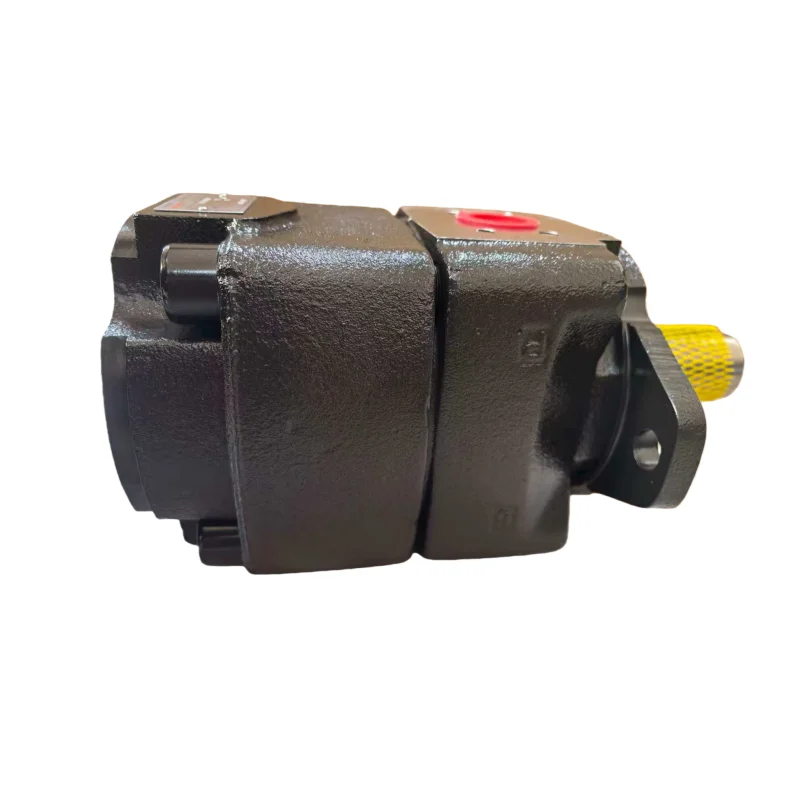
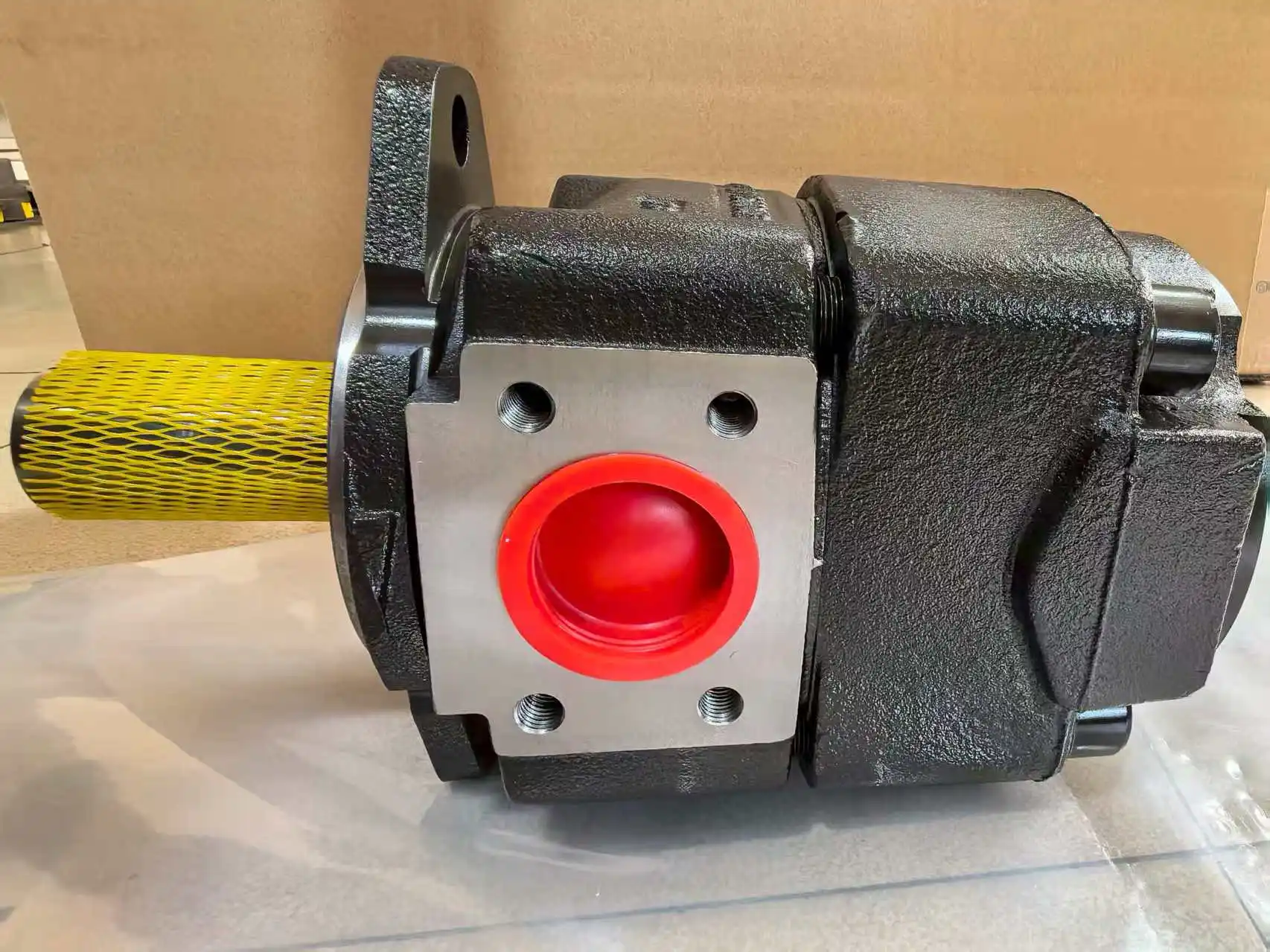
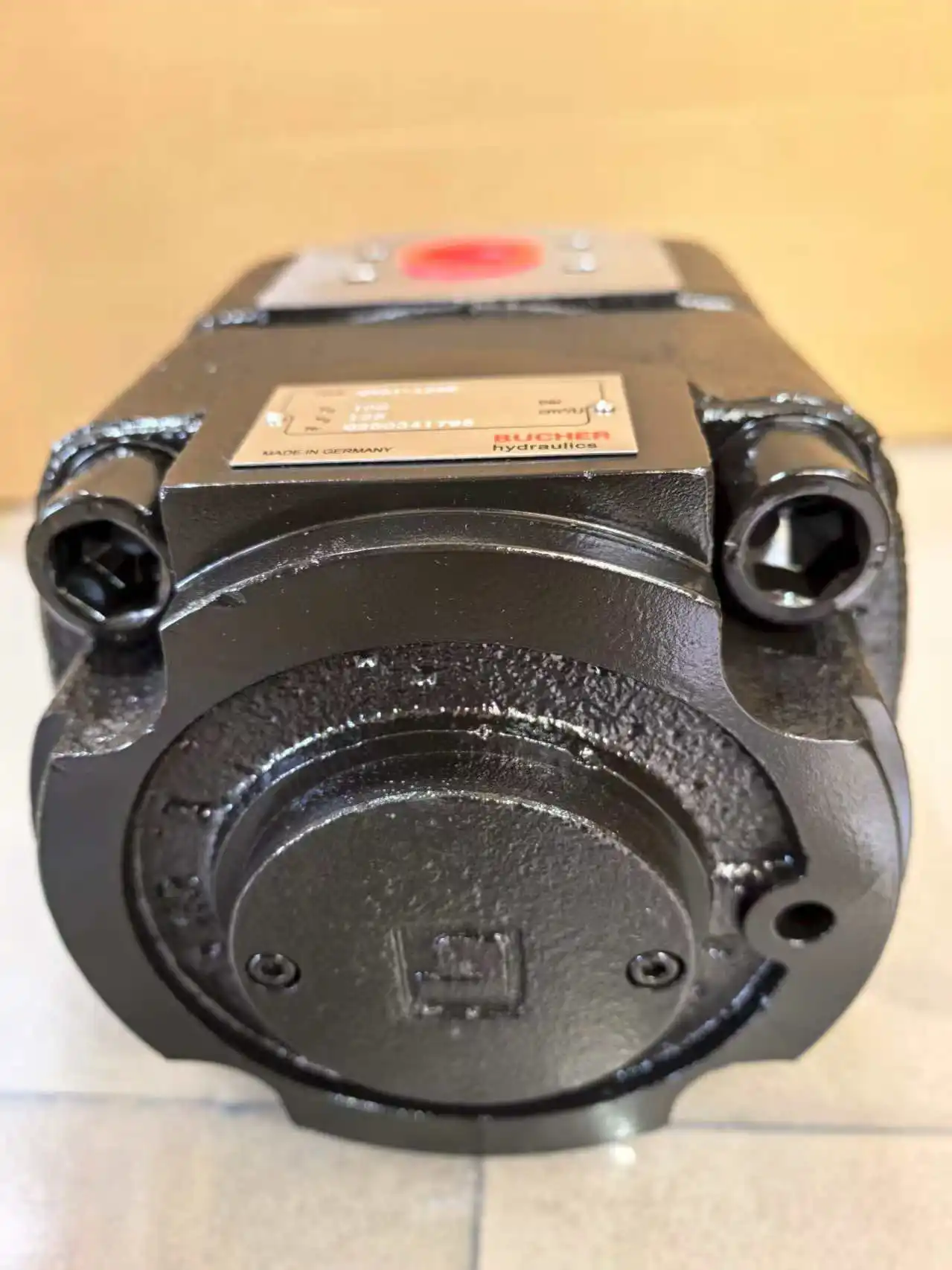
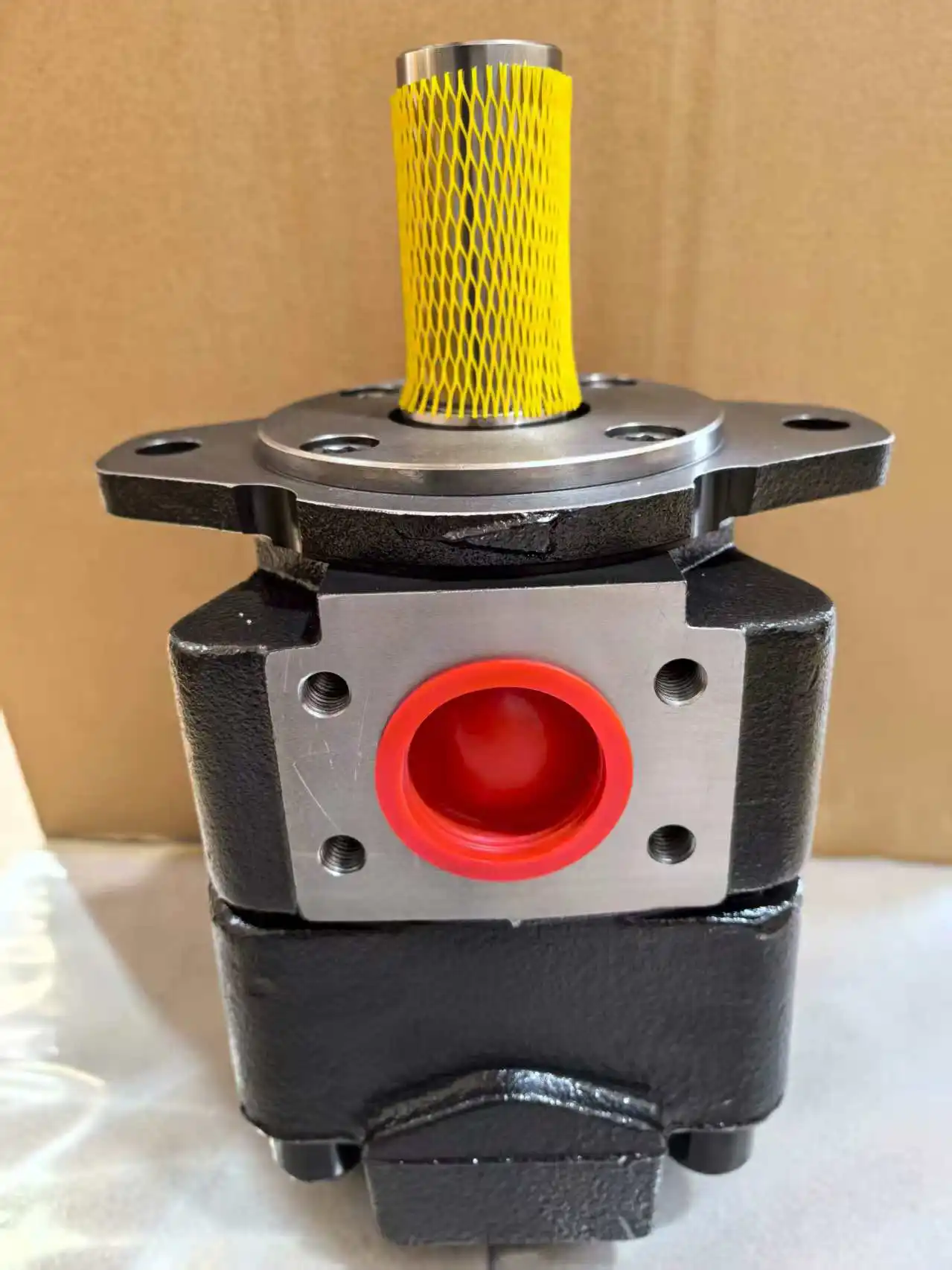
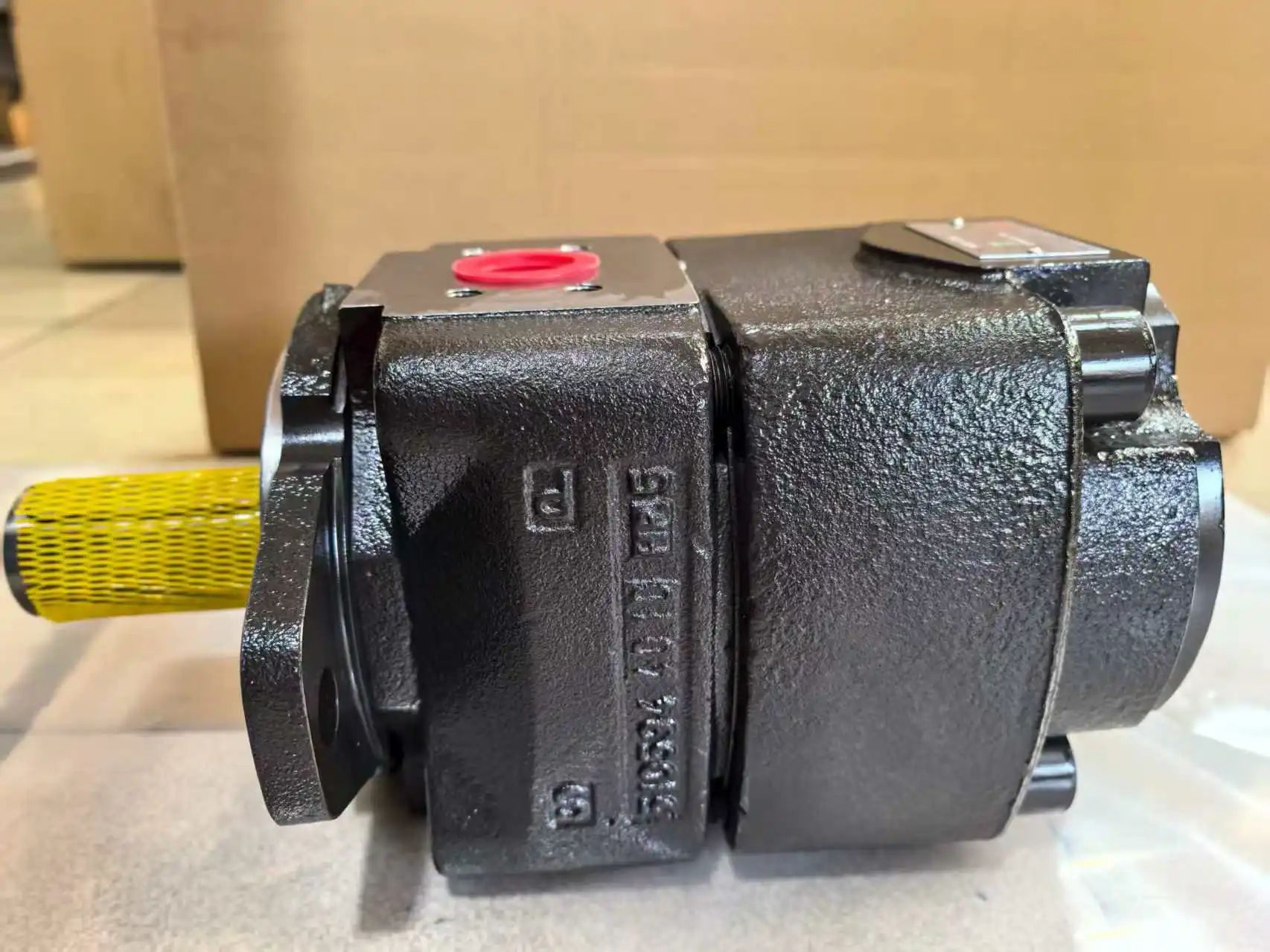
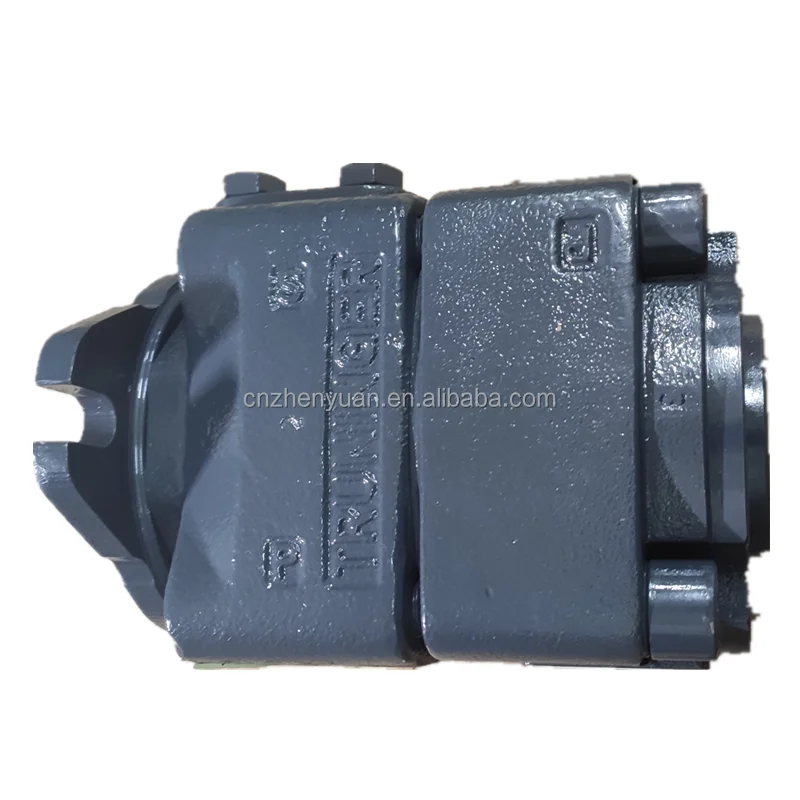
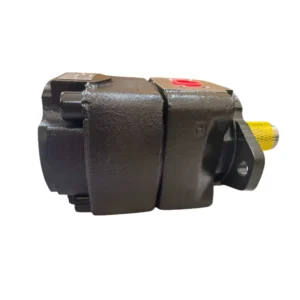
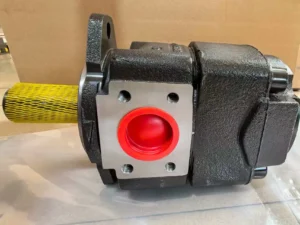
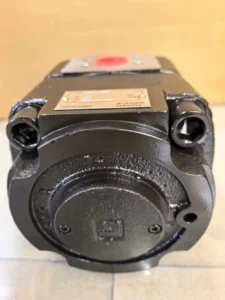
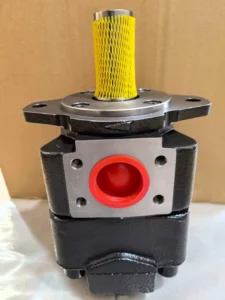
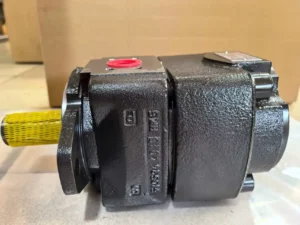
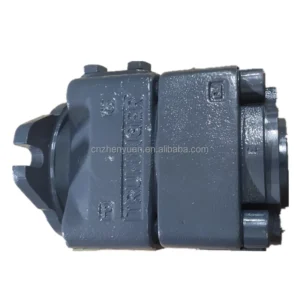
QXEH QX QXM Hydraulic Pump QX21 QX31 QX41 QX51 QX54 QX61 QX62 QX83 High Pressure Hydraulic Internal Gear Pump QX51-125R
Core performance parameters•Displacement specification: External meshing fixed displacement gear pump, theoretical displacement 125 mL/r (mL/ RPM), actual displacement affected by volumetric efficiency, variable adjustment range 90%-100% (112.5-125 mL/r), suitable for medium pressure and medium flow hydraulic systems, flow output stability error ≤±2%.
•Pressure rating: Rated working pressure 16 MPa (160 bar), stable operation under continuous working pressure. The instantaneous peak pressure is 20 MPa (200 bar), with a single duration of no more than 5 seconds. It can withstand medium and small load impacts. The set pressure of the relief valve is matched with the peak pressure.
•Flow output: At the rated speed of 1500 rpm, the rated flow rate is 159.4-170.3 L/min (125 mL/r×1500 rpm× volumetric efficiency 85%-90%). At 2000 rpm, the flow rate is 212.5-227.0 L/min. The flow rate varies linearly with the rotational speed, and the flow pulsation rate is ≤15%.
2. Rotational speed and power parameters
•Speed range: Minimum stable speed 500 rpm, maximum allowable speed 2000 rpm, compatible with 4-pole asynchronous motors (1450 rpm) and small diesel engines (1800 rpm). There is no jamming at low speeds, and the vibration at high speeds is ≤3.0 mm/s.
•Efficiency indicators: Under rated working conditions, volumetric efficiency is 85%-90%, mechanical efficiency is 90%-95%, and total efficiency is 76.5%-85.5%. In the load range of 60% to 100%, the overall efficiency remains above 75%, and the energy consumption performance is suitable for medium and small power systems.
•Power matching: At a rated speed of 1500 rpm and a rated pressure of 16 MPa, the input power is approximately 42.5 kW, the output power is approximately 36.1 kW, and the input torque is approximately 270 N·m, which is suitable for the power transmission requirements of medium and small-sized power sources.
3. Structure and Physical Parameters
•Structural type: External meshing involute gear pump, adopting a “driving gear + driven gear” double-gear meshing design, gear module 4, number of teeth 16, tooth width 25mm, and using an axial clearance compensation mechanism (clearance ≤ 0.05mm) to enhance volumetric efficiency.
•Core material The pump body is made of high-strength gray cast iron (HT300, tensile strength ≥300 MPa), the gears are alloy structural steel (20CrMnTi, carburized and quenched, surface hardness HRC58-62, carburized layer thickness 0.8-1.2 mm), and the shaft is 40Cr quenched and tempered (hardness HRC28-32). The seal is made of nitrile rubber (with a temperature resistance range of -20℃ to 100℃).
•Physical parameters: Net weight 35 kg, external dimensions (length × width × height) 380×260×220 mm, installation method is flange type + key connection, compatible with SAE type A installation flange, oil suction port diameter Φ65 mm, oil pressure port diameter Φ50 mm.
4. Medium and Environmental requirements
•Medium requirements: It is recommended to use L-HM 46 anti-wear hydraulic oil. For low-temperature environments (below -15℃), L-HV 46 hydraulic oil should be selected. It is compatible with common mechanical oil (viscosity grade N46). The kinematic viscosity range of the oil is 20-300 mm²/s, and the acid value of the oil is ≤0.1 mgKOH/g.
•Cleanliness standard: The oil cleanliness is required to reach ISO 4406 18/15 grade (NAS 9 grade). An 80 μm coarse filter (filtration flow rate ≥ 1.5 times the pump flow rate, pressure drop ≤0.08 MPa) should be installed at the oil suction port, and a 20-30 μm filter should be added at the oil return port.
•Environmental parameters: Operating environment temperature -10℃ to 80℃, relative humidity ≤95% (no condensation), can adapt to slight vibration (vibration acceleration ≤ 8m /s²), oil contamination conditions, protection grade IP54, avoid long-term exposure to environment with dust concentration > 15mg /m³.
Ii. Working Principle
This pump is an external meshing quantitative gear pump. It converts mechanical energy into hydraulic energy through the core mechanism of “gear meshing volume change – suction pressure oil chamber isolation – forced oil delivery”, and realizes oil delivery by relying on the periodic change of the sealed cavity formed during gear rotation. The specific process is as follows:
1. Power transmission and gear meshing
The power source drives the pump shaft to rotate through a coupling. The pump shaft drives the driving gear to rotate synchronously. The driving gear and the driven gear achieve reverse rotation (opposite directions, same speed) through the meshing of the tooth surfaces. The teeth of the two gears, the inner wall of the pump body and the front and rear end covers jointly form multiple sealing cavities (each cavity has a volume of approximately 1.5 mL). The number of sealing cavities varies with the number of gear teeth. A 16-tooth structure can form 16 independent sealing cavities.
2. Suction oil circulation and volume compensation
•Oil suction stage: When the gear rotates to the oil suction port side, the gear teeth gradually disengage from meshing, the gap between the teeth increases, and the volume of the sealed cavity expands accordingly. The pressure inside the cavity drops to 0.03-0.05 MPa (absolute pressure), creating a vacuum. Under the action of atmospheric pressure, the oil in the oil tank enters the sealed cavity through the oil suction pipeline and the oil suction port, completing the oil suction process. The oil suction efficiency is ≥95%.
•Oil pressing stage When the oil-filled sealed cavity rotates with the gear to the oil pressure port side, the gear teeth start to mesh, and the gap between the teeth is squeezed and reduced by the adjacent gear teeth. The volume of the sealed cavity drops sharply, and the oil inside the cavity is forcibly squeezed, with the pressure rising to the rated pressure (16 MPa). The oil is then output to the hydraulic system through the oil pressure port and the oil pressure pipeline, completing the oil pressure process. The oil pressure efficiency is ≥90%.
•Volume compensation: An axial clearance compensation mechanism is adopted. Through the elastic element of the rear end cover, the compensation disc is pushed to closely adhere to the gear end face, keeping the axial clearance within 0.05mm and reducing the leakage of high-pressure oil into the oil suction chamber. Meanwhile, the oil film at the gear meshing point also forms an auxiliary seal, further enhancing the volumetric efficiency.
3. Lubrication and cooling
During the rotation of the gear, some high-pressure oil enters the bearing cavity through the gap between the gear shaft and the bearing, providing lubrication for the rolling bearing (lubricating oil volume ≥ 0.5L /min). The lubricated oil flows back to the oil suction cavity through the oil drain hole. Meanwhile, during the circulation of the oil in the pump body, the heat generated by the gear meshing is carried away, keeping the pump body temperature within a reasonable range (≤80℃) and ensuring the stability of continuous operation.
Iii. Product Features and Advantages
1. The structure is simple and compact, and maintenance is convenient
It adopts an external meshing double-gear core structure, with the number of parts being only 60% of that of a plunger pump of the same displacement. The key components (gears, shafts, and seals) have strong universality, and the procurement cost of wear parts is low (50% lower than that of a plunger pump). The modular design enables disassembly and maintenance without the need for specialized tools. The time for replacing seals or gears can be controlled within one hour, making it suitable for the maintenance capabilities of small and medium-sized repair shops.
2. It has a wide range of medium pressure and medium flow adaptability, and the cost is controllable
The parameter combination of a rated pressure of 16 MPa and a rated flow rate of 170 L/min is suitable for the vast majority of medium and small load hydraulic systems and can replace vane pumps (with higher pressure) or small piston pumps (with lower cost) of the same flow rate. The manufacturing cost of the entire machine is 40% to 50% lower than that of the plunger pump with the same flow rate. When purchasing in bulk, the unit price advantage is significant, making it suitable for batch matching of small and medium-sized equipment.
3. High reliability, adaptable to harsh working conditions
The gears are treated with 20CrMnTi carburizing and quenching, with a tooth surface hardness of HRC58-62. They have excellent wear resistance. Under the condition that the oil cleanliness meets the standards, the trouble-free operation life can reach 8,000 hours. The gray cast iron pump body has strong impact resistance and can withstand slight mechanical collisions and vibrations, making it suitable for non-standardized working environments such as mines and construction sites.
4. Wide media compatibility and good environmental adaptability
Nitrile rubber seals are compatible with various media such as anti-wear hydraulic oil and mechanical oil, and do not require special oil, reducing the cost of oil procurement during operation and maintenance. The operating temperature range of -10℃ to 80℃ can cover the working environment in the vast majority of regions in China. It can operate stably in both northern winters and southern summers without the need for additional heating or cooling devices.
Iv. Usage Functions and Purposes
1. Core usage functions
•Medium-pressure power output: It provides 16 MPa stable pressure oil for medium and small power actuating components (such as hydraulic cylinders and hydraulic motors), driving lifting, pushing, rotating and other actions. A single pump can meet the requirements of actuating components with a power of ≤40 kW, and the power transmission efficiency is ≥76.5%.
•Stable flow supply: As a fixed displacement pump, it outputs a stable flow at a fixed speed, making it suitable for scenarios with moderate requirements for flow stability (such as injection molding machine feeding, conveyor drive). The flow fluctuation rate is ≤15%, and simple speed regulation can be achieved through a throttle valve.
•System overload protection: When used in conjunction with a relief valve, if the system pressure exceeds the peak pressure of 20 MPa, the relief valve opens to relieve pressure, preventing the gear surfaces of the pump body from wearing or breaking due to overload, and ensuring the safety of the entire hydraulic system.
2. Main application fields
•Construction machinery: Lifting mechanisms for 5-10 ton loaders, auxiliary actions for small excavators (such as bulldozers), lifting systems for forklifts, suitable for reciprocating or rotary actions of medium and small loads.
•Industrial manufacturing equipment: feeding mechanisms for small and medium-sized injection molding machines, pressing systems for hydraulic presses (under 100 tons), and drive units for belt conveyors, meeting the power demands of medium pressure and medium flow.
•Agricultural machinery: Large tractor suspension systems, combine harvester header lifting mechanisms, and hydraulic drive devices for agricultural machinery, suitable for intermittent power output requirements in agricultural operations.
•Hydraulic station matching: Small and medium-sized hydraulic station (power ≤ 45kW) power source, used in scenarios such as clamping of machine tool fixtures and driving of small production line conveying devices, can be used as a single pump or in parallel with two pumps.
V. Applicable Machines and Scenarios
1. Adapt to the core machine
•Construction machinery: 5-10 ton loaders, 3-6 ton small excavators, 3-5 ton forklifts.
•Industrial equipment: Small and medium-sized injection molding machines (clamping force ≤500 tons), presses under 100 tons, belt conveyors with a belt width ≤1 meter.
•Agricultural machinery: Tractors with over 100 horsepower, large combine harvesters, corn harvesters.
•Specialized equipment: Small and medium-sized hydraulic stations (flow rate ≤200 L/min), hydraulic clamping devices, small-scale garbage compression equipment.
2. Typical application scenarios
•Loader lifting operation: At a speed of 1500 rpm, it outputs a flow rate of 170 L/min, driving the lifting mechanism of an 8-ton loader to achieve a pressure lift of 16 MPa. The lifting weight can reach 5 tons, and the single lifting time is ≤3 seconds. It is suitable for scenarios such as sand and gravel loading at construction sites and bulk cargo handling at ports.
•Injection molding machine feeding operation: At a speed of 1450 rpm, it outputs a flow rate of 165 L/min, providing 12 MPa pressure oil for the feeding mechanism of a 300-ton injection molding machine to drive the feeding screw to rotate. The feeding speed is stable and suitable for the batch production scenarios of plastic parts.
•Tractor suspension operation: At a speed of 1800 rpm, it outputs a flow rate of 205 L/min, driving the suspension system of a 120-horsepower tractor to lift and lower. The suspension weight reaches 3 tons, ensuring smooth lifting and lowering, and is suitable for agricultural operation scenarios such as deep plowing and sowing in farmlands.
•Hydraulic station power supply: As the power source of the 15 kW hydraulic station, it outputs a flow rate of 160 L/min at 1500 rpm, providing a clamping pressure of 10 MPa for machine tool fixtures. The clamping force is stable and suitable for mechanical processing assembly line scenarios.
Six. Similar models
1. Alternative models of the same series
•QX51-100R: It has the same structure as the original model, with a theoretical displacement of 100 mL/r, a rated pressure of 16 MPa, a flow rate of 127.5-136.3 L/min at 1500 rpm, and a volumetric efficiency of 85%-90%. The installation dimensions are fully compatible, making it suitable for low-flow and medium-pressure scenarios (such as 3-ton forklifts and small hydraulic stations).
•QX51-150R: A large-displacement model in the same series, with a theoretical displacement of 150 mL/r, a rated pressure of 16 MPa, and a flow rate of 191.3-204.4 L/min at 1500 rpm. It has the same structural form and is suitable for high-flow medium-pressure systems (such as 10-ton loaders and 500-ton injection molding machines).
2. Cross-series alternative models
•Cgg-125: High-pressure external gear pump, displacement 125 mL/r, rated pressure 20 MPa, peak pressure 25 MPa, made of high-strength gear material, suitable for medium and high-pressure scenarios (such as the active operation of small excavators), with a cost 20% higher than the original model.
•YBC-125: Low-pressure high-flow gear pump, displacement 125 mL/r, rated pressure 10 MPa, flow rate 175 L/min at 1500 rpm, simple structure and low cost (30% lower than the original model), suitable for low-pressure scenarios (such as farmland irrigation pumps, small conveying equipment).
Vii. Precautions for Use
1. Oil and fluid management norms
•It is recommended to use L-HM 46 anti-wear hydraulic oil. It is strictly prohibited to mix different grades or types of oil. The first oil change cycle is 400 hours. Subsequently, it should be changed every 800 hours. Before the oil change, the oil tank and pipelines should be flushed with new oil (the flushing oil volume should be ≥ 1.5 times the system volume). After flushing, the cleanliness of the oil should reach ISO 4406 18/15 grade.
•The oil suction filter should be inspected every 150 hours. It should be replaced immediately when the pressure difference exceeds 0.1 bar. The return oil filter should be replaced every 400 hours to ensure that there are no metal impurities (iron filings, copper filings) and particles in the oil, avoiding wear on the gear tooth surface.
•The moisture content (≤0.1%) and acid value (≤ 0.15mgKOH /g) of the oil should be tested monthly. When they exceed the standards, the oil should be replaced in time. In winter low-temperature environments (below -10℃), L-HV 46 low-temperature anti-wear hydraulic oil should be replaced to prevent the increase in oil viscosity from causing difficulties in starting or wear of the pump body.
2. Installation and commissioning requirements
•The connection should be made by elastic couplings. The coaxiality error between the pump shaft and the motor shaft should be no more than 0.15mm (radial), and the angular error should be no more than 0.3°. Rigid connection or drive through pulleys (the radial bearing capacity of the pump shaft should be no more than 500N) is strictly prohibited to avoid abnormal gear meshing clearance causing tooth surface wear.
•The diameter of the oil suction pipeline is ≥Φ 65mm, the length is ≤ 2m, the number of elbows is ≤2, the oil suction height does not exceed 1.0m, and the pipeline interface is sealed with threads + sealing tape to ensure no air leakage (air leakage will lead to insufficient oil suction and increased noise). The installation direction must comply with the arrow marking on the pump body. Reverse rotation is strictly prohibited (reverse rotation will cause damage to the sealing parts).
•Before the first start-up, the pump body should be filled with hydraulic oil, and the pump should be manually turned by hand for 3 to 4 turns (with uniform rotational resistance and no jamming). After startup, run it unloaded for 5 minutes (when the oil temperature rises above 20℃), then gradually load it. The pressure increase rate should be no more than 0.5 MPa/ minute to avoid gear damage caused by high-pressure impact.
3. Operation monitoring and maintenance
During operation, real-time monitoring of the pump body temperature (normal ≤75℃, maximum ≤80℃), outlet pressure (≤16 MPa), and operating noise (normal ≤85 dB(A)) is conducted. If a sudden temperature rise of ≥10℃, abnormal pressure fluctuations, or sharp abnormal sounds are detected, the machine should be immediately shut down for inspection, with a focus on checking gear wear, oil contamination, or bearing damage.
Disassemble and inspect every 1,500 hours
4. Storage and protection Specifications
•When stored for a long time, seal the suction and pressure oil ports with plastic plugs, inject anti-rust oil into the pump body (the oil injection volume should be 80% of the pump body volume, and L-TSA 46 anti-rust turbine oil should be selected), and place it in a dry and well-ventilated area (humidity ≤60%, temperature 5-35℃). Manually turn the wheel once a month to prevent gear rusting and jamming.
•After being idle for more than six months, before putting it into use, drain the anti-rust oil, flush the pump body twice with new oil (run it no-load for three minutes after each flush), then run it no-load for another ten minutes. Gradually increase the load to the rated pressure and run it continuously for 20 minutes without leakage, abnormal noise and stable parameters before it can be put into formal use.