

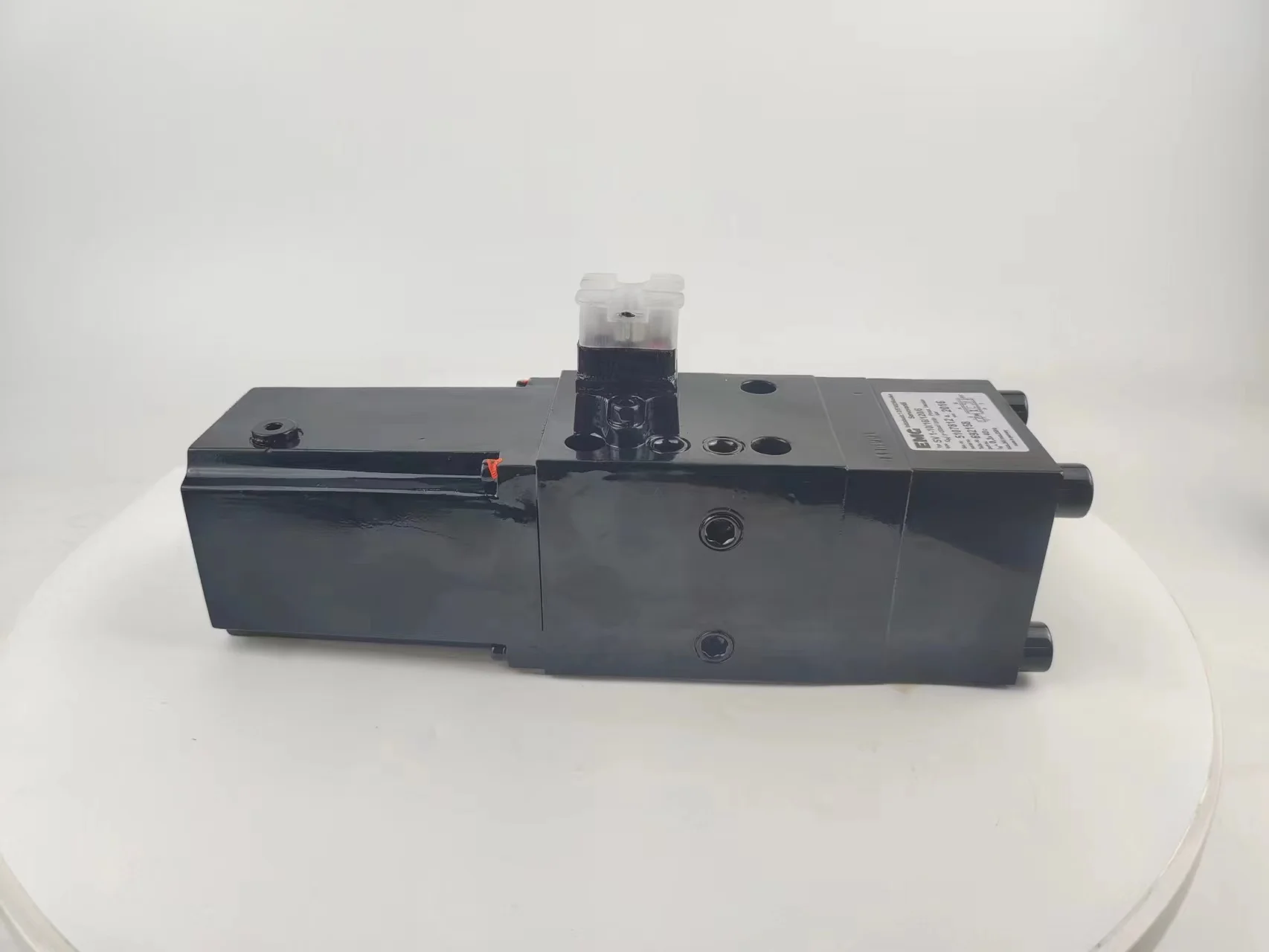
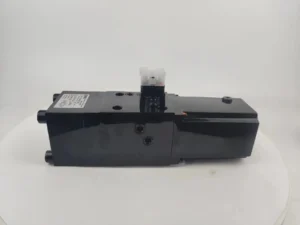
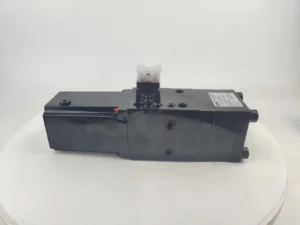
The SV1, SV2, and SVH series high-performance electro-hydraulic servo control valves manufactured by LIC Hydraulic (comprising strict model nomenclature including SV1-10/16/210/6, SV1-06, SV1-16, and SV2-10/20) are state-of-the-art closed-loop rotary slide fluid power components designed for continuous strip-guiding automation, metal mills, and heavy industrial positioning systems. Engineered to line up with standard international subplate footprint specifications (such as ISO 4401 NG10/Cetop 5 or NG06/Cetop 3), specific electrical driving currents, and proportional dynamic flow amplification graphs, this product series delivers 100% drop-in interchangeability with classic SV series servo valves from German OEM EMG Automation.
Standard nozzle-flapper or jet-pipe servo valves deployed in steel mills and heavy industrial mills frequently suffer from early pilot-orifice silt blockage, extreme temperature-induced zero drift, and sudden performance collapse caused by particulate accumulation. LIC mitigates these problems by implementing the classic patented wet-pin rotary slide single-stage armature drive design. Eliminating fragile hydraulic pilot stages completely, the main valve spool is rotated directly via an integrated high-torque electro-magnetic rotary drive. Every single unit undergoes 100% full-load simulated strip-guiding dynamic hysteresis factory testing before dispatch, maintaining stable null balance and fast microsecond step responses under continuous 210-315 bar system pressure thresholds.
Technical Specifications
Accurate, catalog-verified engineering technical profiles for the SV1 / SV2 series servo configurations:
Product Series: SV1 (Single-Stage Direct Rotary Drive) / SV2 (Two-Stage High-Volume) Servo Valve Platform
Nominal Mounting Diameters (Size):
SV1-06: Nominal size 6mm (DIN 24340 / ISO 4401-03 / Cetop 3 subplates)SV1-10: Nominal size 10mm (DIN 24340 / ISO 4401-05 / Cetop 5 subplates)SV2-10 / SV2-20: High-volume two-stage execution spanning nominal sizes up to NG20.
Model Number Selection Breakdown (Example: SV1-10/16/210/6):
SV1: Single-stage, high-frequency rotary sliding spool design architecture.10: Nominal interface connection size NG10.16: Nominal volumetric flow rating of 16 L/min evaluated at a constant standardized valve drop $\Delta p_N = 20\text{ bar}$ (Alternative options: 4, 8, 32, 48 L/min; Flow delivers 24 L/min at $\Delta p_N = 70\text{ bar}$).210: Rated continuous system working pressure restriction of 210 bar (3045 psi; options for 100 bar or 315 bar available).6: Spool null lap assignment indicating a 6% positive overlap pattern (1% low-deadband variant available).
Allowable Continuous Operating Pressure Range ($p_S$): 30 bar – 315 bar (Standard steel chassis) / 20 bar – 210 bar (Lightweight aluminum variant)
Maximum Allowable Tank Port Pressure Back-Loading ($p_T$): Strict limit of 30 bar (435 psi) to protect internal motor cavity boundaries.
Nominal Control Driving Current Range: $\pm 300\text{ mA}$ for lower displacement variants; up to $\pm 1000\text{ mA}$ for large-capacity spool sets.
Recommended Dither Electrical Signal: Standard 50 Hz (10-40 mA amplitude variance) or 150 Hz.
Hysteresis Error: $< 2\%$ to $2.5\%$; Response sensitivity/resolution: $< 0.1\%$.
Fluid Cleanliness Threshold Targets: Regulated to ISO 4406:1999 17/15/12 or better (NAS 1638 Class 6 standard).
Net Physical Weight: Approx. 6.5 kg – 7.5 kg for standard NG10 single-stage configurations.
Key Technical Advantages
Patented High-Torque Electromagnetic Rotary Slide Direct Drive: The internal spool completely avoids traditional axial linear travel, moving instead via small-angle rotational cutting shear vectors driven by a heavy-duty rotary actuator. This high-torque cutting motion shears through fine silt micro-particles trapped inside the control lands, eliminating the common issue of spool jamming caused by fluid contaminants.
Near-Zero Zero-Point Thermal Drift Performance: Thanks to symmetric flow channel design and micro-honed radial gap balancing, shifting fluid temperatures across a $-10^{\circ}\text{C}$ to $+70^{\circ}\text{C}$ range will not introduce uneven physical distortion between the spool and the housing. The zero-point temperature drift remains virtually unmeasurable, maintaining exact center control on high-speed strip continuous processing lines.
On-Line Operational Flushing Capability: Replicating the high-serviceability layout of premium German valve blocks, LIC incorporates an integrated on-line flushing mechanism. During system commissioning or line flushing, the main passages can be forced through using a manual override. This allows operators to clear out manufacturing debris without stripping down the assembly or losing pressure control.
Micrometer-Precision Hydrostatic Control Land Edges: The critical valve control lands are precision-ground out of high-grade tool steel and treated with localized laser micro-hardening. The 1% or 6% positive overlap profiles deliver an exceptional hydraulic pressure amplification factor. A minor $0.1\%$ control current shift provokes immediate flow modulation, keeping dynamic step response times well within millisecond thresholds.
Application Areas
The SV1 and SV2 series direct-drive rotary servo valves are uniquely suited for harsh environments requiring ultra-fast dynamic responses, high silt tolerance, and thermal zero-point stability:
Continuous Strip Guiding Systems (CPC/EPC Manifolds): Precise hydraulic cylinder actuation managing uncoilers, steering guides, tension loops, and recoilers on strip processing lines.
Automated Pulp, Paper, & Web Converting Lines: High-frequency edge-tracking cylinders guiding large-scale wide paper webs and ensuring uniform calendar roll nip-pressure balances.
Primary Metallurgical Valve Networks & Blast Furnace Controls: Managing automated arc-furnace electrode vertical travel systems, heavy proportional gas-off blast switches, and airflow damper governors.
High-Capacity Specialized Conveyor Tracking Networks: Governing rapid differential tension cylinders and automated guide rollers on large bulk material transport belts.
Expert Maintenance Tips
Never Block or Over-Pressure the Port T Return Circuit: Because the SV1 series incorporates a single-stage wet-pin layout, the internal return path of Port T vents directly into the rotary motor housing shroud, facing a firm maximum pressure cap of 30 bar. The tank return plumbing must be routed directly back to the reservoir. Installing a secondary block valve or a restrictive check valve on the return line risks rupturing the internal armature shroud and seizing the spool mechanism.
Enforce Correct Dither Signal Inputs to Defeat Mechanical Stiction: To achieve full specified accuracy, the controller must feed a low-amplitude, high-frequency dither signal (50 Hz or 150 Hz at designated milliamp settings). This slight continuous oscillation keeps the spool in constant microscopic motion, overcoming static mechanical friction and fluid stiction to maintain a resolution boundary under 0.1%.
Execute Regular Fluid Sampling against Rigid NAS Particulate Benchmarks: Although this rotary design features excellent silt tolerance, fine abrasive contaminants will cause gradual edge blurring along the control lands over long service periods. This edge degradation increases null internal leakage and drops overall loop responsiveness. Utilize high-beta microfiber elements to keep the oil conditioned to NAS 1638 Class 6 (ISO 4406 17/15/12) or better.