
How to Test a Hydraulic Pump
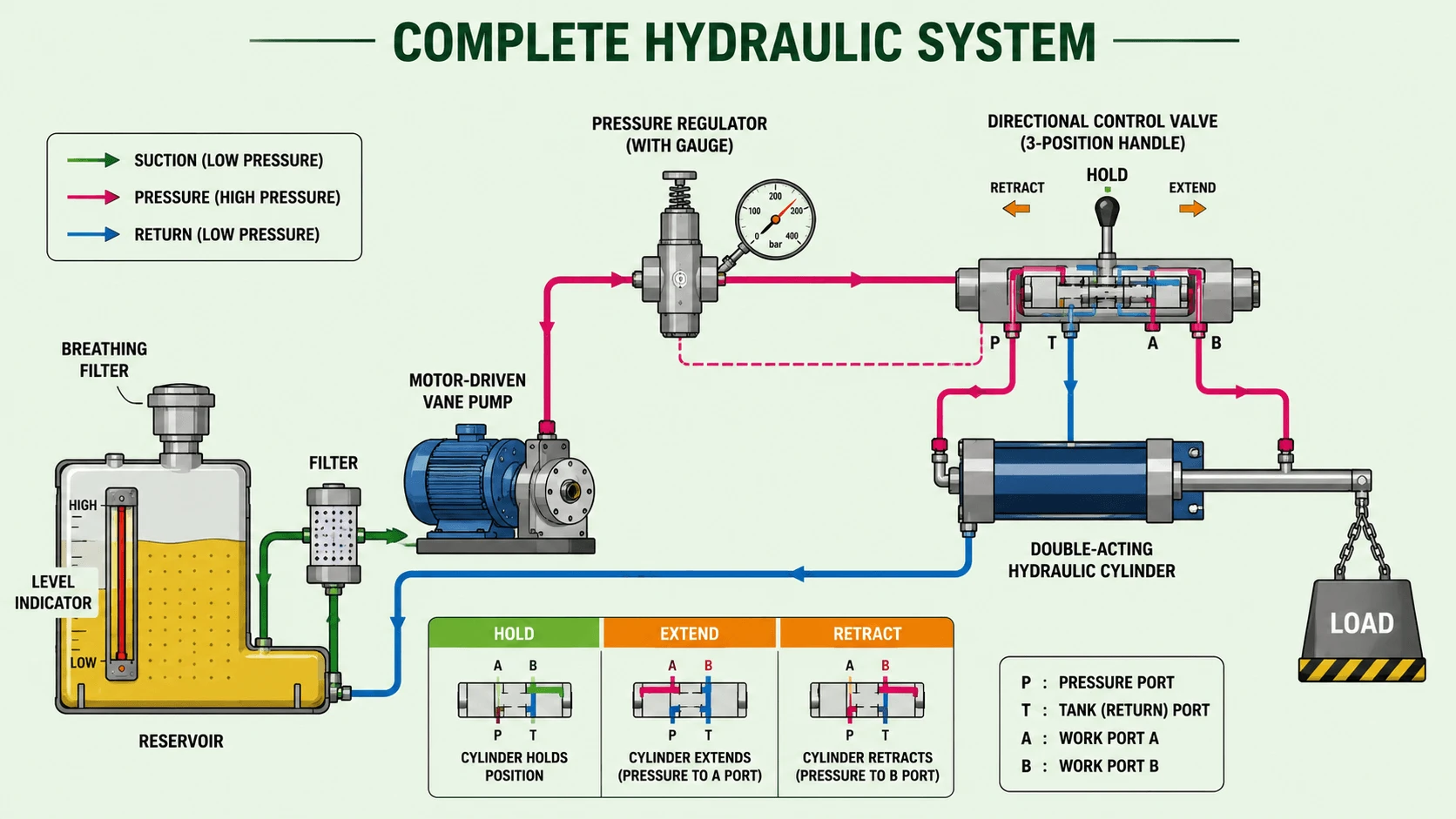
Testing a hydraulic pump is not only about checking pressure. A pump can show pressure on a gauge while still failing to deliver enough flow under load. For accurate diagnosis, test pressure, flow, case drain leakage, inlet condition, oil cleanliness, and operating temperature together.
Before testing, confirm the machine is depressurized, locked out, and fitted with gauges, hoses, and flow meters rated above the system’s maximum pressure. Hydraulic injection injuries are serious, so never search for leaks with your hand.
What Does a Hydraulic Pump Test Measure?
A hydraulic pump test checks whether the pump can convert mechanical input into hydraulic flow at the required pressure. The most useful indicators are:
| Test Item | What It Shows |
|---|---|
Pressure |
Whether the system can reach set pressure |
Flow under load |
Whether the pump maintains output as pressure rises |
Case drain flow |
Internal leakage in piston or vane pumps |
Inlet vacuum |
Suction restriction or cavitation risk |
Oil temperature |
Excess leakage, viscosity loss, or cooling problems |
Oil cleanliness |
Contamination risk to pump and valves |
Tools Needed
Common tools include a pressure gauge, hydraulic flow meter, temperature gun or sensor, tachometer, vacuum gauge for the suction line, clean sampling bottle, and the pump manufacturer’s service data.
Use a flow meter with a loading valve when possible. It allows the technician to increase pressure gradually while watching whether flow remains stable.
Step 1: Check System Conditions First
Before condemning the pump, inspect the reservoir oil level, suction strainer, inlet hose condition, coupling, drive speed, relief valve setting, filters, and return restrictions.
Many “bad pump” complaints are actually caused by low oil level, aerated oil, blocked suction lines, incorrect relief settings, worn actuators, or a valve leaking internally to tank.
Step 2: Perform a Pressure Test
Install a rated pressure gauge at the pump outlet or approved test port. Start the system at low load and observe standby pressure, operating pressure, and relief pressure.
If pressure cannot rise, possible causes include a worn pump, broken shaft, open relief valve, internal valve leakage, or severe actuator bypass. Pressure alone is not enough; continue with a flow test.
Step 3: Perform a Flow Test Under Load
Connect a hydraulic flow meter and gradually increase load pressure using the test valve or controlled circuit load.
A healthy fixed-displacement pump should maintain close to rated flow as pressure increases within its operating range. If flow drops sharply as pressure rises, internal leakage is likely.
For pressure-compensated piston pumps, confirm the compensator setting and test according to the manufacturer’s procedure. Do not force a variable pump into unsafe conditions without the service manual.
Step 4: Check Case Drain Flow
For piston and some vane pumps, case drain flow is one of the strongest indicators of internal wear. Excessive case drain usually means leakage past pistons, slippers, barrel surfaces, vanes, or rotating groups.
Always compare case drain flow against the manufacturer’s limit. Case drain pressure should also remain within specification because a restricted drain line can damage shaft seals and distort test results.
Step 5: Watch Temperature, Noise, and Oil Condition
High temperature often points to internal leakage, relief valve bypassing, undersized cooling, or excessive pressure drop. Noise may indicate cavitation, aeration, bearing damage, or suction restriction.
Oil condition matters. Contaminated oil accelerates pump wear, especially in piston pumps and servo-controlled systems. Use ISO 4406 cleanliness targets specified by the equipment or pump manufacturer.
Troubleshooting Guide
| Symptom | Likely Cause | What to Check |
|---|---|---|
Low pressure and low flow |
Worn pump, suction restriction, low RPM |
Flow test, inlet vacuum, drive speed |
Pressure OK but actuator slow |
Low flow, valve bypass, cylinder leakage |
Flow meter, valve leakage, actuator test |
Flow drops as pressure rises |
Internal pump leakage |
Flow under load, case drain |
High case drain flow |
Worn rotating group or vanes |
Manufacturer case drain limit |
Pump noisy |
Cavitation or aeration |
Oil level, suction hose, inlet vacuum |
Pump overheats |
Leakage or continuous relief bypass |
Case drain, relief valve, cooling circuit |
Shaft seal leaking |
High case pressure or seal damage |
Drain restriction, case pressure |
When Should You Replace the Pump?
Replace or rebuild the pump when measured flow under load is below specification, case drain exceeds the manufacturer’s limit, metal contamination is present, pressure cannot be maintained after valve faults are ruled out, or the pump shows repeated overheating and noise after inlet problems are corrected.
FAQs
Can you test a hydraulic pump with only a pressure gauge?
You can do a basic check, but it is incomplete. A pressure gauge shows resistance to flow, not actual pump delivery. A flow meter under load gives a much better diagnosis.
What is the best way to test hydraulic pump efficiency?
Measure actual flow at a known pressure, oil temperature, and shaft speed, then compare it with the pump’s rated or theoretical flow.
What does high case drain flow mean?
It usually indicates internal leakage and wear. Always compare the result with the pump manufacturer’s case drain specification.
Why does my hydraulic pump make noise?
Common causes include cavitation, aerated oil, blocked suction strainers, low reservoir level, wrong oil viscosity, or worn bearings.
Authority Sources
- ISO 4413 hydraulic fluid power safety requirements
- Parker hydraulic pump service manuals
- IFPS hydraulic safety training
- OSHA hydraulic systems modification safety bulletin
- ISO 4406 cleanliness explanation by Valin
Need help diagnosing a weak or noisy hydraulic pump? Contact our engineering team with your pump model, operating pressure, flow requirement, oil type, and failure symptoms. We can help identify whether you need testing, repair, replacement, or a more suitable hydraulic pump configuration.