
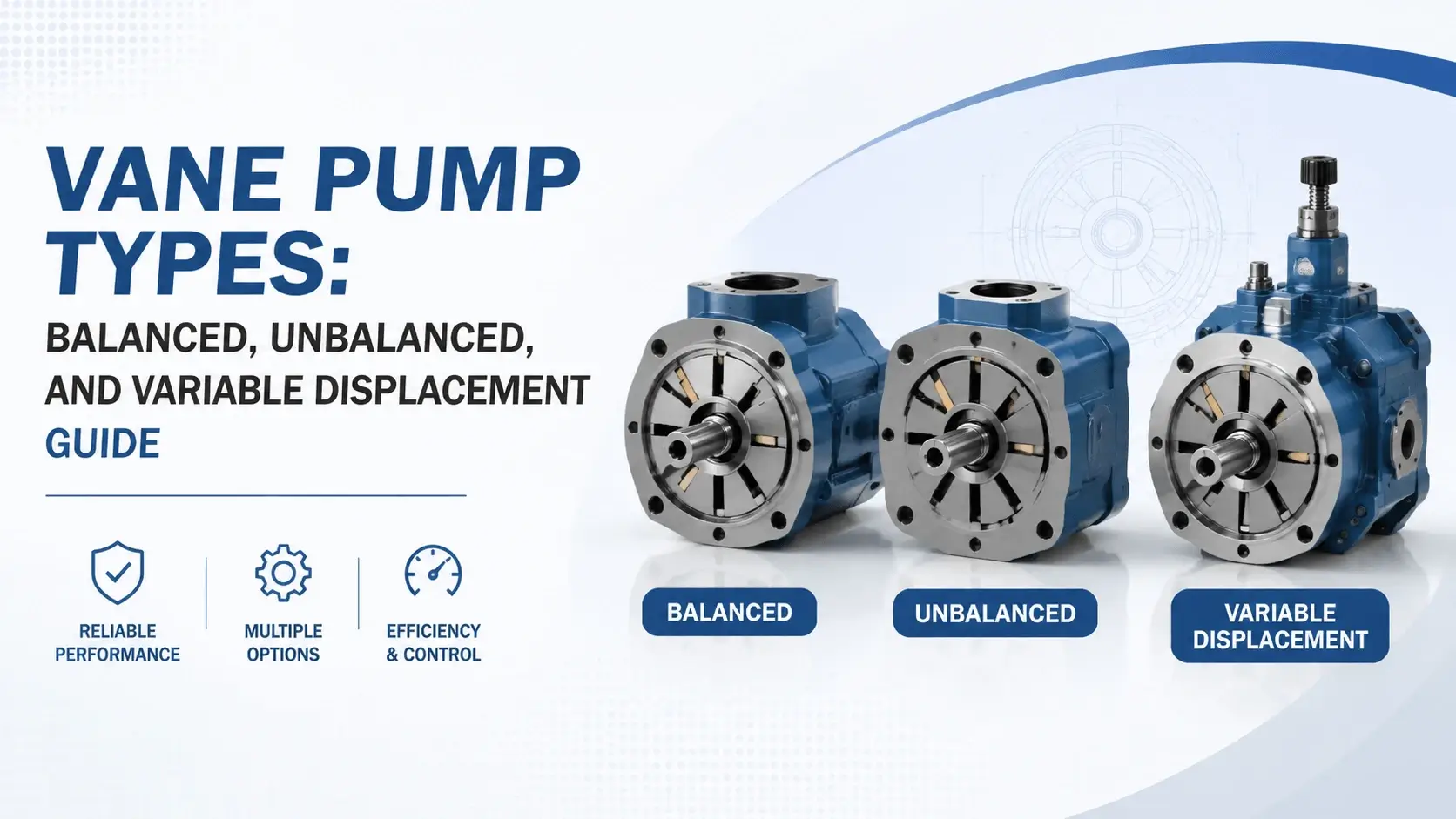
Introduction
Not all vane pumps work the same way. The term covers several distinct vane pump types, each with its own pressure range, shaft loading behavior, and displacement capability. If you specify or maintain hydraulic equipment, you need to know which ones fit your circuit.
This guide breaks down every major design family. You will learn what makes each type different, where it excels, and when to pick it over the others. Real numbers follow throughout.
What Defines Vane Pump Types
All vane pump types share a basic mechanism. A rotor carries sliding vanes inside a cam ring. Centrifugal force and system pressure hold the vanes against the ring surface. As the rotor turns, chamber volume changes, and fluid moves from inlet to outlet.
What separates one design from another is the cam ring shape and rotor position. An elliptical ring centered on the rotor gives you one behavior. A circular ring offset from the center gives you another.
That geometric difference drives everything else: shaft load, bearing life, displacement flexibility, and pressure rating.
Understanding these distinctions matters because the wrong choice costs money in premature wear or wasted energy.
Balanced Vane Pump
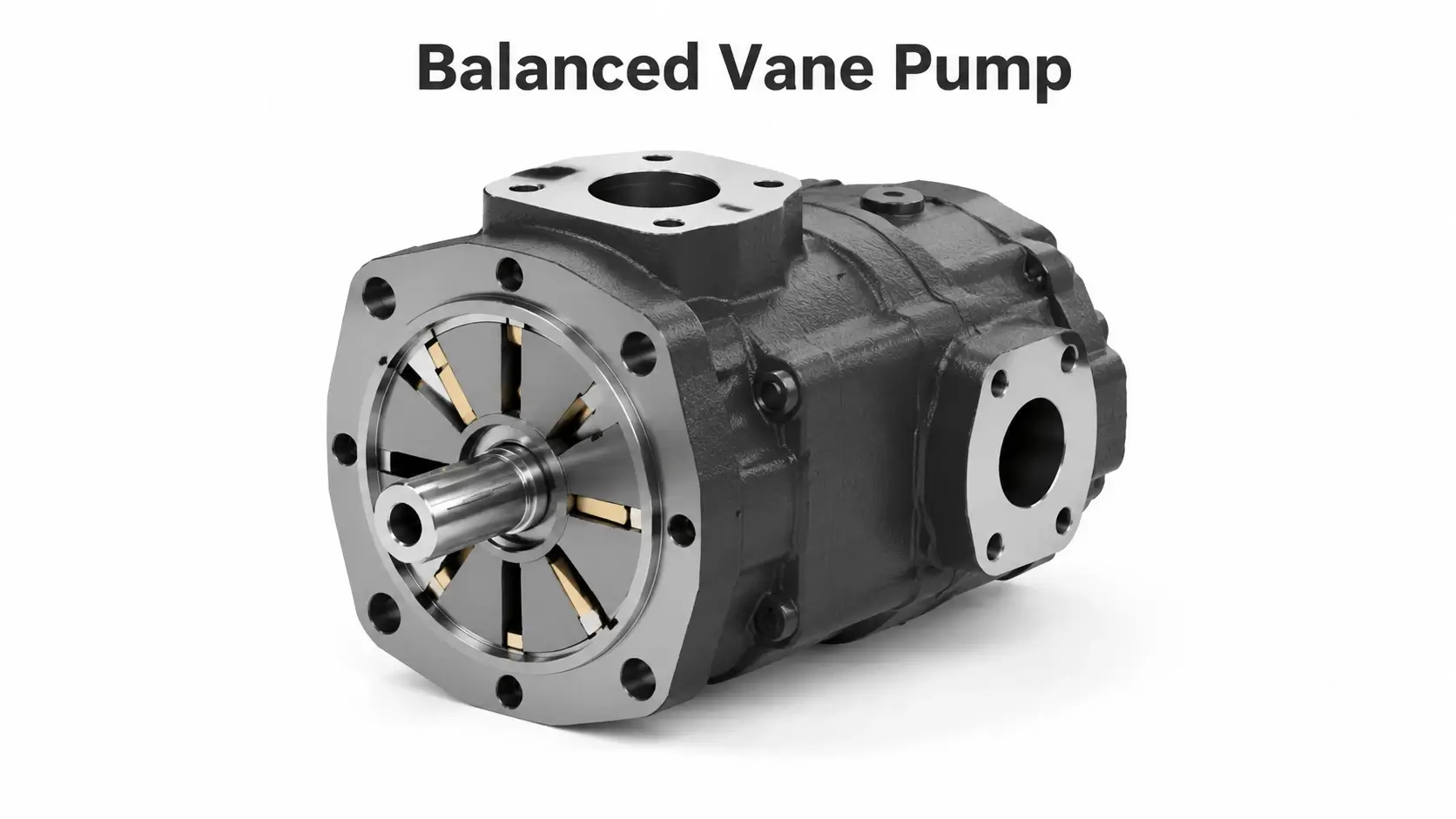
The balanced design uses an elliptical cam ring. The rotor sits at the center of the ellipse. Two intake ports and two discharge ports sit opposite each other, 180 degrees apart.
This symmetry cancels the radial force on the shaft. Fluid pressure pushes equally from both sides. The bearings see almost no net side load. That makes the balanced type durable for continuous duty at moderate pressure.
Balanced units deliver fixed displacement only. You cannot vary their flow without changing speed. Most run 70 to 140 bar continuous. Some high-pressure designs reach 175 bar. Flow ranges from 5 to 200 L/min, depending on size.
These balanced units suit machine tool circuits, low-noise power units, and any application where the pump runs steady for long shifts. The long bearing life offsets the lack of variable displacement.
Unbalanced Vane Pump
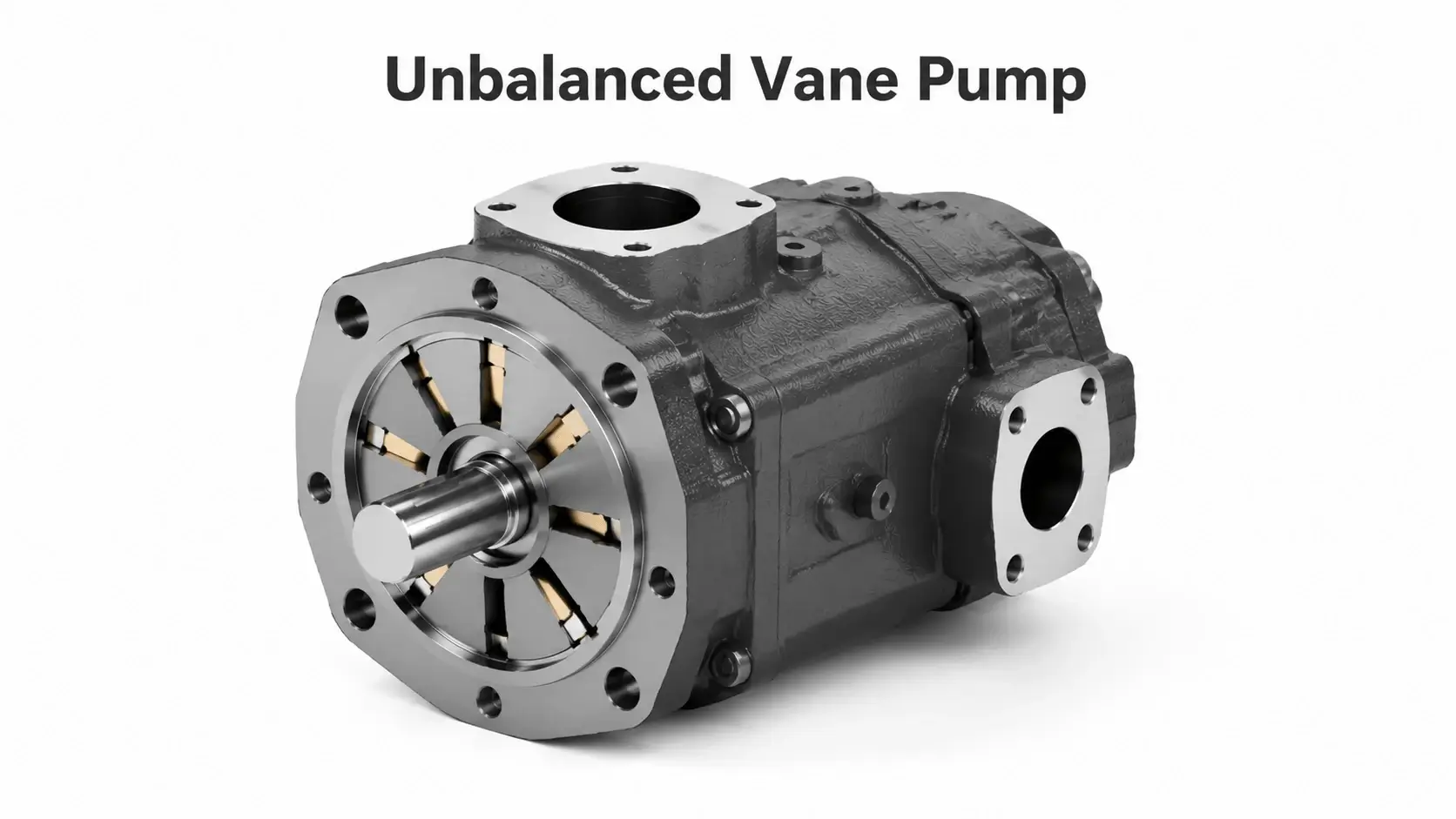
The unbalanced type uses a circular cam ring offset from the rotor center. One intake port and one discharge port create a net radial force pushing the shaft toward the low-pressure side.
That side load wears bearings faster than in a balanced pump. At pressures above 140 bar, bearing life drops noticeably. But the offset geometry enables something useful: variable displacement.
Most unbalanced designs let you shift the cam ring to change the eccentricity. Move the ring toward center and flow drops. Align the centers and flow hits zero. This flexibility makes unbalanced designs the base for nearly all variable displacement models.
Fixed-displacement unbalanced pumps exist, too. They cost less than balanced types but demand more frequent bearing replacement under heavy loads.
Variable Displacement Vane Pump
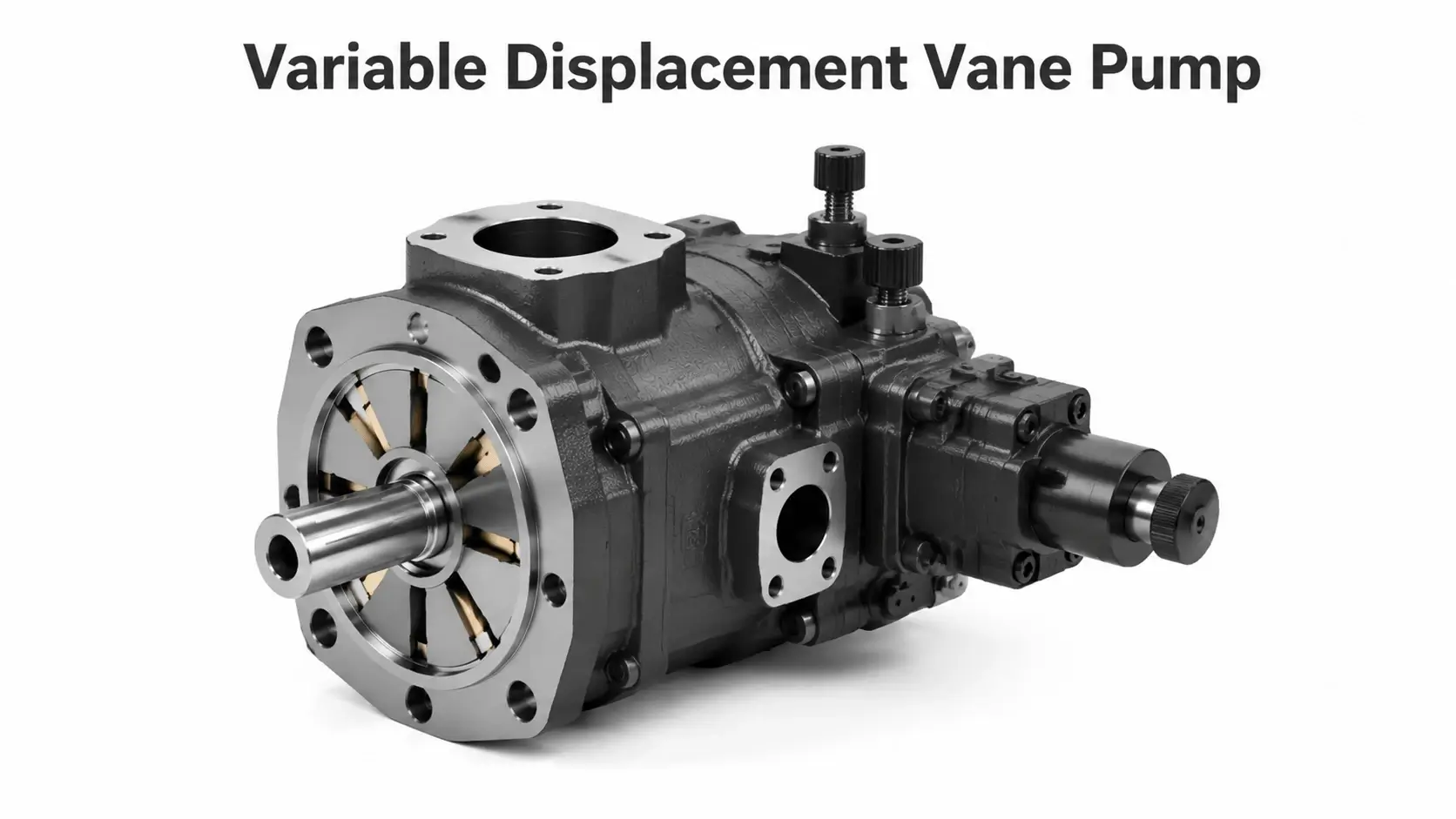
Variable displacement models work on the pressure-compensated principle in most industrial designs. A spring holds the cam ring at maximum eccentricity. System pressure acts on an opposing piston. When pressure rises past the spring setting, the ring shifts inward.
Flow drops as the ring moves. At the cutoff pressure, output falls near zero. The pump holds that pressure while drawing minimal power. No excess fluid dumps over a relief valve. That saves energy and heat.
Typical pressure settings range from 70 to 170 bar. High-performance designs reach 210 bar. Flow varies from maximum down to near zero across that range.
Eaton Vickers, Parker Denison, and Yuken built their industrial lines on this concept. Injection molding machines, die-casting presses, and clamp-and-hold circuits use these variable models extensively.
Fixed Displacement Vane Pump
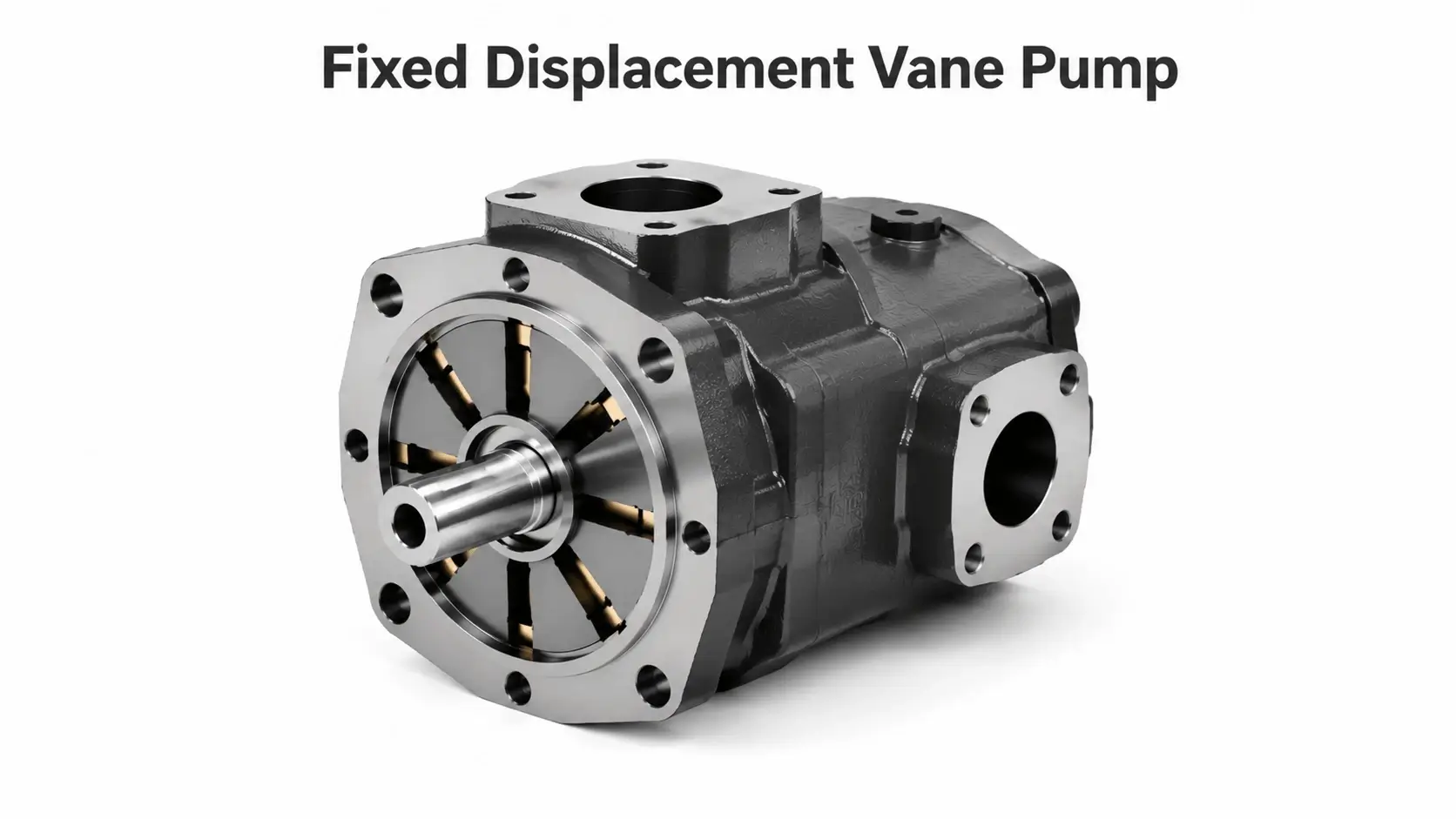
Fixed displacement means flow stays constant per revolution. Only motor speed changes output. Both balanced and unbalanced designs come in fixed versions.
Pick a fixed pump when your circuit demands a steady flow. Conveyor drives, constant-speed machine tools, and simple lift circuits fit this pattern. The pump runs cheaper and simpler than a variable model.
The downside shows up in hold-pressure applications. A fixed pump pushes full flow continuously. Excess oil goes over the relief valve at set pressure. That wastes energy as heat. If your cycle includes long dwell times, consider switching to a variable displacement unit instead.
Comparison Table: All Vane Pump Types
| Feature | Balanced | Unbalanced (fixed) | Unbalanced (variable) |
|---|---|---|---|
Cam ring shape |
Elliptical |
Circular, offset |
Circular, offset |
Radial shaft load |
Near zero |
Moderate |
Moderate |
Displacement |
Fixed only |
Fixed |
Variable |
Typical pressure |
70–140 bar |
70–140 bar |
70–170 bar |
Bearing life |
Long |
Medium |
Medium |
Best duty cycle |
Continuous |
Intermittent |
Hold-pressure |
Noise level |
Low |
Low-Medium |
Low-Medium |
Cost |
Medium |
Low |
High |
Use this table to compare all vane pump types at a glance. Then check the next section for application-specific guidance.
How to Choose Between Vane Pump Types
Start with your duty cycle. Does the pump run at one flow rate all day? A fixed displacement type works. Does it hold pressure for long periods? Pick a variable displacement unit.
Next, check your pressure requirement. Below 140 bar, both balanced and unbalanced types serve well. Above 140 bar, look at piston pumps instead. Few vane designs exceed 175 bar reliably.
Consider shaft loading if bearing life matters. Balanced designs last longer in continuous operation. Unbalanced types need bearing checks at shorter intervals.
Finally, match the port standard to your manifold. SAE J744 flanges, ISO 3019-2 mounts, and BSPP threads vary by manufacturer and frame size. Bring a datasheet when you order replacements.
Applications by Type
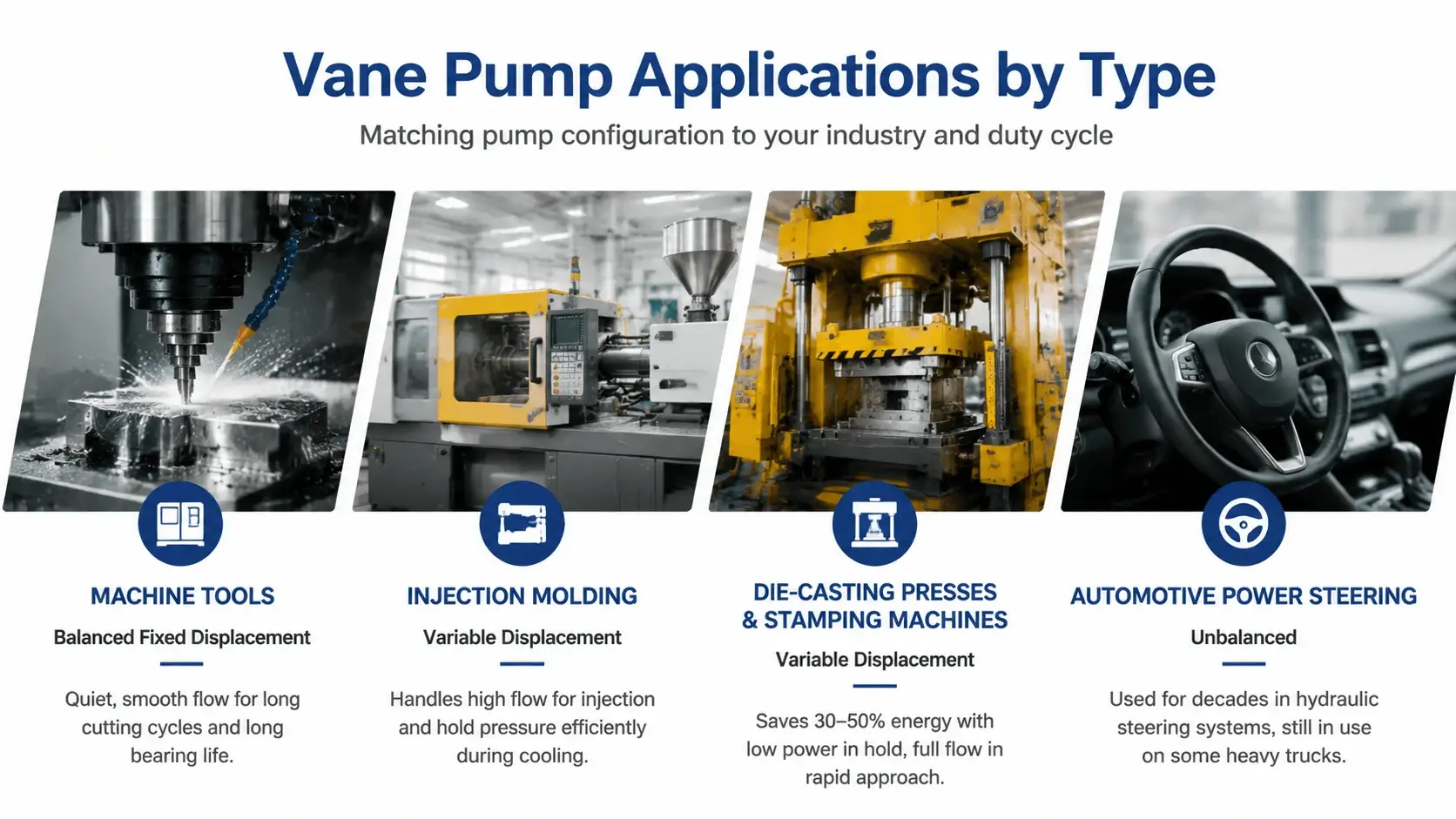
Different industries favor different configurations based on noise, duty cycle, and pressure needs.
Machine tools almost always use balanced fixed-displacement pumps. Milling machines, grinders, and lathes need a quiet, smooth flow during long cutting cycles. The balanced shaft load keeps bearings alive for years.
Injection molding machines rely on variable displacement types. The clamp circuit holds pressure while the mold cools. The injection circuit demands high flow for a short shot. A pressure-compensated vane pump handles both modes efficiently.
Die-casting presses and stamping machines follow the same pattern. Hold pressure draws little power. Rapid approach draws full flow. These variable models cut energy cost by 30 to 50 percent compared to fixed pumps.
Automotive power steering used unbalanced vane pumps for decades. Electric assist has replaced most of them, but some heavy trucks still run hydraulic steering with a vane pump.
Common Issues Per Type
Each design fails in predictable ways. Knowing the failure mode helps you diagnose faster.
Balanced pumps develop elliptical cam ring wear. The ring ovalizes after thousands of hours. Clearance opens, efficiency drops, and case drain flow rises. Replace the ring and vanes together.
Unbalanced pumps eat bearings. The side load accelerates race wear. You hear rumbling before pressure falls. Check shaft end-play during rebuilds.
Variable types suffer compensator spring drift. The spring weakens, or the spool sticks. Cutoff pressure shifts over time. Calibrate the compensator annually if your process depends on precise hold pressure.
Cold starts stick vanes in every vane design. Thick oil prevents the vanes from extending. Preheat the reservoir or use a lower-viscosity grade for cold climates.
FAQ
What are the different vane pump types?
Three main families exist: balanced, unbalanced fixed, and unbalanced variable displacement. These vane pump types differ in cam ring geometry, shaft loading, and displacement capability. Balanced types have an elliptical cam ring and no radial shaft load. Unbalanced types use an offset circular ring and allow variable flow in most configurations.
What is the difference between balanced and unbalanced vane pump?
Geometry and shaft loading separate them. A balanced pump centers the rotor in an elliptical ring. Pressure forces cancel out. An unbalanced pump offsets the rotor in a circular ring. Net radial force loads the bearings. Balanced types last longer; unbalanced types offer variable displacement.
Which vane pump type is best for my application?
Choose balanced fixed for continuous-duty quiet circuits. Choose variable displacement for clamp-and-hold or molding applications. Choose unbalanced fixed only when cost outweighs bearing life concerns.
Can all vane designs handle variable displacement?
No. Only unbalanced designs permit variable displacement. The offset cam ring can shift to change eccentricity. A balanced pump locks the rotor at the ring center, so displacement stays fixed regardless of control mechanism.
How do I identify which type I have?
Check the nameplate for “balanced” or “variable.” Count the ports: two inlet and two outlet suggest a balanced design. One inlet and one outlet indicate an unbalanced type. Measure shaft end-play if bearings seem worn; unbalanced types show more movement.
Conclusion
These design families split along clear lines. Balanced designs offer long life and quiet running at fixed flow. Unbalanced designs add variable displacement at the cost of bearing load. Your duty cycle and pressure requirement point to the right choice.
Match the type to the job. Do not force a variable pump onto a steady-flow circuit. Do not expect a balanced pump to save energy on hold-pressure duty. Get the geometry right first, then size the displacement.
When you spec correctly, these vane designs deliver years of reliable service. Quiet, efficient, and predictable, they remain the mid-pressure workhorse of industrial hydraulics.