
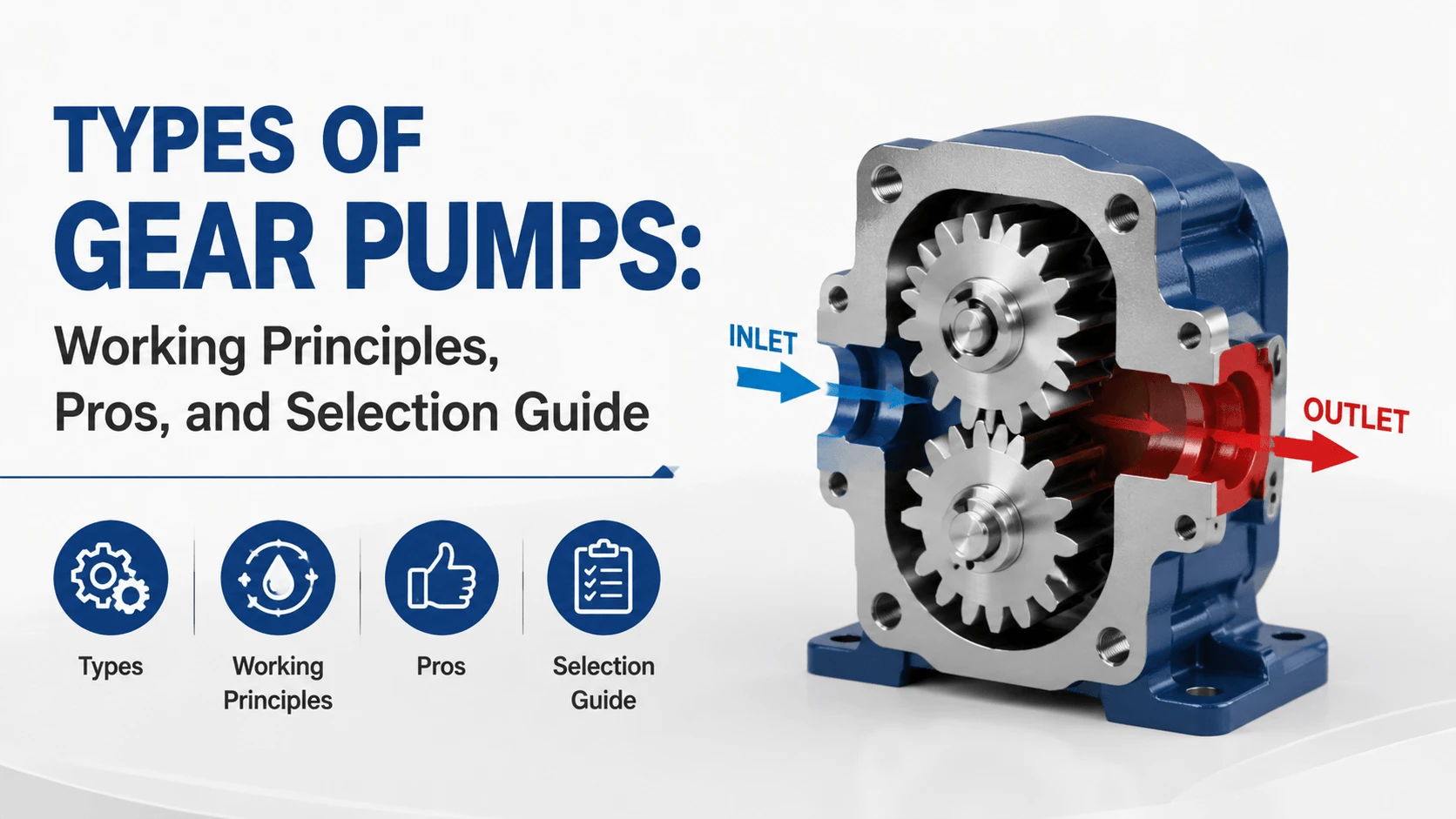
If you buy or specify hydraulic pumps, the word gear pump covers several designs. The main types of gear pumps include external gear pumps, internal gear pumps, and gerotor pumps. Some suppliers also group helical, herringbone, multi-section, and magnetically coupled units under the same family.
A gear pump moves fluid by trapping it between gear teeth and the pump casing. As the gears rotate, they carry fluid from the inlet side to the outlet side. The gear mesh then blocks reverse flow and pushes fluid into the discharge port.
Most gear pumps deliver fixed displacement. One shaft turn moves a set volume of oil, fuel, resin, or another fluid. Speed changes flow. Pressure comes from system resistance, not from the pump by itself.
External Gear Pumps
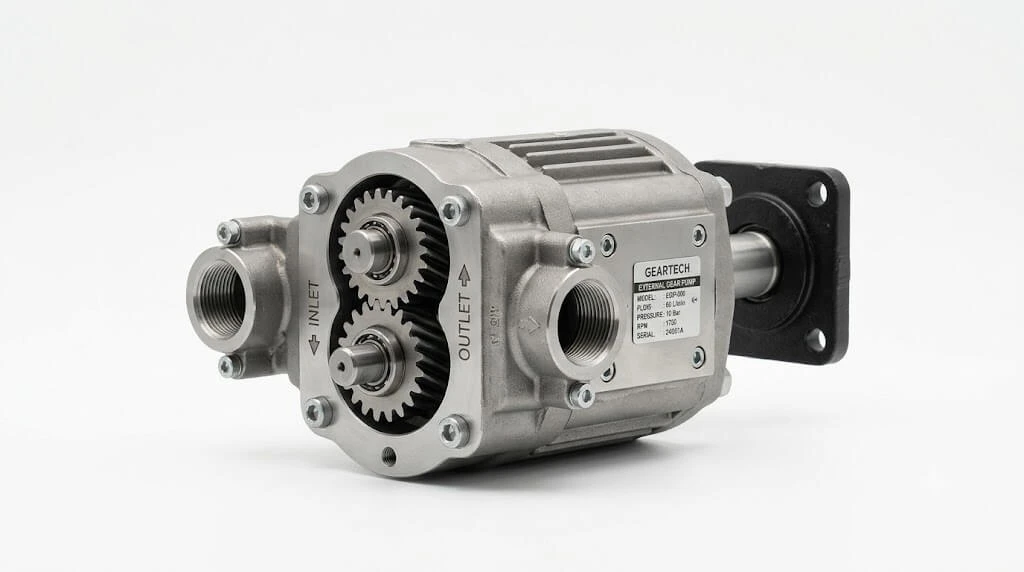
External gear pumps use two matching gears that turn against each other. One gear connects to the drive shaft. The second gear follows it. Fluid travels around the outside of the gears, along the casing wall.
This design fits hydraulic power units, mobile equipment, lubrication systems, fuel transfer, and compact machinery. It handles clean oil well and gives a steady flow for its size.
Most hydraulic external gear pumps use spur gears. Spur gears cost less and handle pressure well. Helical gears run quieter, but they create axial thrust. Herringbone gears reduce that thrust, though they add cost and machining work.
External gear pumps suit buyers who need rugged performance and a reasonable price. They also tolerate a wide speed range. The tradeoff shows up as noise, pulsation, and wear when oil cleanliness slips.
Internal Gear Pumps
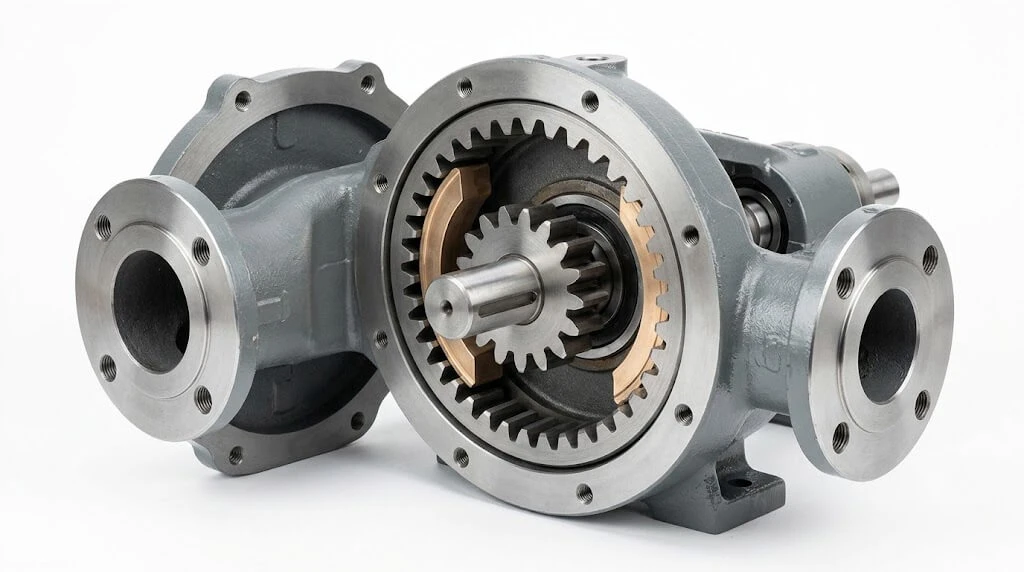
nternal gear pumps use a smaller gear inside a larger ring gear. The two gears rotate in the same direction. A crescent-shaped divider fills the gap and guides fluid through the pump.
This pump type usually runs smoother than an external gear pump. It also handles higher-viscosity fluids better. You often see it in oil transfer, chemical metering, polymer handling, and low-noise hydraulic units.
Internal gear pumps can move thicker fluids with less shear. That matters when a plant pumps resin, asphalt, chocolate, paint, or heavy lubricating oil. The pump still needs clean fluid and correct clearances.
They cost more than basic external gear pumps. They also need more care during selection. Viscosity, temperature, shaft speed, and seal choice can change the result quickly.
Gerotor Pumps
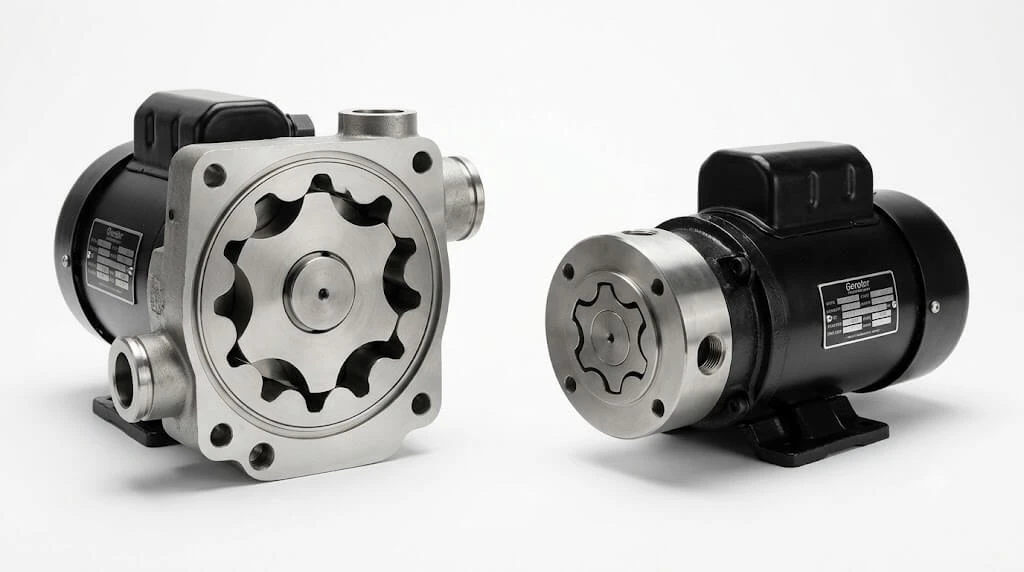
A gerotor pump uses an inner rotor and an outer rotor. The inner rotor has one fewer tooth than the outer rotor. As they rotate, pockets open, carry fluid, and close again.
Gerotor pumps work well in compact spaces. Automotive engines, transmissions, small hydraulic circuits, and lubrication systems use them for that reason. They can run quietly when the fluid stays clean.
A gerotor pump does not like abrasive contamination. Dirt scratches the rotor surfaces and opens internal leakage paths. Once that happens, pressure and flow drop even though the pump still turns.
Lobe and Gear-Like Pumps
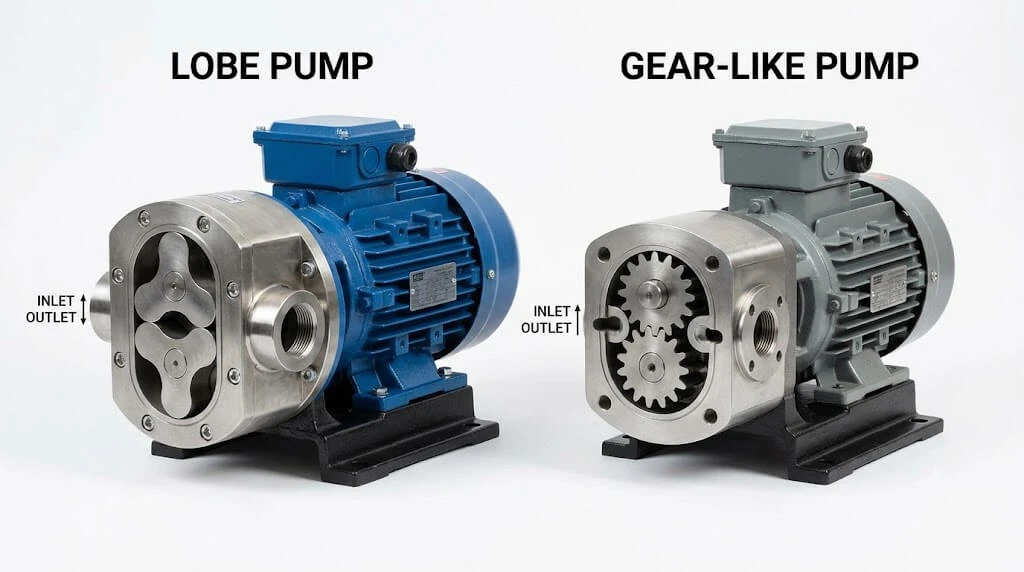
Some catalogs place lobe pumps near gear pumps. That can confuse buyers. Lobe pumps use rotors with rounded lobes, and the lobes do not mesh like gear teeth.
Lobe pumps handle fluids with soft solids better than most gear pumps. Food, beverage, and sanitary processing plants use them often. For high-pressure hydraulic oil, a true gear pump usually makes more sense.
Gear Pump Types by Construction
Pump geometry tells only part of the story. Construction details also matter. A pressure-balanced gear pump can reduce side leakage and improve efficiency under load.
A bi-rotational gear pump can run in both directions when the porting supports it. A multiple-section gear pump stacks two or more pumping elements on one drive shaft. Mobile machines use that setup to feed steering, lift, and auxiliary circuits.
Magnetically coupled gear pumps remove the dynamic shaft seal. Chemical plants use them when leakage creates a safety or cleanup problem. They cost more, but they can save trouble around aggressive or costly fluids.
Quick Comparison Table
| Type | Best fit | Main strength | Watch point |
|---|---|---|---|
External gear pump |
Hydraulic oil, fuel, lubrication |
Simple, compact, cost-effective |
Noise and contamination wear |
Internal gear pump |
Viscous fluids, transfer, metering |
Smooth flow and good suction |
Higher price and tighter selection |
Gerotor pump |
Engine oil, small circuits |
Quiet and compact |
Sensitive rotor wear |
Lobe pump |
Sanitary or soft-solids service |
Gentle handling |
Lower pressure than hydraulic gear pumps |
Magnetic drive gear pump |
Chemicals and costly fluids |
No shaft seal leakage |
Higher cost and torque limits |
Advantages of Gear Pumps
Gear pumps earn their place because they stay simple. They use a few moving parts and deliver a predictable flow. A technician can often diagnose them with pressure, flow, noise, and oil condition checks.
They also fit compact machines. A small hydraulic power pack can use an external gear pump without much space penalty. Many OEMs choose them because they balance price, size, and durability.
For clean oil service, a gear pump can run for years. Good filtration, proper inlet conditions, and correct shaft alignment make a large difference.
Limitations and Failure Risks
Gear pumps depend on close clearances. Dirt, air, and dry starts damage those clearances. The pump then loses volumetric efficiency and makes more heat.
High viscosity can also cause trouble at the inlet. Thick oil moves slowly, especially during cold starts. If the pump cannot fill each tooth space, cavitation marks the gears and housing.
Low-viscosity fluids bring a different problem. Thin fluid leaks back through internal clearances. The pump may still spin fast, but useful flow falls under pressure.
Common Gear Pump Problems
Noise often points to inlet trouble. Check oil level, suction hose size, clogged strainers, and air leaks. A small suction leak can make a good pump sound worn out.
Heat points to wasted energy. Internal leakage, wrong relief valve settings, undersized lines, or excessive speed can raise oil temperature. A quick temperature check across the pump and relief valve helps narrow the cause.
Low pressure does not always blame the pump. A stuck relief valve, open bypass, worn actuator, or leaking directional valve can drop system pressure. Test the flow under load before ordering a replacement.
How to Select the Right Gear Pump
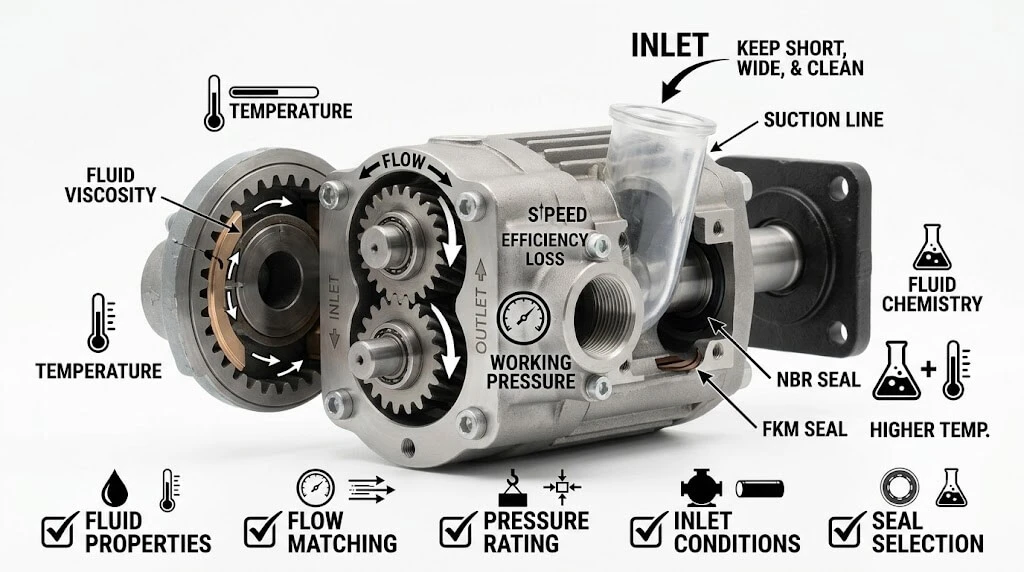
Start with the fluid. Viscosity, lubricity, temperature, and contamination level shape the choice. A pump that handles warm hydraulic oil may struggle with cold gear oil.
Match flow to machine demand. Use displacement and speed to calculate theoretical flow. Then allow for efficiency loss at working pressure.
Check the pressure rating against real duty. A lift circuit with short peaks needs a different margin than a press that holds pressure all day. Continuous pressure matters more than a glossy peak number.
Look hard at inlet conditions. Gear pumps can create suction, but they do not forgive starvation. Keep suction lines short, wide, and clean.
Choose seals after you confirm fluid chemistry and temperature. NBR may suit mineral oil. FKM often handles higher temperature or aggressive fluids better. The wrong seal can fail before the gears show wear.
Maintenance Tips
Keep the oil clean. That advice sounds basic, but most gear pump failures start with dirty oil, water, or air. Filtration costs less than downtime.
Do not run the pump dry. Prime it when the system layout requires it. After installation, jog the motor and check rotation before full-speed startup.
Listen during the first hour of operation. A new whine, rattle, or foamy reservoir tells you something changed. Fix the cause before the pump wears itself in the wrong way.
Track pressure, flow, and temperature over time. One reading gives a snapshot. A trend shows wear before production stops.
Conclusion
The main types of gear pumps are external gear pumps, internal gear pumps, and gerotor pumps. Each one solves a different problem.
External gear pumps fit rugged hydraulic work. Internal gear pumps suit smoother flow and thicker fluids. Gerotor pumps make sense where space and noise matter.
The best choice comes from the duty cycle, fluid, pressure, inlet layout, and maintenance reality. If those details look fuzzy, slow down before buying. Pump mistakes usually cost more after installation.
FAQ
What are the main types of gear pumps?
The main types are external gear pumps, internal gear pumps, and gerotor pumps. Some suppliers also include lobe pumps, magnetic drive gear pumps, and multi-section gear pumps.
Which gear pump type is best for hydraulic systems?
External gear pumps suit many hydraulic systems because they are compact, rugged, and cost-effective. Internal gear pumps work better when noise, suction, or viscosity matters more.
What is the difference between external and internal gear pumps?
External gear pumps use two gears of similar size. Internal gear pumps use one gear inside another. External designs often handle hydraulic pressure well. Internal designs usually run smoother.
Are gear pumps self-priming?
Many gear pumps can create suction, but they still need good inlet conditions. Dry starts, air leaks, and clogged suction lines can damage the pump quickly.
Can gear pumps handle thick fluids?
Yes, especially internal gear pumps. Thick fluids still need correct speed, inlet size, temperature control, and seal material.